English


Why Choosing the Right Trailer Jack Wholesale Supplier Matters
For trailer manufacturers, parts distributors, and equipment brands, selecting a reliable trailer jack wholesale supplier is not simply a price decision.
A trailer jack is a critical trailer component responsible for supporting trailer positioning, lifting, coupling, and parking operations. Poor-quality trailer jacks may lead to:
- Difficult operation
- Premature mechanical wear
- Corrosion problems
- Product returns
- Customer complaints
For B2B buyers, a qualified supplier should provide more than standard products.
The right supplier should offer:
- Stable production capacity
- Consistent product quality
- Accurate specifications
- OEM customization
- Export support
- Long-term cooperation capability
ZTL Rigging specializes in rigging hardware and customized hardware solutions for global customers. Learn more about ZTL’s manufacturing capabilities on the About Us page.
For buyers developing trailer component product lines, supplier selection should focus on total value:
Product quality + manufacturing capability + supply reliability + technical support
rather than only unit price.
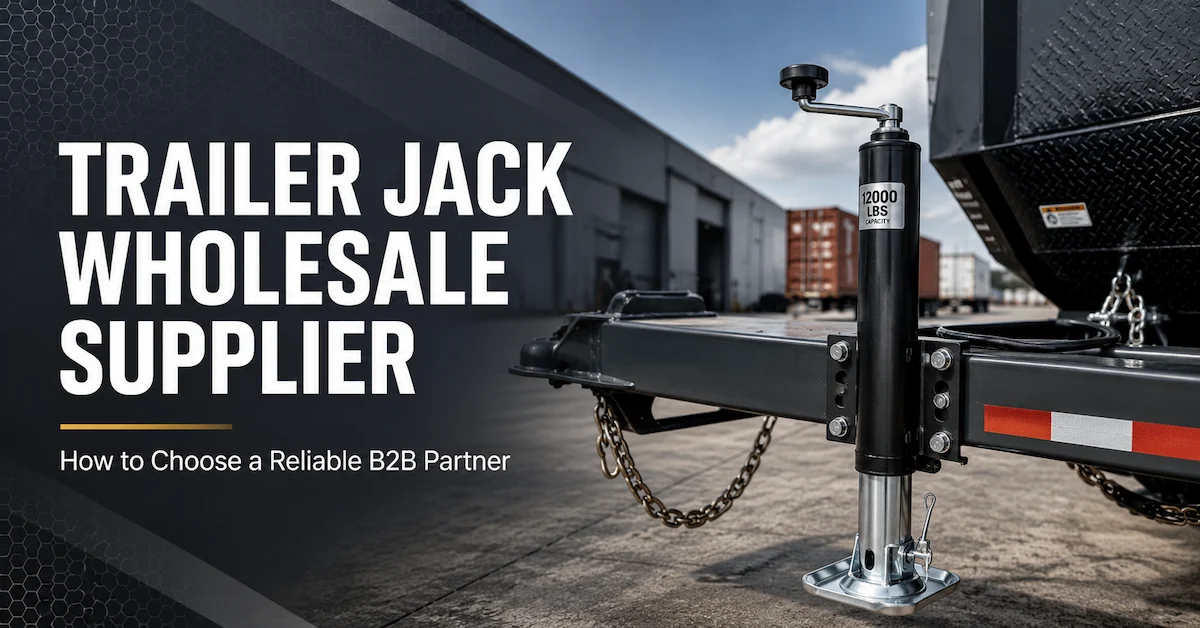
What Is a Trailer Jack?
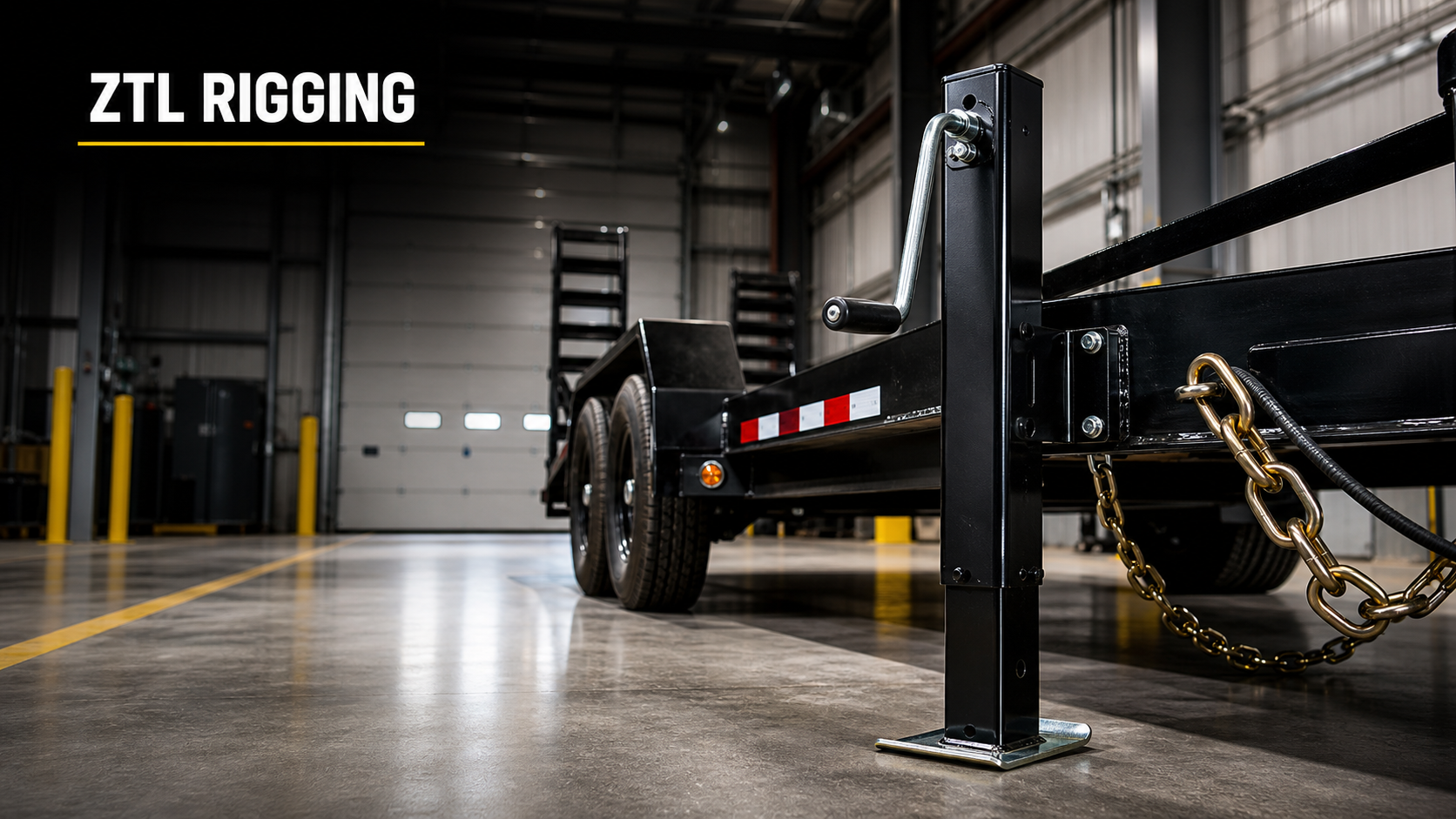
A trailer jack is a mechanical support device installed on trailers to lift, lower, and stabilize the trailer during connection, loading, and parking.
Trailer jacks are commonly installed on:
- Utility trailers
- Cargo trailers
- Boat trailers
- Agricultural trailers
- Industrial trailers
- Equipment trailers
A typical trailer jack includes:
| Component | Function |
|---|---|
| Outer tube | Provides structural support |
| Inner tube | Adjusts height position |
| Screw mechanism | Creates lifting movement |
| Gear system | Transfers operating force |
| Handle | Controls lifting operation |
| Mounting bracket | Connects jack to trailer |
| Footplate or wheel | Provides ground support |
For wholesale buyers, understanding the product structure helps determine whether a supplier can meet different market requirements.
Main Types of Trailer Jacks for Wholesale Buyers
Different trailer applications require different jack designs.
A professional trailer jack wholesale supplier should provide multiple options to support different customer segments.
| Trailer Jack Type | Features | Common Applications |
|---|---|---|
| A-Frame Jack | Mounted at trailer front frame | Utility and cargo trailers |
| Swivel Jack | Fold-away structure | Commercial trailers |
| Drop Leg Jack | Faster height adjustment | Heavy-duty trailers |
| Side Wind Jack | Side handle operation | General trailer use |
| Top Wind Jack | Top-mounted handle | Utility and recreational trailers |
A-Frame Trailer Jack
A-frame jacks are commonly used on trailers where the jack is mounted directly on the front frame.
Typical applications:
- Cargo trailers
- Utility trailers
- Small equipment trailers
Buyers usually evaluate:
- Capacity
- Mounting compatibility
- Lift range
- Corrosion resistance
Swivel Trailer Jack
Swivel jacks allow the jack body to move or fold when not in use.
Advantages include:
- Improved ground clearance
- Easier storage
- Better trailer handling
They are popular for:
- Commercial trailers
- Boat trailers
- Multi-purpose trailers
Drop Leg Trailer Jack
Drop leg designs provide faster height adjustment.
They are commonly selected for applications requiring:
- Frequent adjustment
- Higher efficiency
- Heavy trailer operation
Who Buys Trailer Jacks Wholesale?
The keyword trailer jack wholesale supplier usually represents strong commercial intent.
The main buyer groups include:
Trailer Manufacturers
Trailer builders need suppliers that can provide:
- Stable quality
- Compatible dimensions
- Reliable delivery
- Consistent production
Common applications include:
- Utility trailers
- Cargo trailers
- Agricultural trailers
- Industrial trailers
A manufacturer supplying trailer components must maintain consistency because component variation can affect final assembly.
Trailer Parts Distributors
Distributors usually require:
- Multiple product models
- Competitive wholesale pricing
- Packaging suitable for resale
- Reliable inventory support
They often supply:
- Repair shops
- Trailer dealers
- Equipment companies
- Retail channels
RV and Outdoor Equipment Brands
RV-related buyers often focus on:
- Easy operation
- Appearance
- Durability
- Private-label opportunities
Agricultural Equipment Suppliers
Agricultural applications require trailer components that can withstand:
- Outdoor exposure
- Dust
- Mud
- Repeated operation
These customers often prioritize:
- Heavy-duty construction
- Corrosion resistance
- Long service life
Key Specifications to Check Before Ordering
Before purchasing from a trailer jack wholesale supplier, buyers should prepare a detailed specification list.
| Specification | Why It Matters |
|---|---|
| Load capacity | Determines supporting ability |
| Lift range | Defines height adjustment |
| Mounting type | Ensures trailer compatibility |
| Tube diameter | Influences strength |
| Material thickness | Affects durability |
| Handle design | Affects operation |
| Foot or wheel option | Determines mobility |
| Surface treatment | Influences corrosion resistance |
| Packaging | Supports distribution |
| OEM requirements | Enables customization |
Load Capacity Selection
Load capacity is one of the most important purchasing factors.
However, buyers should avoid selecting products only based on trailer size.
Consider:
- Trailer tongue weight
- Operating environment
- Usage frequency
- Safety requirements
A properly selected trailer jack should provide sufficient support without excessive mechanical stress.
Mounting Compatibility
Different trailers may require different mounting solutions.
Before ordering, buyers should confirm:
- Mounting plate size
- Tube dimensions
- Installation method
- Available clearance
Incorrect mounting specifications can create installation problems after delivery.
Manufacturing Process Behind Reliable Trailer Jacks
A professional trailer jack wholesale supplier should have control over the complete production process.
Important manufacturing stages include:
- Steel processing
- Tube forming
- Welding
- Machining
- Assembly
- Surface treatment
- Inspection
ZTL Rigging provides manufacturing and customized hardware solutions for industrial customers. More information is available through the Products page.
Steel Processing and Component Manufacturing
Trailer jacks require materials that can handle:
- Mechanical loads
- Outdoor environments
- Repeated operation
Material quality influences:
- Strength
- Service life
- Product reliability
Welding Quality Control
Welding is one of the most important manufacturing steps.
A professional supplier should control:
- Weld consistency
- Joint strength
- Appearance quality
- Defect prevention
Poor welding quality may lead to:
- Structural problems
- Product failures
- Customer complaints
Mechanical Assembly
Internal mechanisms influence:
- Smooth operation
- Lifting performance
- Product lifespan
Important components include:
- Screws
- Gears
- Bearings
- Moving parts
Assembly accuracy directly affects user experience.
Surface Treatment and Corrosion Protection
Trailer jacks are often exposed to outdoor conditions.
Common environments include:
- Rain
- Humidity
- Road spray
- Dust
- Coastal conditions
A suitable surface treatment helps improve:
- Corrosion resistance
- Appearance
- Product durability
Wholesale buyers should specify the expected environment when requesting quotations.
How to Evaluate a Trailer Jack Wholesale Supplier?
Choosing the right supplier requires evaluating manufacturing and commercial capability.
Factory Capability
Ask:
- Does the supplier manufacture directly?
- What processes are controlled internally?
- Can they support repeat orders?
Quality Control System
Evaluate:
- Incoming material inspection
- Production inspection
- Finished product inspection
- Quality documentation
Production Capacity
For wholesale buyers,production capacity affects:
- Delivery reliability
- Inventory planning
- Market expansion
OEM Capability
Confirm whether the supplier supports:
- Logo marking
- Custom packaging
- Product labels
- Private-label programs
Export Experience
International buyers should consider:
- Export packaging
- Documentation
- Shipping experience
- Communication efficiency
OEM Trailer Jack Solutions for Brands
Many distributors and brands need more than standard trailer jacks.
OEM solutions may include:
- Custom branding
- Packaging design
- Product identification
- Color options
- Market-specific requirements
A professional supplier should distinguish between:
Cosmetic Customization
Examples:
- Logo
- Label
- Packaging
Engineering Customization
Examples:
- Structural changes
- Capacity modification
- Mounting redesign
Engineering changes require technical evaluation before production.
Common Purchasing Risks When Buying Trailer Jacks Wholesale
Choosing Only Based on Price
Low-cost products may create:
- Higher return rates
- Quality complaints
- Replacement expenses
A better comparison considers:
- Product quality
- Supplier reliability
- Delivery performance
- Customer support
Ignoring Capacity Requirements
Selecting the wrong capacity can create:
- Poor performance
- Safety concerns
- Customer dissatisfaction
Not Testing Samples
Before bulk purchasing, buyers should evaluate:
- Operation
- Installation compatibility
- Surface quality
- Packaging
Inconsistent Production Quality
A supplier should maintain the same quality across:
- First order
- Repeat orders
- Large-volume shipments
How to Prepare an RFQ for Trailer Jacks
A detailed RFQ helps suppliers provide accurate quotations.
Include:
| Information | Example |
|---|---|
| Trailer type | Cargo / Utility / RV |
| Capacity | Required load rating |
| Quantity | Initial order volume |
| Mounting style | A-frame / swivel |
| Destination market | Country |
| Packaging | Bulk or private label |
| Branding | Logo requirements |
| Delivery | Required schedule |
For more efficient communication, buyers can send technical requirements through the ZTL Rigging Contact Us page.
FAQ
What does a trailer jack wholesale supplier provide?
A wholesale supplier provides trailer jack products in bulk quantities for distributors, trailer manufacturers, and OEM brands.
How do I choose the right trailer jack capacity?
Choose based on trailer tongue weight, application requirements, operating conditions, and required safety margin.
What types of trailer jacks are available?
Common types include A-frame jacks, swivel jacks, drop leg jacks, side wind jacks, and top wind jacks.
Can trailer jacks be customized?
Yes. Manufacturers may provide OEM options including branding, packaging, labels, and selected specifications.
What should I ask a trailer jack supplier before ordering?
Confirm product specifications, materials, quality control, production capacity, packaging, lead time, and OEM support.
Are trailer jacks suitable for outdoor applications?
Yes, but buyers should confirm corrosion protection according to the operating environment.
How can I compare trailer jack suppliers?
Compare manufacturing capability, quality systems, customization ability, delivery reliability, and technical support.
Do manufacturers provide trailer jack samples?
Professional suppliers can usually provide samples for testing before bulk production.
Conclusion
Choosing the right trailer jack wholesale supplier is an important decision for trailer manufacturers, distributors, and OEM brands.
A reliable supplier should provide:
- Accurate product specifications
- Stable manufacturing quality
- Strong quality control
- OEM support
- Reliable delivery capability
ZTL Rigging supports global customers with manufacturing experience and customized hardware solutions.
For buyers sourcing trailer jacks in bulk, preparing complete requirements including trailer type, capacity, quantity, application environment, packaging, and OEM needs helps create a more efficient purchasing process.
Learn more about ZTL Rigging’s manufacturing capabilities through the About Us page, explore available hardware solutions on the Products page, or contact the team directly through Contact Us for wholesale and OEM inquiries.