English


What Should Buyers Expect From a Torque Tensioner Manufacturer?
A professional torque tensioner manufacturer should provide more than a mechanism that tightens a chain. For distributors, transport-equipment brands, flatbed fleets, industrial buyers, and OEM customers, the real purchasing decision involves how accurately and consistently the product converts operator input into controlled tension while remaining compatible with the complete cargo securement system.
In practical cargo-control applications, a torque tensioner uses rotational or mechanical input to take up slack and create tension in a chain-based restraint system. The exact mechanism may vary by product design, which is why buyers should never approve a model based only on appearance or the word “torque.”
The purchasing specification should answer five questions first:
- Which chain grade and size will be used?
- What Working Load Limit is required?
- How much take-up or adjustment is needed?
- How will the tensioner be operated in the field?
- What testing and traceability must the supplier provide?
ZTL Rigging manufactures cargo-control and rigging products and currently presents load binders as one of its primary product groups. The company reports production capabilities covering high-strength steel selection, manufacturing, quality inspection, customization, and global export supply.
Buyers comparing tensioning products can review the ZTL Load Binder range before preparing an RFQ.
What Is a Torque Tensioner?
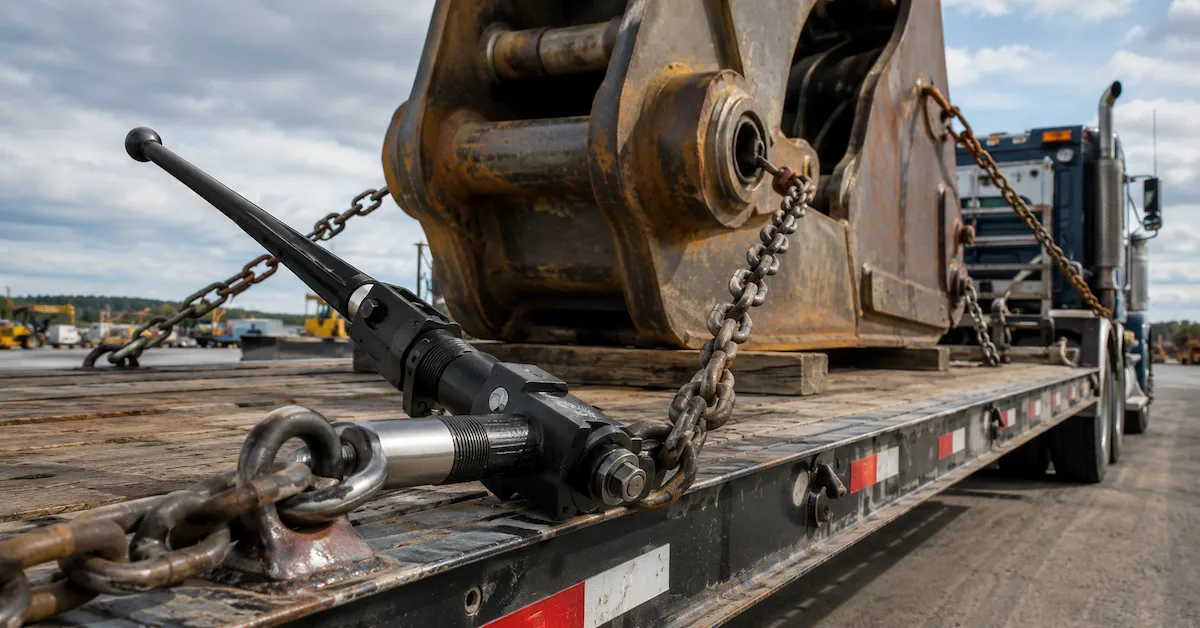
A torque tensioner is a mechanical device used to apply controlled tension to a chain or load-restraint system through rotational or mechanical input.
Its purpose is not simply to make a chain “tight.”
The real objective is to:
- Remove excessive slack
- Establish controlled restraint
- Maintain suitable chain engagement
- Support repeatable operation
- Integrate with rated securement components
This distinction matters in commercial transportation because tightening force, Working Load Limit, proof load, and ultimate load are different concepts.
Torque Is Not the Same as Working Load Limit
One of the most important technical points for B2B buyers is this:
Applied torque should not be treated as the WLL of the tensioner or the chain system.
Torque describes rotational input. WLL describes the rated load allowed for a component under its specified conditions of use.
The actual relationship between operator torque and resulting chain tension can be influenced by:
- Thread geometry
- Mechanical leverage
- Friction
- Lubrication
- Component wear
- Manufacturing tolerances
- Tensioner geometry
If an application requires a controlled torque-to-tension relationship, the buyer should request the manufacturer's applicable technical data rather than calculate cargo securement capacity from handle torque alone.
For U.S. commercial transport, 49 CFR §393.108 states that a tiedown's WLL is determined by the lowest-rated component—including the tensioner—or the anchor point, whichever is lower.
That makes the complete system more important than any single specification.
Who Buys Torque Tensioners in Bulk?
The keyword torque tensioner manufacturer carries strong commercial intent because most searchers using “manufacturer” are already beyond the basic product-awareness stage.
Typical B2B buyers include:
Cargo-Control Distributors
They need:
- Repeatable specifications
- Multiple order quantities
- Reliable packaging
- Product identification
- Stable replenishment
- OEM/private-label support
Flatbed and Heavy-Haul Equipment Buyers
Their priorities include:
- Chain compatibility
- Reliable tensioning
- Heavy-duty construction
- Outdoor durability
- Easy field operation
Transport Equipment Brands
Brands need a manufacturer capable of supplying the same specification across repeat production batches.
They also care about:
- Branding
- Packaging
- Inspection documentation
- Corrective-action support
- Supply continuity
Industrial and Trailer OEM Buyers
OEM customers may integrate cargo-control hardware into a broader equipment package.
Their RFQs often require:
- Drawings
- Defined dimensions
- Marking requirements
- Surface finishes
- Packaging standards
- Technical approval samples
Importers and Wholesalers
Importers need both product quality and commercial reliability.
Common concerns include:
- MOQ
- Production lead time
- Shipment consistency
- Export packaging
- Documentation
- Claim handling
Where Are Torque Tensioners Commonly Used?
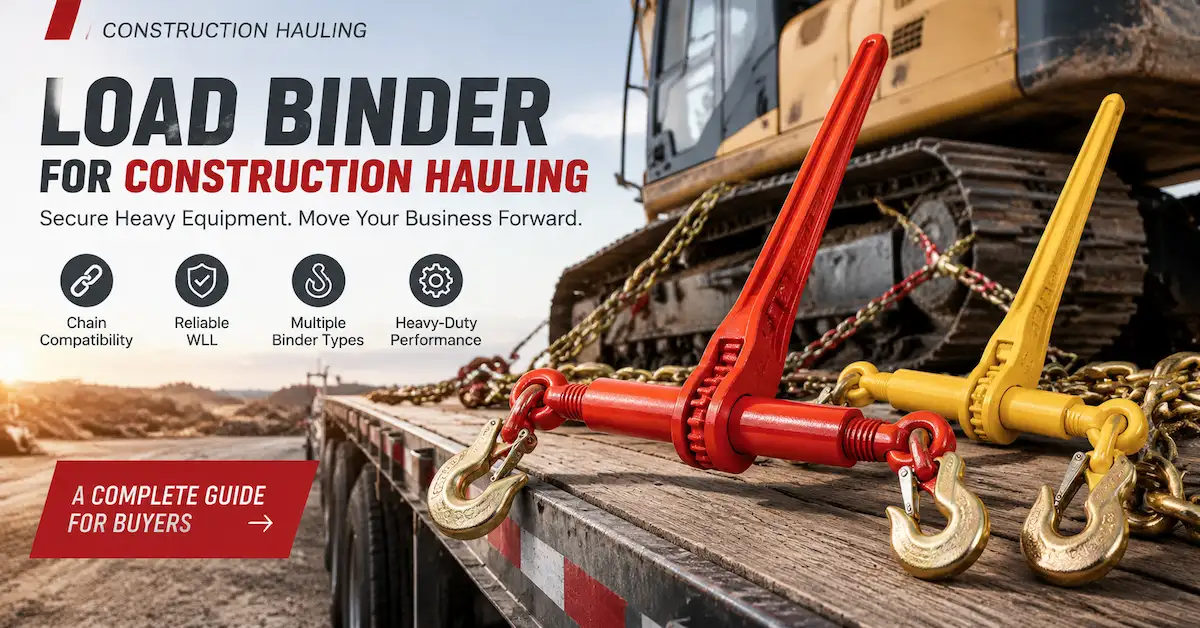
Torque-controlled or mechanically adjusted chain tensioning products are most relevant where heavy cargo must remain secured through vibration, braking, acceleration, and road movement.
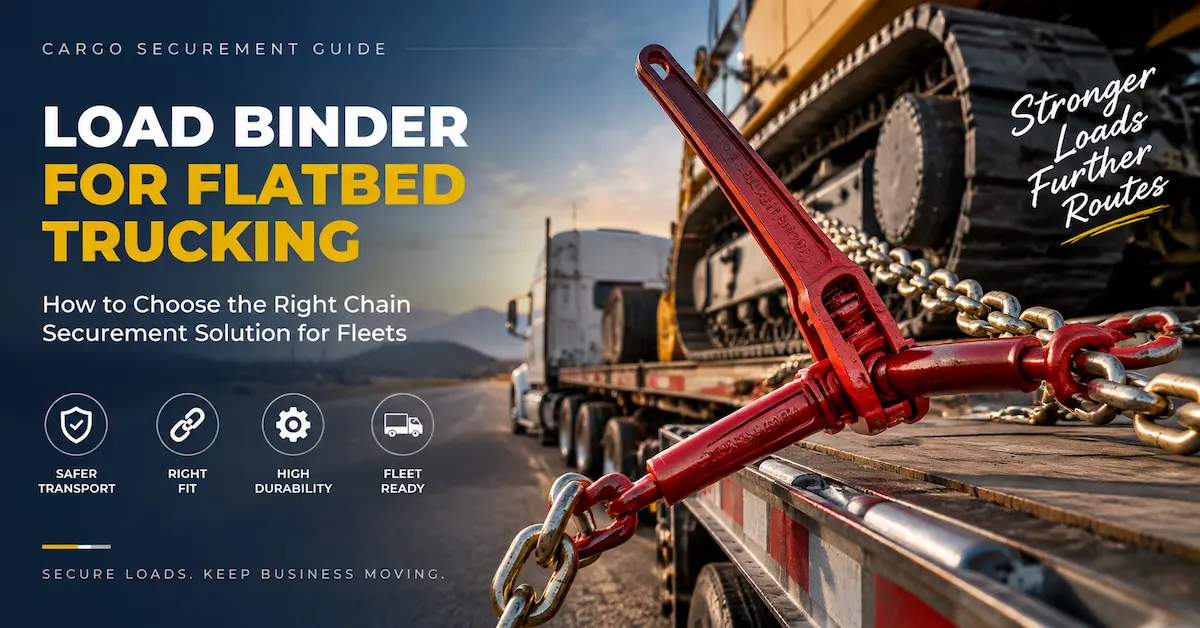
Flatbed Transportation
Typical loads include:
- Fabricated steel
- Industrial machinery
- Construction components
- Equipment modules
- Heavy materials
Cargo must be secured so that it remains immobilized or restrained during transport. Current U.S. cargo securement rules require cargo to be firmly immobilized or secured with structures, tiedowns, or other suitable restraint methods.
Heavy Equipment Hauling
Common cargo includes:
- Excavators
- Loaders
- Tractors
- Construction machinery
- Agricultural equipment
These applications place a premium on correct tiedown configuration rather than simply applying maximum possible tension.
Industrial Logistics
Factories may use chain restraint systems when transporting:
- Machinery assemblies
- Steel structures
- Fabricated components
- Production equipment
For repeat shipments, consistent tensioner operation and batch quality become especially important.
Construction Transportation
Construction environments add:
- Dust
- Mud
- Repeated handling
- Impact
- Outdoor exposure
Buyers serving these markets should evaluate surface protection and maintenance requirements in addition to rated performance.
Which Specifications Should Be in a Torque Tensioner RFQ?
A high-quality quotation starts with a high-quality RFQ.
Instead of sending:
“Please quote torque tensioners.”
professional buyers should provide an application specification.
| RFQ Item | Why It Matters |
|---|---|
| Chain size | Confirms hook and chain compatibility |
| Chain grade | Helps define the rated securement system |
| Required WLL | Establishes the rated requirement |
| Tensioner mechanism | Defines operating method |
| Take-up range | Determines available slack adjustment |
| Hook configuration | Affects chain engagement |
| Handle/input design | Affects field operation |
| Material requirement | Influences mechanical performance |
| Heat treatment | Affects controlled material properties |
| Surface finish | Addresses corrosion exposure |
| Proof-test requirement | Defines verification expectations |
| Product marking | Supports identification |
| Quantity | Determines production planning |
| Packaging | Important for distribution |
| Destination market | Helps identify documentation needs |
| OEM requirements | Defines branding/customization scope |
A Better RFQ Example
Instead of:
“Send your best price for 2,000 torque tensioners.”
send:
“We require 2,000 chain tensioners for flatbed equipment transport. Please confirm compatible chain size, WLL, take-up range, hook configuration, proof-testing method, surface finish, product marking, OEM packaging, production lead time, and sample availability.”
The second RFQ gives the manufacturer enough information to quote the correct product, not simply the cheapest one.
Why WLL Should Be Verified Before Price Negotiation
For safety-related transport hardware, WLL is a procurement gate—not a specification to discuss after price.
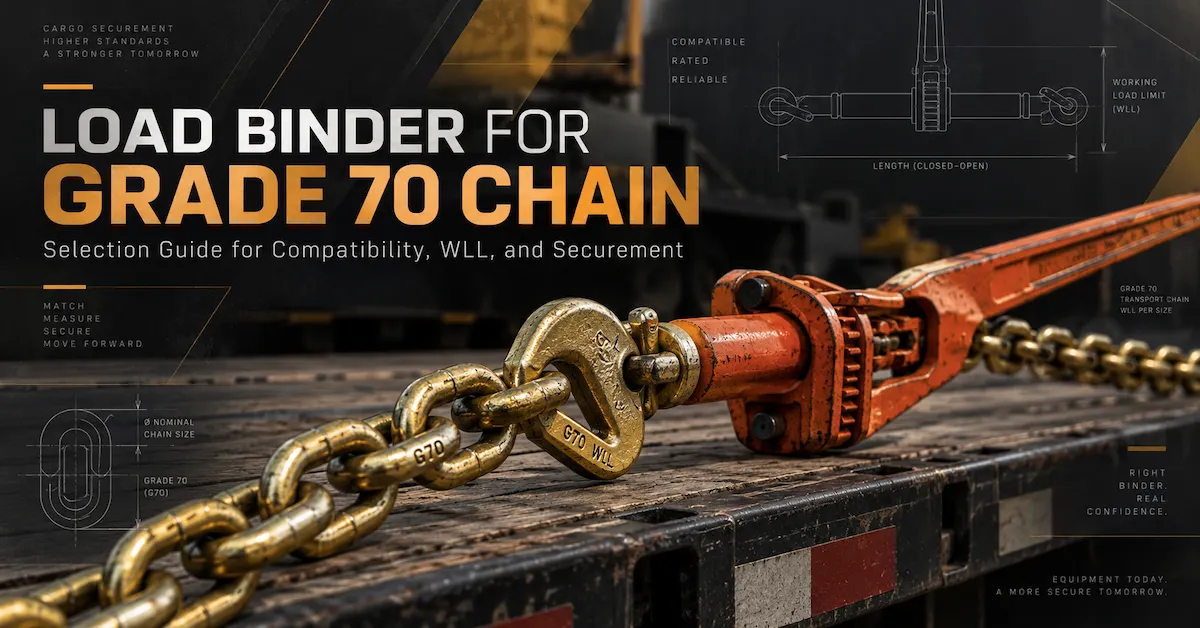
Under current 49 CFR §393.108, the WLL of a tiedown system is limited by its lowest-rated component or anchor point. The same section also provides reference WLL values for different grades and sizes of welded steel chain.
This creates a simple purchasing rule:
Do not buy the tensioner first and choose the chain later.
The buyer should establish the complete system requirement first:
Cargo → tiedown configuration → chain → tensioner → connector → anchor point
Why Overspecifying One Component Does Not Solve the Problem
Imagine a tensioner has a higher rating than the chain.
The system does not automatically inherit the tensioner's higher rating.
Likewise, using a higher-grade chain does not compensate for:
- An underrated tensioner
- A weaker connector
- An inadequate anchor point
- Incorrect installation
This system-level thinking is one of the most important differences between professional procurement and commodity buying.
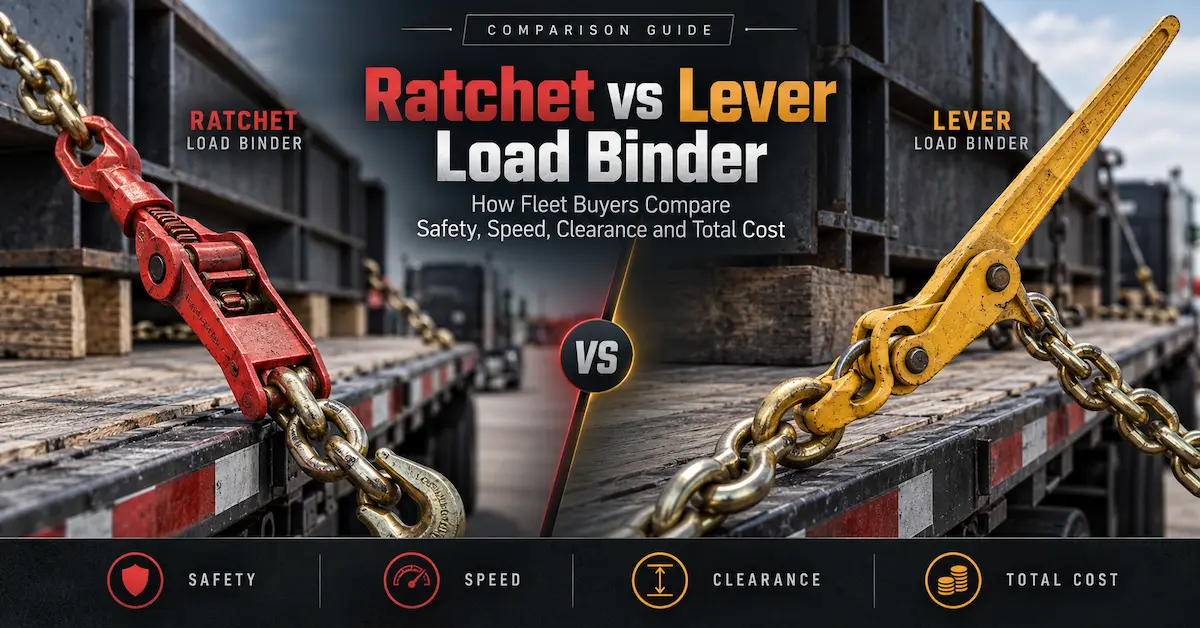
Torque Tensioner vs Ratchet, Lever, and Folding-Handle Binders
Buyers searching for a torque tensioner often compare different tensioning mechanisms before deciding which product family best matches their operation.
| Type | Operating Characteristic | Main Buyer Priority | Typical Use |
| Torque Tensioner | Controlled rotational/mechanical input | Repeatable tensioning and application control | Commercial cargo restraint |
| Ratchet Load Binder | Incremental ratchet adjustment | Fine tension adjustment | Frequent cargo securement |
| Lever Load Binder | Direct lever action | Fast operation | Heavy-haul transport |
| Folding Handle Binder | Foldable operating handle | Reduced protrusion | Limited-clearance applications |
| Indirect Load Binder | Cargo-system tensioning configuration | Flexible securement layout | Heavy transport |
The best product depends on application—not which design sounds more advanced.
Buyers comparing gradual ratchet operation can also review ZTL's Ratchet Load Binder sourcing guide.
For applications where space around the binder is restricted, the Folding Handle Load Binder guide covers a different purchasing scenario.
Why Forging Matters When Selecting a Manufacturer
A tensioner used in heavy transport experiences repeated mechanical loading.
This makes the manufacturing route important.
ZTL identifies forging and heat treatment among its primary manufacturing processes. Its public product information for several load binders also specifies drop-forged and heat-treated construction.
Raw Material Control
The manufacturer should know what material enters production and how incoming material is verified.
Important questions include:
- Is material identification recorded?
- Are supplier certificates checked?
- How are mixed-material risks prevented?
- How are nonconforming materials controlled?
Forging Control
Forging consistency depends on more than having a forging machine.
Production controls should address:
- Forming condition
- Die condition
- Part geometry
- Flash/trimming quality
- Surface defects
- Dimensional consistency
Machining and Assembly
Where threaded, rotating, or interacting mechanisms are used, fit and alignment influence operating consistency.
For a torque-controlled product, excessive dimensional variation can change:
- Operating feel
- Mechanical efficiency
- Wear
- Take-up behavior
This is why a torque tensioner manufacturer should be evaluated on process capability rather than product photos alone.
Why Heat Treatment Is a Procurement Issue
Heat treatment changes the mechanical properties of steel after forming.
From a sourcing perspective, the important issue is not simply whether heat treatment is mentioned in a catalog.
The real questions are:
- Is the process defined?
- Is it repeatable?
- Is it verified?
- Are batches traceable?
- What happens when results fall outside requirements?
Buyers ordering hundreds or thousands of units need consistency.
A single approved sample cannot prove future batch performance.
Proof Testing and Quality Control Should Be Agreed Before the PO
Proof testing is particularly valuable because it turns a general quality claim into a measurable verification activity.
ZTL's current public product range states that several of its load binder types are individually proof tested, while the company's About page describes material inspection, process inspection, and finished-product inspection as part of its quality system.
For the exact torque tensioner model being purchased, buyers should confirm the applicable test specification rather than assume that another binder's test parameters automatically apply.
Questions to Ask About Testing
Ask your torque tensioner manufacturer:
- What is tested?
- What load is applied?
- Is testing individual or sample-based?
- What is the acceptance criterion?
- Is test equipment calibrated?
- Are records retained?
- Can results be linked to the shipment batch?
- What happens to failed units?
Three Levels of QC to Expect
Incoming Inspection
Typical checks:
- Raw material identity
- Dimensions
- Surface condition
- Documentation
In-Process Inspection
Typical checks:
- Forging geometry
- Machined interfaces
- Thread or mechanism function
- Heat-treatment status
- Assembly
Final Inspection
Typical checks:
- Dimensions
- Functional operation
- Surface finish
- Marking
- Testing status
- Packaging
For B2B buyers, the key word is repeatability.
Surface Protection Should Match the Real Operating Environment
Cargo-control equipment is rarely used only indoors.
Common exposure conditions include:
- Rain
- Mud
- Road spray
- Humidity
- Dust
- Temperature cycling
- De-icing salts
- Long warehouse storage
A product can pass dimensional inspection and still generate complaints if the finish is unsuitable for its market.
Distributors should therefore tell the manufacturer whether the tensioner will be sold for:
- General inland trucking
- Agricultural transport
- Coastal regions
- Construction fleets
- Long-term outdoor storage
Rather than writing “anti-rust finish” in the RFQ, define the expected environment and ask the manufacturer to propose a suitable treatment.
How Should Importers Evaluate a Torque Tensioner Manufacturer?
A manufacturer audit should combine technical and commercial factors.
1. Is the Product Within the Manufacturer's Core Capability?
A factory specializing in forged rigging and cargo-control hardware is more relevant than a general metal-products supplier.
2. Can the Supplier Explain the Load Path?
The technical team should understand:
- How tension is generated
- How the chain connects
- Which components carry load
- Which specifications limit performance
3. Can the Supplier Support Repeat Orders?
Ask about:
- Capacity
- Production scheduling
- Tooling
- Raw material availability
- Batch controls
4. Can the Supplier Support Documentation?
Depending on the buyer's market, required documentation may include:
- Technical specification
- Inspection records
- Product markings
- Packaging information
- Material documentation
- Test records
5. Is OEM Support Engineering-Led?
A professional OEM discussion should separate cosmetic customization from structural changes.
Changing:
- Carton artwork
- Label
- Color
- Brand marking
is different from changing:
- Hook geometry
- Load-bearing section
- Handle length
- Thread design
- Material
Structural modifications may affect performance and should be reviewed before approval.
ZTL Manufacturing Capacity for B2B Buyers
Ningbo Zhongteli Rigging Co., Ltd. states that it was established in 2008 and operates a manufacturing facility of about 15,000 m² with more than 50 production lines and 200+ skilled workers. Its site reports ISO 9001 quality management and exports to more than 20 countries and regions.
The company also reports annual load binder production of approximately 500,000 sets.
For procurement teams, these numbers are useful supplier-qualification indicators, but capacity for a specific order should still be confirmed before a PO is issued.
Buyers can review About ZTL Rigging for the company's current manufacturing information.
OEM Torque Tensioner Options for Distributors and Brands
An OEM torque tensioner project can involve more than placing a logo on a standard unit.
Commercial customization may include:
- Product marking
- Handle/finish color
- Labels
- Barcode
- Carton artwork
- Private-label packaging
- Instruction sheets
- Export packaging
- Market-specific identification
Technical customization may involve:
- Dimensions
- Hook interfaces
- Take-up range
- Mechanism configuration
These changes require greater engineering review because they may affect product performance.
What Should an OEM Buyer Send?
A useful OEM brief includes:
- Product/application description
- Chain grade and size
- Required WLL
- Required quantity
- Target market
- Expected operating environment
- Product marking
- Packaging specification
- Testing requirements
- Target delivery schedule
If drawings or existing samples are available, include them at the beginning of the project rather than after quotation.
What Really Determines Torque Tensioner Cost?
Professional procurement should not compare only FOB unit prices.
Several factors influence final cost:
Material and Product Size
More material or higher mechanical requirements can increase manufacturing cost.
Forging and Machining Complexity
Complex components can require:
- Additional tooling
- More machining
- Tighter dimensional control
Heat Treatment
Defined process requirements add production and quality-control steps.
Testing
Individual or enhanced testing affects cost differently from sample inspection.
Surface Treatment
Different corrosion-protection systems have different process costs.
Packaging
Private-label cartons, retail packaging, or reinforced export packaging affect total landed cost.
Order Quantity
Batch size influences tooling allocation, production setup, inspection efficiency, and unit pricing.
The Cheapest Tensioner Can Be the Most Expensive Purchase
For distributors and OEM brands, sourcing risk has a monetary value.
Common Hidden Costs
- Customer returns
- Reinspection
- Incorrect chain compatibility
- Shipment delays
- Corrosion complaints
- Documentation corrections
- Repacking
- Product recalls
- Emergency replacement orders
A better commercial comparison is:
Unit price + quality risk + compliance risk + logistics risk + after-sales risk
Supplier Comparison Checklist
| Evaluation | Manufacturer A | Manufacturer B | Manufacturer C |
| Chain compatibility confirmed | ✓ / ✕ | ✓ / ✕ | ✓ / ✕ |
| WLL documented | ✓ / ✕ | ✓ / ✕ | ✓ / ✕ |
| Forging capability | ✓ / ✕ | ✓ / ✕ | ✓ / ✕ |
| Heat-treatment control | ✓ / ✕ | ✓ / ✕ | ✓ / ✕ |
| Proof-test method defined | ✓ / ✕ | ✓ / ✕ | ✓ / ✕ |
| Batch traceability | ✓ / ✕ | ✓ / ✕ | ✓ / ✕ |
| OEM support | ✓ / ✕ | ✓ / ✕ | ✓ / ✕ |
| Export packaging | ✓ / ✕ | ✓ / ✕ | ✓ / ✕ |
| Technical response quality | High/Low | High/Low | High/Low |
| Lead time confirmed | ✓ / ✕ | ✓ / ✕ | ✓ / ✕ |
This table gives procurement teams a better basis for supplier approval than price alone.
When Should Buyers Request a Pre-Production Sample?
A sample is particularly important when:
- Changing manufacturers
- Launching a new product line
- Introducing a private-label product
- Changing chain compatibility
- Changing surface treatment
- Modifying the mechanism
- Entering a new market
- Placing a large first order
The recommended workflow is:
Requirement → Technical Review → Quotation → Sample → Inspection → Written Approval → Mass Production → Pre-Shipment Inspection
ZTL describes its general service workflow as requirements analysis, solution design, production manufacturing, and quality assurance.
This sequence is especially useful for OEM projects because it creates an agreed reference before volume production begins.
A Buyer Cheat Sheet Before Sending Your Inquiry
For faster technical evaluation, prepare these details before contacting a manufacturer:
| Buyer Information | Example |
| Application | Flatbed machinery transport |
| Chain grade | Specify required grade |
| Chain size | Specify diameter |
| WLL requirement | Specify rated requirement |
| Quantity | Initial + annual forecast |
| Environment | Outdoor / coastal / construction |
| Finish | State requirement or ask for recommendation |
| Testing | Define required documentation |
| Branding | Logo / marking / label |
| Packaging | Bulk / branded carton |
| Market | US / EU / other |
| Delivery | Required shipment window |
An inquiry containing this information is far more likely to receive a technically useful quotation.
FAQ
What is a torque tensioner?
A torque tensioner is a mechanical tensioning device that uses rotational or mechanical input to remove slack and apply controlled tension in a chain or load-restraint system. The exact mechanism depends on the product design.
Is torque the same as Working Load Limit?
No. Torque is rotational input, while WLL is the rated working capacity of a component. Buyers should use manufacturer ratings and applicable securement requirements rather than infer WLL from operating torque.
What information should I give a torque tensioner manufacturer?
Provide chain size and grade, required WLL, application, quantity, take-up requirement, destination market, operating environment, finish, testing requirements, packaging, and OEM needs.
How do I choose the correct chain size?
Select the chain based on the required securement system and then confirm that the tensioner's hooks and rated specifications are compatible with that exact chain size and grade.
Is the strongest tensioner always the safest choice?
No. The securement system is limited by its lowest-rated component or anchor point under U.S. tiedown rules. Correct system matching is more important than oversizing a single component.
Should torque tensioners be proof tested?
The applicable testing requirement depends on the model and buyer specification. Buyers should confirm the manufacturer's proof-test method, acceptance criteria, testing frequency, and documentation before ordering.
Can ZTL support OEM torque tensioners?
ZTL states that it provides custom product solutions for rigging customers. Buyers should submit structural requirements separately from branding and packaging changes so the technical team can evaluate feasibility.
What should distributors check before a bulk order?
Confirm the approved specification, chain compatibility, WLL, testing, markings, finish, packaging, batch traceability, lead time, and pre-shipment inspection requirements.
How is a torque tensioner different from a ratchet load binder?
The terms can overlap depending on product design. A ratchet binder specifically describes a ratcheting mechanism, while “torque tensioner” emphasizes applying controlled mechanical or rotational input. Buyers should compare actual specifications rather than rely on naming alone.
Where can I request a ZTL quotation?
Prepare your chain specification, WLL requirement, quantity, application, destination market, testing needs, and OEM requirements, then submit them through Contact ZTL Rigging for technical review and quotation.
Conclusion
Choosing a torque tensioner manufacturer should begin with the securement system—not the supplier's price list.
For distributors, fleet buyers, cargo-control brands, and OEM customers, the most important purchasing factors are:
- Chain compatibility
- Working Load Limit
- Take-up and operating method
- Forged construction
- Heat-treatment control
- Proof testing
- Surface protection
- Batch consistency
- Traceability
- OEM capability
- Reliable volume supply
The key procurement lesson is simple:
Do not ask only how much torque a tensioner can apply. Ask whether the complete product specification, rated load, chain interface, manufacturing process, testing system, and production batch can be verified.
ZTL Rigging has manufactured rigging products since 2008 and reports capabilities in forging, heat treatment, surface treatment, quality inspection, customization, and global export supply.
For a more accurate quotation, send ZTL your chain size, chain grade, required WLL, order quantity, application, target market, operating environment, surface finish, testing requirements, and OEM packaging needs through the ZTL inquiry page.
A complete technical RFQ helps the manufacturer recommend the right configuration faster—and helps your procurement team compare suppliers on total sourcing value rather than unit price alone.