English


How to Choose a Load Binder for Grade 70 Chain
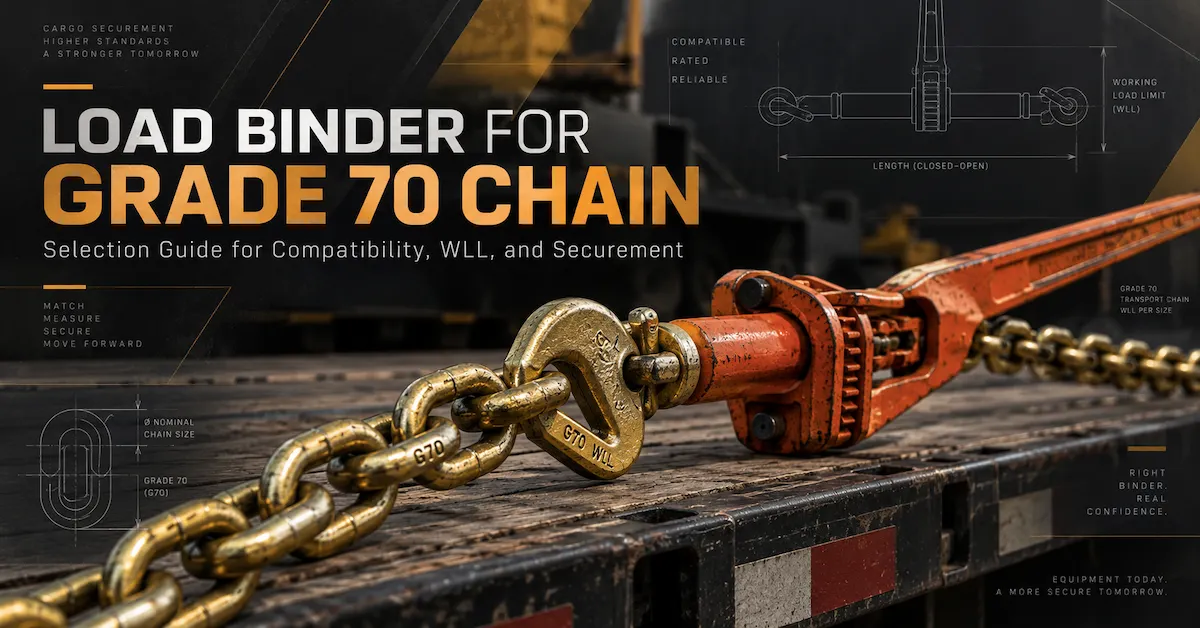
A load binder for Grade 70 chain should be selected as part of a complete cargo securement system rather than as an independent component. Buyers need to confirm that the binder matches the chain size, chain grade, Working Load Limit (WLL), hook design, adjustment range, and intended transportation application.
Grade 70 transport chain is commonly used in cargo securement applications because of its strength-to-weight characteristics. However, choosing a compatible binder requires more than matching the chain diameter. The binder, chain, hooks, and attachment points should be evaluated together to ensure the selected combination meets the buyer’s application requirements.
ZTL provides multiple Load Binder solutions, including ratchet load binders, lever load binders, folding handle load binders, indirect tensioners, EU type tensioners, and torque tensioners. These options allow buyers to select different operating styles according to their chain system, working environment, and purchasing requirements.
Why Grade 70 Chain Compatibility Matters for Load Binder Selection
A common mistake during procurement is choosing a binder only according to chain size. While chain diameter is important, it does not provide complete information about the securement system.
When selecting a load binder for Grade 70 chain, buyers should confirm:
| Item | Why It Matters |
|---|---|
| Chain grade | Determines compatibility with the binder system |
| Chain size | Ensures proper hook engagement |
| Working Load Limit | Defines allowable working capacity |
| Hook design | Influences connection reliability |
| Take-up range | Determines adjustment capability |
| Handle clearance | Affects operation in real applications |
| Application environment | Influences finish and maintenance requirements |
ZTL’s Load Binder Size Chart and Chain Compatibility Guide explains the importance of reviewing chain specifications, binder dimensions, and rated values together.
For professional buyers, the goal is not simply finding a binder that physically connects to the chain. The goal is confirming that the complete securement combination matches the transportation requirement.
Who Typically Buys Grade 70 Chain Load Binders?
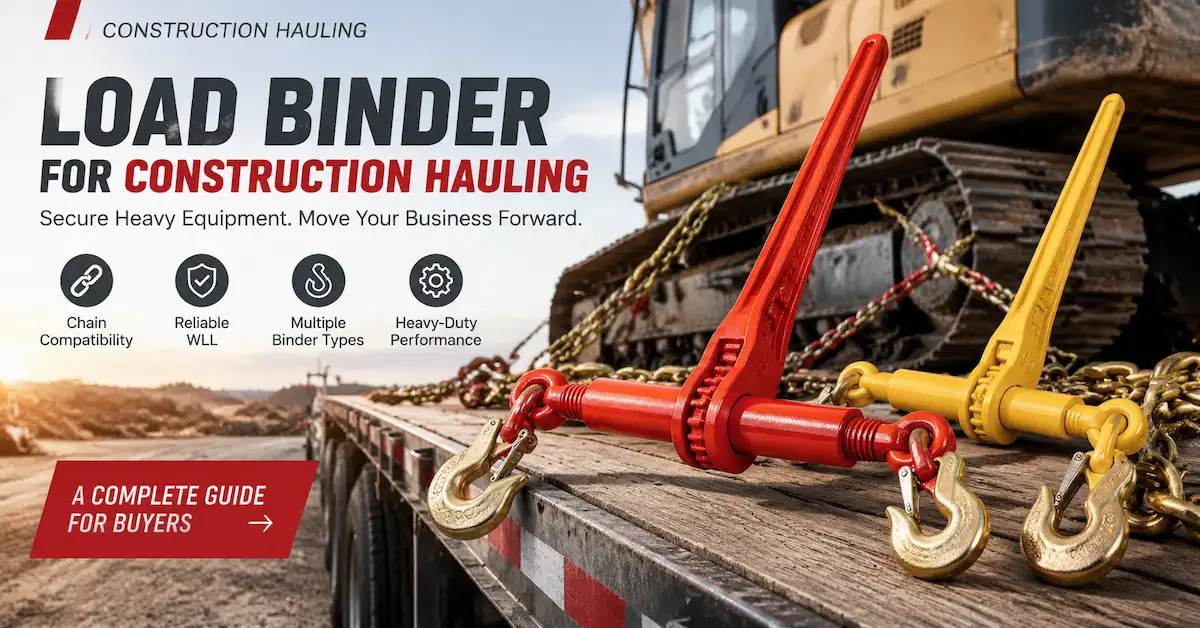
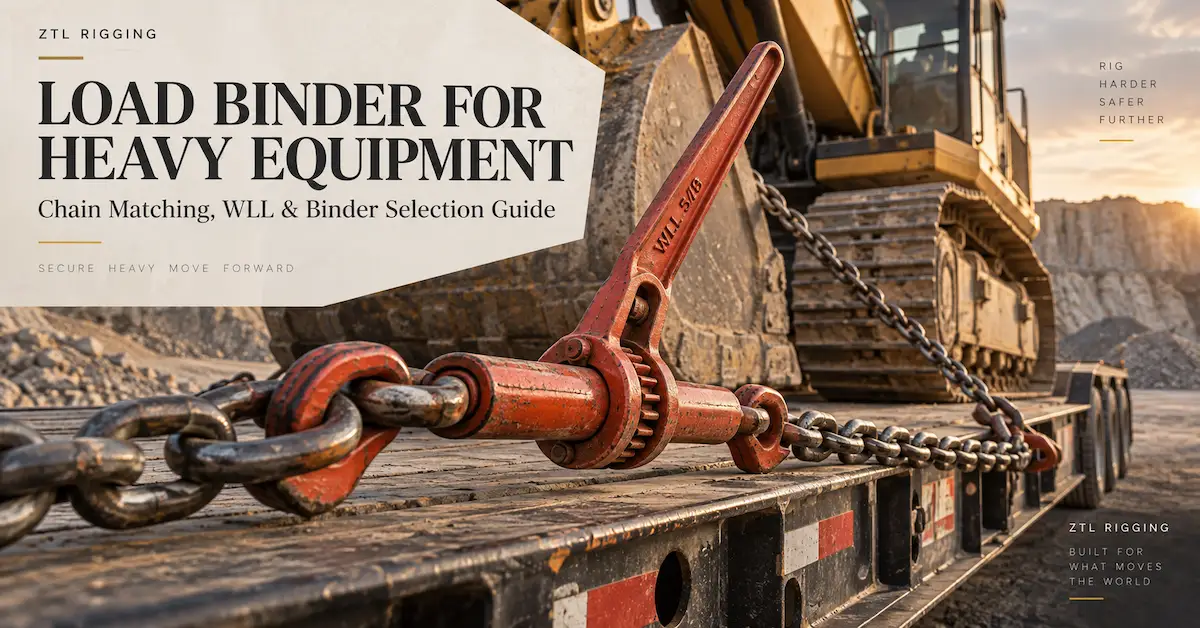
Heavy Equipment Transportation Companies
Companies transporting excavators, loaders, tractors, and industrial machinery often use Grade 70 chain systems for equipment securement.
Their main concerns include:
- Correct chain and binder compatibility
- Fast installation during loading operations
- Sufficient operating clearance
- Repeatable performance across multiple transport jobs
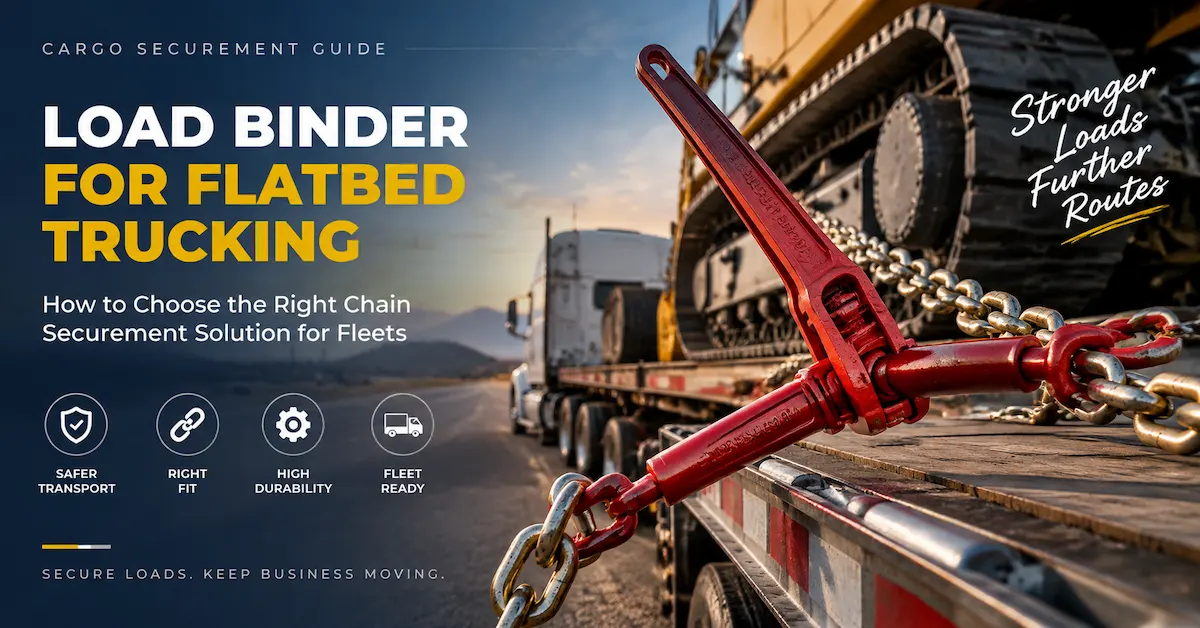
Flatbed Trucking Fleets
Flatbed operators require products that support repeated daily use.
Typical purchasing priorities include:
- Consistent product quality
- Easy operator training
- Clear product identification
- Reliable replacement supply
Cargo Securement Distributors
Distributors need product ranges that cover different customer applications.
They usually focus on:
- Multiple binder styles
- Clear specifications
- Packaging requirements
- Stable inventory supply
OEM and Private Label Buyers
OEM customers often require:
- Custom marking
- Packaging solutions
- Product documentation
- Consistent production batches
For these buyers, supplier capability and quality management are as important as the product itself.
Understanding Working Load Limit When Using Grade 70 Chain
WLL Is the Key Purchasing Reference
Working Load Limit (WLL) represents the maximum allowable working load under specified conditions.
When purchasing a load binder for Grade 70 chain, buyers should avoid comparing products using unclear terms such as:
- Heavy duty
- High strength
- Industrial grade
- Maximum strength
Instead, compare:
- WLL
- Proof load
- Ultimate load
- Chain compatibility
- Product markings
These values describe different aspects of product performance and should not be used interchangeably.
Why Proof Load and Ultimate Load Should Be Separated
A proof load is a testing value used during product verification. It is not the same as the allowable working capacity.
Ultimate load relates to failure testing and should not be considered a normal operating value.
A professional RFQ should clearly identify which rating information is required.
How to Match a Binder With Grade 70 Chain Size
A correct selection requires matching the binder to the exact chain specification.
Before ordering, buyers should provide:
| Required Information | Example |
|---|---|
| Chain grade | Grade 70 |
| Chain size | Diameter specification |
| Required WLL | Working load requirement |
| Application | Equipment transport or cargo securement |
| Binder style | Ratchet, lever, folding handle |
| Quantity | Trial order or bulk purchase |
ZTL’s Load Binder Product Range includes different binder structures designed for different transportation requirements.
The selected binder should provide suitable hook engagement and adjustment capability without forcing operators to modify the product or use it outside its intended application.
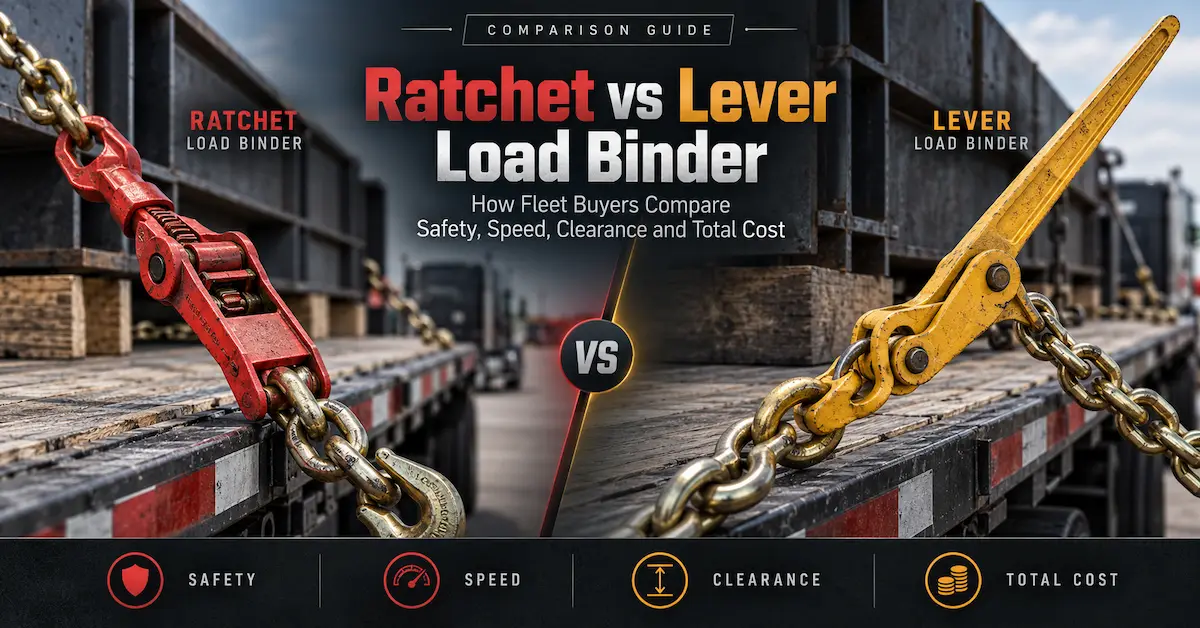
Ratchet Load Binder for Grade 70 Chain Applications
A ratchet load binder is often selected when operators need controlled adjustment during cargo securement.
Important evaluation points include:
Adjustment Range
The binder should provide enough take-up capability to remove chain slack while maintaining the approved operating condition.
Hook Compatibility
The hooks should properly engage with the selected Grade 70 chain size.
Operating Environment
Flatbed and equipment transport environments may include:
- Dust
- Mud
- Rain
- Road contamination
- Frequent handling
Buyers should consider maintenance requirements and inspection procedures.
ZTL’s Ratchet Load Binder information highlights product features including ratchet operation, forged construction, customization options, and securement applications.
Lever Load Binder for Grade 70 Chain Applications
Lever load binders remain widely used in transportation because of their direct operating method.
When selecting a lever binder, buyers should evaluate:
- Handle movement
- Available operating space
- Hook configuration
- Chain compatibility
- Product marking
ZTL’s Lever Type Load Binder describes forged steel construction, heat treatment, swivel hooks, proof testing information, and customization options.
However, the correct selection still depends on the complete chain and cargo securement system.
Folding Handle Load Binder for Limited Clearance Applications
Some transportation applications have limited space around the cargo.
Examples include:
- Machinery with large structures
- Equipment with narrow tie-down areas
- Flatbed trailers with restricted access
- Dense cargo arrangements
A folding handle design can help reduce unnecessary handle projection.
ZTL’s Folding Handle Load Binder Guide explains how this design can support applications where clearance is an important consideration.
Before approval, buyers should confirm:
| Inspection Item | Purpose |
|---|---|
| Folded dimensions | Check storage clearance |
| Handle operation | Confirm usability |
| Hinge structure | Evaluate durability |
| WLL | Confirm securement requirement |
| Chain compatibility | Prevent incorrect matching |
Manufacturing and Quality Control Considerations
For international buyers, selecting a supplier involves evaluating both product specifications and manufacturing capability.
ZTL describes manufacturing capabilities including forging, heat treatment, surface treatment, inspection, and customization on its About Us page.
A buyer evaluating a Grade 70 chain binder supplier should consider:
| Quality Area | Buyer Question |
|---|---|
| Material | Are materials controlled by specification? |
| Forging | Are forged components consistent? |
| Heat treatment | Is the process verified? |
| Dimensions | Are hooks and threads inspected? |
| Testing | Are inspection requirements defined? |
| Marking | Are ratings traceable? |
| Finish | Is corrosion protection suitable? |
Supplier capability should always be connected with the specific product being purchased.
A general factory statement is useful background information, but the approved drawing, specification, and inspection requirements should control production.
Surface Protection Requirements for Transport Binders
Grade 70 chain binders are commonly used outdoors, where exposure may include:
- Rain
- Dust
- Road salt
- Construction environments
- Long-term storage
Buyers should define the actual environment before selecting a finish.
Important questions include:
- What coating system is applied?
- Which components receive protection?
- Are moving parts treated differently?
- What appearance requirements apply?
- How is coating quality inspected?
The purpose is not simply preventing corrosion visually. The finish should support the actual transportation environment and maintenance process.
OEM Customization for Grade 70 Chain Binder Projects
OEM buyers may require customization beyond the standard product.
Possible requirements include:
- Brand marking
- Packaging design
- Product labels
- Color requirements
- Documentation
- Specific configurations
However, different customization types involve different levels of technical impact.
| Customization Type | Impact |
|---|---|
| Logo marking | Mainly identification |
| Packaging | Distribution requirement |
| Color change | Appearance requirement |
| Dimension change | Engineering review required |
| Structural change | Validation may be required |
For OEM projects, buyers should define requirements before sample approval and bulk production.
How to Prepare an RFQ for Grade 70 Chain Load Binders
A complete RFQ helps suppliers provide accurate recommendations.
Include:
| RFQ Information | Details |
|---|---|
| Application | Flatbed trucking, equipment transport, cargo securement |
| Chain specification | Grade 70 and size |
| Required WLL | Working load requirement |
| Binder type | Ratchet, lever, folding handle |
| Quantity | Initial order and forecast |
| Packaging | Bulk or individual |
| Branding | OEM requirements |
| Testing | Required documents |
| Destination | Target market |
Buyers can submit project information through the ZTL Contact Us page.
Common Mistakes When Buying Load Binder for Grade 70 Chain
Choosing Only by Chain Diameter
Diameter alone does not define complete compatibility.
Ignoring WLL Information
A binder should be selected according to rated working requirements, not marketing descriptions.
Mixing Different Rating Concepts
Proof load and ultimate load should not replace WLL.
Using One Binder for Every Application
Different cargo, trailer layouts, and operating environments may require different solutions.
Ordering Without Technical Confirmation
Before bulk purchasing, confirm:
- Product specification
- Chain compatibility
- Inspection requirements
- Packaging details
Frequently Asked Questions
What is a load binder for Grade 70 chain?
It is a chain tensioning device designed to work with compatible chain systems for cargo securement applications. The binder must match chain size, grade, and required WLL.
Can any load binder be used with Grade 70 chain?
No. The binder should be selected according to chain compatibility, hook design, and rated requirements.
Should I choose a ratchet or lever binder for Grade 70 chain?
The choice depends on operating requirements. Ratchet binders provide controlled adjustment, while lever binders provide direct operation.
What information should I provide when ordering?
Provide chain grade, chain size, required WLL, application, quantity, packaging requirements, and customization needs.
Can Grade 70 chain binders be customized?
Yes. Customization may include branding, packaging, and selected product requirements. The exact scope should be confirmed with the supplier.
Why is WLL important for chain binder selection?
WLL provides the working capacity reference needed to evaluate whether the binder fits the intended securement application.
Can I use a heavier binder instead of matching the chain?
No. The complete securement system should be evaluated, including chain, binder, and attachment points.
What quality documents should buyers request?
Buyers may request specifications, inspection information, testing requirements, and production records according to project needs.
How do distributors choose Grade 70 chain binders?
Distributors should consider customer applications, chain sizes, product range coverage, packaging, and supplier consistency.
How can I request a quotation from ZTL?
Provide your chain specification, required WLL, application, quantity, and customization requirements through the ZTL Contact Us page.
Conclusion
Selecting a load binder for Grade 70 chain requires careful evaluation of chain compatibility, Working Load Limit, hook design, binder structure, operating conditions, and supplier capability. For transportation companies, distributors, and OEM buyers, the correct product choice comes from matching the binder with the complete cargo securement system rather than selecting by appearance or price alone.
ZTL provides different Load Binder solutions, including ratchet, lever, folding handle, indirect, EU type, and torque tensioner designs for different cargo securement requirements. Buyers preparing a Grade 70 chain binder project can contact ZTL with chain specifications, application details, required ratings, quantity, and customization requirements to evaluate the suitable product configuration.