English


What Should a Side Wind Jack Manufacturer Confirm Before You Order?
A side wind jack manufacturer should help a buyer turn a general trailer-jack request into a controlled purchasing specification. Capacity is only the first filter. Trailer manufacturers and distributors should also confirm the load at the jack location, mounting interface, required operating travel, retracted and extended dimensions, crank-handle clearance, surrounding trailer components, surface protection, product identification, inspection requirements, and packaging. ZTL currently lists several side-wind configurations in its trailer jack product range, allowing buyers to begin with an existing capacity family and then determine what still needs to be confirmed for the actual trailer. The strongest RFQ is therefore not “quote a side wind jack,” but a drawing- and application-based request that identifies the conditions the selected product must satisfy.
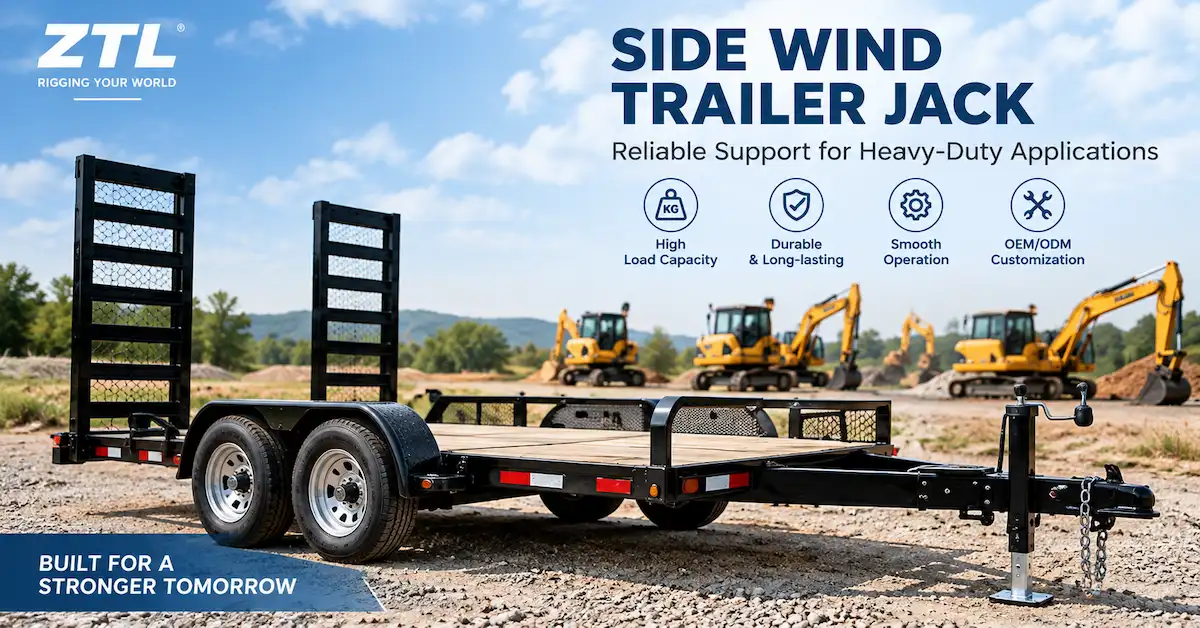
Which Buyers Are a Good Fit for Side-Wind Trailer Jacks?
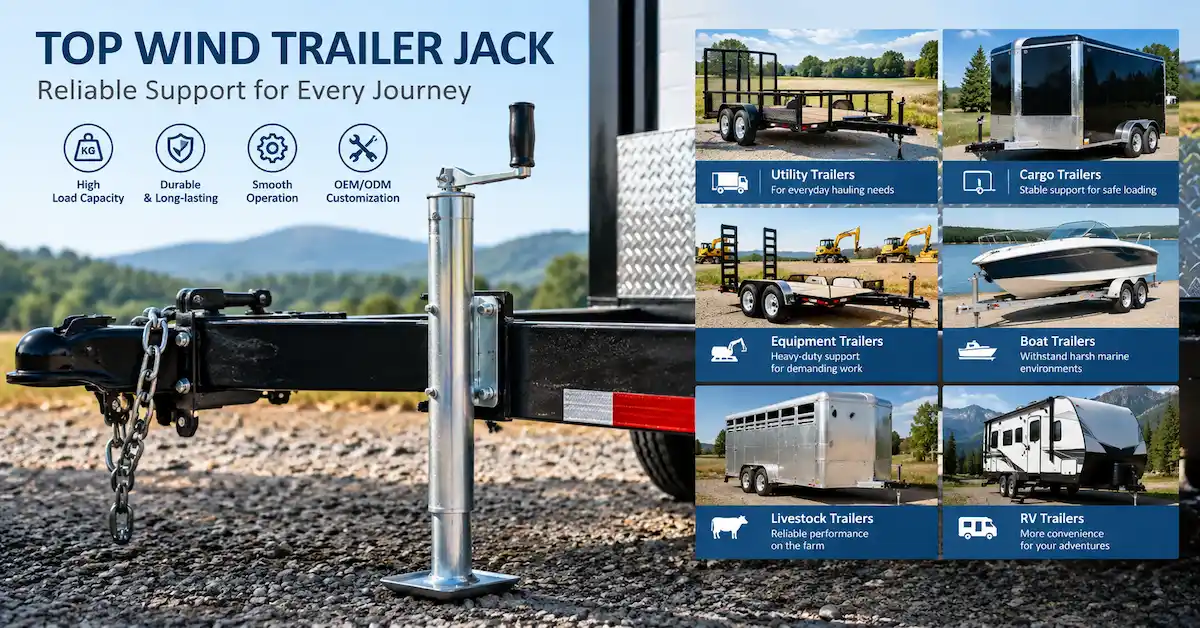
Side-wind designs are particularly relevant to utility-trailer manufacturers, equipment-trailer builders, cargo-trailer companies, agricultural-trailer suppliers, trailer-parts distributors, fleet maintenance programs, and private-label brands that have usable operating space beside the trailer tongue or frame. These buyers often need repeatable mounting dimensions and predictable crank access across an entire trailer range rather than a jack that merely works on one sample unit. A distributor may focus on replacement compatibility and clear capacity identification, while an OEM engineer may prioritize installation geometry, crank envelope, travel, component consistency, and change control. A side-wind configuration is less appropriate when adjacent toolboxes, drawbar members, winch structures, safety-chain arrangements, wiring, or other components obstruct the side crank. ZTL's trailer jack selection guide explains why top-wind and side-wind layouts should be chosen according to actual clearance rather than assuming one design is universally better.
Where Are Side-Wind Jacks Commonly Evaluated?
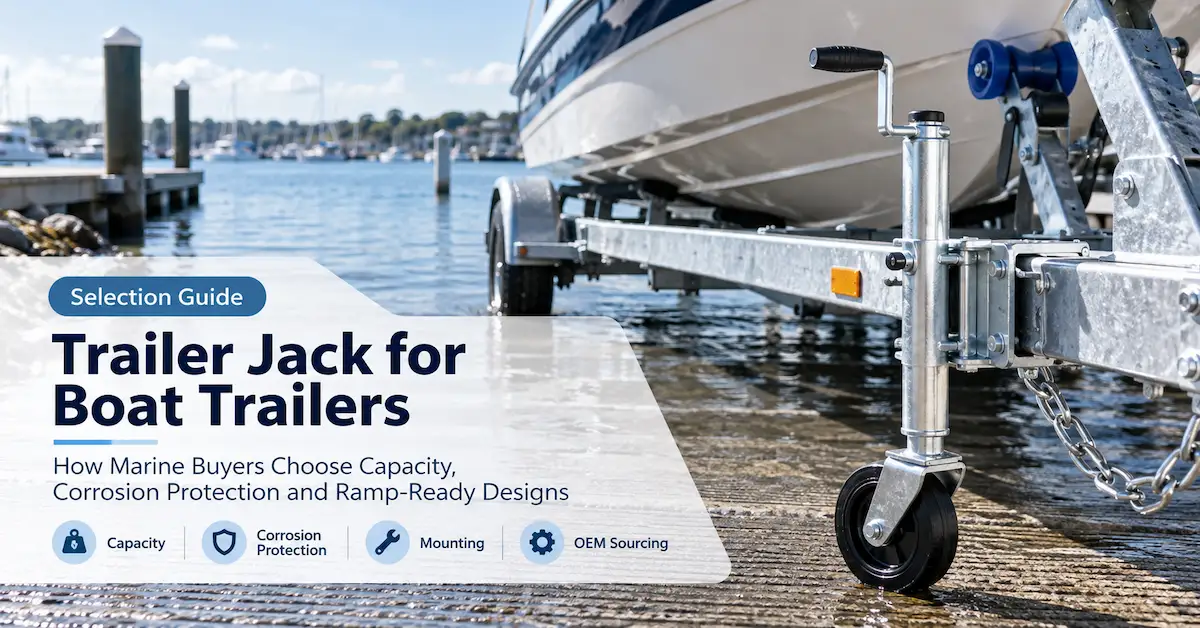
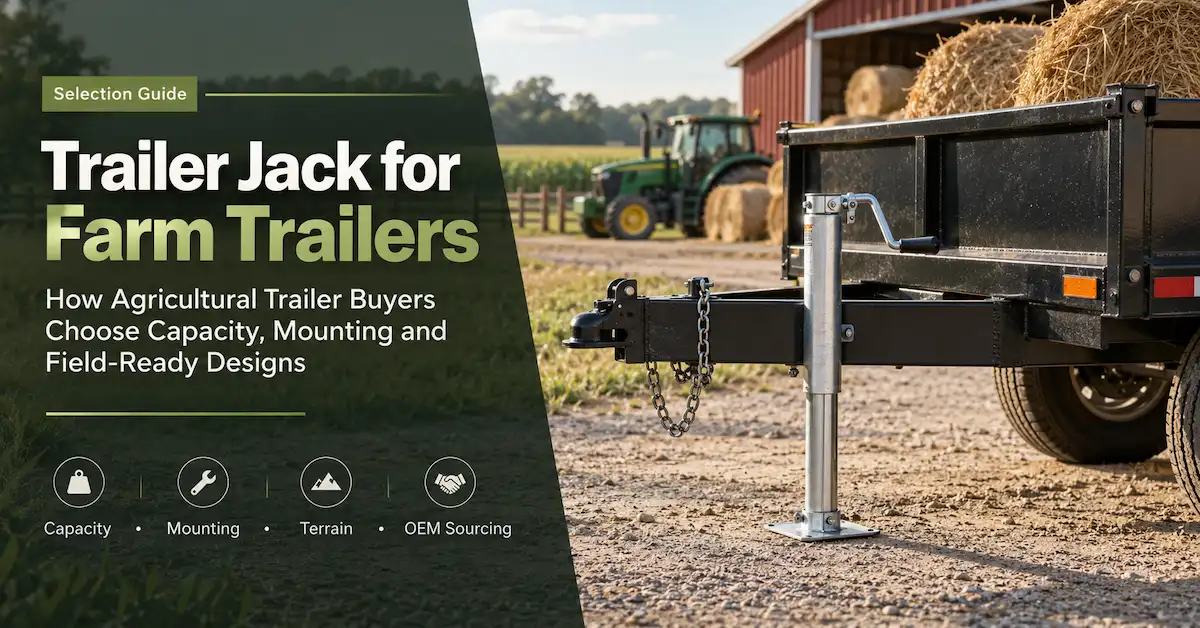
The same side-wind jack can face very different purchasing requirements depending on the trailer. A utility trailer may need frequent coupling and uncoupling with simple operator access. An equipment trailer may have higher loads and more structural members around the tongue. Agricultural trailers can encounter dirt, moisture, outdoor storage, and repeated operation, while boat-trailer projects may introduce more demanding corrosion concerns. Cargo and commercial trailer manufacturers may prioritize assembly-line repeatability, standardized interfaces, packaging, and replacement-part identification. For every application, the useful question is not simply whether a side-wind jack “can be used,” but whether the selected configuration has the right capacity definition, mounting geometry, stroke, operating clearance, finish, and maintenance conditions for that specific trailer. Buyers comparing different configurations can start from ZTL's complete trailer jack category before requesting model-specific documentation.
Build a Technical RFQ Before Asking for a Price
A professional side wind jack manufacturer should receive the same technical inputs that your engineering and quality teams will later use for approval. This prevents quotations from appearing comparable when suppliers have actually interpreted the application differently. The following specification table is intended as an RFQ structure; where ZTL has not publicly stated a model-specific value, that value should be confirmed through the selected product drawing or quotation rather than assumed.
| Specification Area | What the Buyer Should Provide or Confirm | Why It Matters |
|---|---|---|
| Trailer application | Utility, equipment, cargo, agricultural, boat or other trailer | Establishes operating context |
| Load requirement | Maximum load expected at the jack location | Supports correct capacity review |
| Capacity definition | Required lifting/support rating and applicable conditions | Prevents rating misunderstandings |
| Mounting method | Weld-on, bolt-on or project-specific interface | Determines installation compatibility |
| Mounting dimensions | Tube, bracket, holes, reference surfaces and clearances | Prevents assembly mismatch |
| Travel | Required operating stroke | Determines usable height adjustment |
| Retracted height | Minimum installation/storage height | Checks fit when the trailer is lowered |
| Extended height | Required maximum operating position | Checks coupling and leveling range |
| Side-crank clearance | Full handle rotation envelope | Prevents interference |
| Surface finish | Environmental and appearance requirement | Defines corrosion-protection expectation |
| Identification | Model, rating label, batch or traceability needs | Supports receiving and service |
| Documentation | Drawings, inspection records and required certificates | Defines approval evidence |
| Packaging | Individual/bulk packaging and label requirements | Supports distribution and assembly |
Understand the Side-Crank Clearance Before Freezing the Design
Side-wind and top-wind do not describe capacity; they describe the location and movement of the operating handle. For a side-wind configuration, the buyer needs sufficient space beside the jack for the crank to move through its required path. That clearance should be checked against the trailer frame, coupler, drawbar braces, storage boxes, wiring, safety chains, spare-wheel arrangements, towing-vehicle clearance, and any accessories fitted close to the tongue. ZTL's current OEM guide describes side-wind models as practical where open side clearance supports comfortable crank operation and lists 2,000 lb, 5,000 lb, and 12,000 lb side-wind configurations in the current range. A useful engineering drawing should therefore show not only where the jack mounts, but also the space required during operation.
For a trailer manufacturer with multiple variants, repeat this clearance check for every configuration expected to use the same jack. A toolbox fitted to a premium trailer model, for example, may change the available crank envelope even when the main frame remains unchanged. Approving the jack on the base trailer alone can therefore create an avoidable assembly problem later. Record the clearance decision in the product approval package so future design changes trigger a deliberate review rather than allowing the original assumption to carry forward unnoticed.
Compare ZTL's 2,000 lb, 5,000 lb, and 12,000 lb Side-Wind Options
ZTL's current catalogue lists three side-wind capacity designations: 2,000 lb, 5,000 lb, and 12,000 lb. The catalogue also describes customization availability across the trailer-jack range. These model names are useful for initial product segmentation, but a larger capacity number alone does not prove that two jacks share the same mounting dimensions, travel, weight, component construction, crank geometry, or finish. Each candidate therefore requires its own approved specification.
| ZTL Side-Wind Product | Published Capacity Designation | Initial Buyer Positioning | What Still Needs Project Confirmation |
|---|---|---|---|
| 2,000 lb Side Wind Trailer Jack | 2,000 lb | Candidate for applications where assessed jack-point load and layout fit this capacity class | Rating definition, mounting, travel, dimensions, finish and project configuration |
| 5,000 lb Side Wind Trailer Jack | 5,000 lb | Intermediate side-wind option for commercial trailer sourcing | Drawing revision, crank clearance, installation details, finish and acceptance requirements |
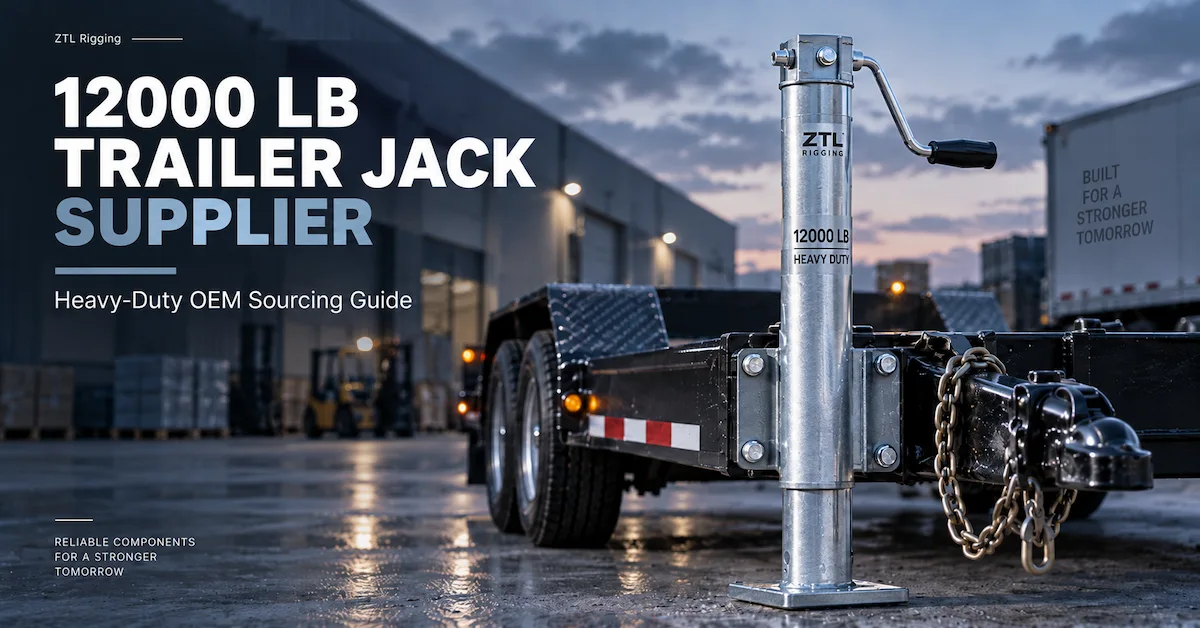
| 12,000 lb Side Wind Trailer Jack | 12,000 lb | Higher-capacity candidate for applications requiring a larger capacity class | Full model specification, installation interface, operating conditions and validation requirements |
The purpose of this comparison is not to select a product purely by trailer size. Buyers should establish the actual load at the jack location and then compare the specific technical data of the candidate model. ZTL's OEM trailer jack selection article provides additional context for evaluating capacity, travel, layout, and installation before ordering.
Evaluate Materials and Components at the Product Level
A side wind jack manufacturer should be able to identify the construction used in the specific jack being quoted. Buyers should confirm the main tube and inner tube configuration, mounting components, screw and drive mechanism, crank handle, grip, foot or base arrangement, retaining components, and any drop-leg components where applicable. Material names should be linked to the relevant component instead of appearing as one general statement for the complete assembly. Likewise, a factory's ability to perform forging, heat treatment, welding, machining, or surface treatment does not mean every component in every jack uses every process. ZTL's About Us page describes its manufacturing and quality-control capabilities, including material, process, and finished-product inspection; buyers can use those company-level capabilities as the starting point for requesting model-specific manufacturing details.
The commercial value of this information is repeatability. When a buyer approves a sample, the important question is not only whether the sample works, but whether the production definition identifies the components and critical characteristics needed to reproduce the same configuration. This becomes especially important for private-label products or recurring OEM programs, where small undocumented changes can create installation, appearance, or service differences between batches.
Check Manufacturing Workmanship Where It Affects Fit and Operation
Workmanship should be evaluated according to functional consequences rather than visual appearance alone. For a trailer jack, tube alignment can affect smooth movement; mounting geometry affects installation; welding affects the relationship between structural parts; gear or screw assembly influences operation; surface preparation influences the final coating; and component retention affects the integrity of the assembled product. A useful supplier review therefore links each important manufacturing step to an inspection requirement. The buyer should ask which dimensions are checked before assembly, which functions are checked after assembly, how the mounting interface is controlled, and which cosmetic defects are considered acceptable or unacceptable.
For bulk purchasing, first-article or sample approval should identify the drawing revision used to manufacture the sample. If engineering later changes the mounting bracket, handle, finish, packaging, or another agreed feature, purchasing should know whether a new sample or validation is necessary. This approach turns “good workmanship” from a marketing phrase into a production-control requirement that both supplier and buyer can verify.
Define Quality Control Before Mass Production
Quality control should be agreed before the order enters production, not added after finished products are already packed. Buyers evaluating a side wind jack manufacturer should identify the critical dimensions, functional checks, appearance requirements, marking requirements, and any load-related verification required for the selected product. They should also ask which items are checked on every unit and which use a defined sampling plan. ZTL states that its quality system includes material inspection, process inspection, and finished-product inspection; for an OEM project, the buyer should translate those general controls into model-specific acceptance criteria. The trailer jack factory audit checklist can be used as an internal qualification reference when comparing suppliers.
Certification requires the same discipline. ZTL's company page displays ISO- and CE-related quality claims, but buyers should confirm which certificates, declarations, reports, or other documents apply to the exact product, company entity, destination market, and order requirement. A company-level certification statement should not automatically be treated as evidence that every trailer-jack model has the same certification status.
Specify Corrosion Protection According to the Environment
“Outdoor use” is too broad to define a meaningful finish requirement. A utility trailer stored under cover, an agricultural trailer exposed to dirt and washdown, a rental trailer parked outdoors year-round, and a boat trailer used near salt water can place different demands on the jack. Buyers should describe the exposure and then ask the manufacturer to identify the proposed surface treatment for each relevant component. ZTL's corrosion-resistant trailer jack guide explains how coating specification, testing conditions, and acceptance criteria should be separated instead of relying on generic claims such as “anti-rust” or “marine grade.”
ZTL's published coating guide currently gives more detailed information for one 5,000 lb side-wind configuration, including a 15-inch travel reference, 7.5 kg listed weight, weld-on construction, black powder coating, and zinc-plated parts. Those values are useful only when they correspond to the exact current model being purchased; they should not be copied automatically to the 2,000 lb or 12,000 lb models. Before releasing an order, buyers should request the current drawing and specification attached to the quotation.
Treat Production Capacity and Lead Time as Order-Specific Variables
A factory's total equipment, workforce, and production capability can help buyers assess whether it is suitable for long-term cooperation, but it does not by itself determine the lead time for one specific order. ZTL's manufacturing overview publishes factory and production information, yet an OEM buyer should still request a quotation that defines sample timing, any development work, bulk-production schedule, inspection period, packaging preparation, and the event that starts the production clock.
Do not assume that a previously quoted MOQ or lead time for another trailer jack applies automatically to a side-wind model with different capacity, coating, packaging, branding, or engineering changes. Custom labels may have little effect on the design, while a changed bracket or mechanical configuration may require additional technical review. For repeat orders, tell the manufacturer the expected annual demand, individual order size, and approximate order frequency so the commercial discussion reflects how the product will actually be purchased.
Compare Total Sourcing Cost Instead of Unit Price Alone
The lowest quoted price does not necessarily represent the lowest purchasing risk. Compare what each supplier has actually included: product configuration, surface finish, inspection, packaging, labels, sample requirements, tooling or development where applicable, export packing, documentation, and commercial terms. If one quotation is based on an undefined drawing while another includes a controlled model specification and agreed inspection criteria, the unit prices are not directly comparable.
The hidden costs of a poorly defined order can appear during assembly or after receipt: mounting mismatch, crank interference, wrong travel, inconsistent labeling, repacking, additional incoming inspection, production delays, or uncertainty about which revision was supplied. These are not claims that every incorrect specification will create a failure; they are sourcing risks that a buyer can reduce before purchase. ZTL's trailer jack wholesale guide provides further context for buyers comparing bulk trailer-jack sourcing options.
Use OEM Customization to Solve a Defined Requirement
OEM customization creates value when it solves a real compatibility, branding, or supply-chain requirement. A trailer builder might need an installation interface adapted to an existing frame design; a distributor may need private-label identification and packaging; a product family may require standardized appearance across several capacity classes. These requests should be separated into cosmetic changes, packaging changes, and engineering changes because they can have different implications for development, validation, cost, MOQ, and schedule.
ZTL describes custom product solutions as part of its manufacturing and service capabilities. A practical development flow is to define the application, submit the technical requirements, review the proposed configuration and drawing, approve a sample, close inspection requirements, approve labels and packaging, and then release mass production. Every final order should reference the approved model and revision so later repeat orders are tied to the same controlled product instead of relying on email history or visual similarity.
What Should You Send a Side Wind Jack Manufacturer for Evaluation?
A useful RFQ should include the trailer type, maximum load expected at the jack position, preferred capacity range, existing jack or mounting drawing, required travel, minimum and maximum height constraints, available side-crank space, mounting method, operating environment, expected first-order quantity, forecast demand, destination market, branding requirements, packaging requirements, and required inspection or technical documents. If replacing an existing jack, also provide photographs, critical dimensions, mounting details, and the problem you are trying to solve. Buyers can submit these project details through the ZTL contact page so the inquiry can begin with an application-based review rather than a request for a generic catalogue price.
Frequently Asked Questions
1. What is the main difference between a side-wind and top-wind trailer jack?
The primary difference is the crank location and its movement around the jack. A side-wind handle operates beside the jack, while a top-wind handle operates from the top. Neither arrangement is automatically better; available crank clearance, operator access, trailer structure, capacity requirements, and installation conditions should determine the choice. ZTL compares both configurations in its trailer jack OEM buyer's guide.
2. Which side-wind jack capacities does ZTL currently list?
ZTL's current trailer jack category lists 2,000 lb, 5,000 lb, and 12,000 lb side-wind products. These catalogue capacity designations are useful for shortlisting, but buyers should request the current model specification and rating definition before final approval.
3. Can I select a side-wind jack using only the total trailer weight?
No. The relevant jack requirement should be based on the load the jack is expected to carry at its installed position and under the intended operating conditions. The trailer's total weight alone does not define that value. Buyers should confirm the manufacturer's rating definition and the trailer designer's application requirements before selecting a model.
4. What clearance should I check for a side-wind handle?
Check the complete handle movement against the frame, coupler, drawbar braces, storage boxes, wiring, safety chains, spare-wheel arrangements, accessories, and towing vehicle. Do this at relevant jack positions and across every trailer variant that will use the same product.
5. Can ZTL customize a side-wind trailer jack?
ZTL states that customization is available within its trailer jack range. The exact scope should be confirmed for the selected model because branding or packaging changes may require a different process from mounting, dimensional, structural, or mechanical changes.
6. What should I inspect when approving a sample?
Check the sample against the agreed drawing and specification, including mounting dimensions, travel, relevant heights, crank clearance, functional operation, surface condition, identification, packaging, and any agreed verification requirements. Record the model and revision used for approval so mass production has a defined reference.
7. How should I specify corrosion resistance?
Describe the actual environment instead of asking only for “anti-rust” treatment. State whether the jack will face normal outdoor storage, rain, mud, washdown, coastal conditions, or another defined exposure, then agree on the finish and any required verification. ZTL's trailer jack coating guide explains the relevant procurement questions.
8. What MOQ should I expect from a side wind jack manufacturer?
MOQ depends on the selected model, customization scope, packaging, production arrangement, and current quotation. Confirm it specifically for your project instead of applying a number from another ZTL product or an older order.
9. How should repeat orders be controlled?
Link each repeat order to the approved product code, specification revision, drawings, finish, labels, packaging, and inspection requirements. Changes affecting the approved product should be reviewed before implementation so the buyer knows which batch introduces the change.
10. What information will help ZTL prepare a more useful quotation?
Provide the trailer application, load requirement, mounting drawing, capacity class, travel and height requirements, crank-clearance information, operating environment, order quantity, destination, customization needs, packaging, and required documents. Use the ZTL contact page to submit the project information rather than sending only a product name and target price.
Conclusion
Choosing a side wind jack manufacturer is ultimately a product-definition and supply-control decision. Trailer OEMs and distributors should look beyond the catalogue capacity number and verify the actual load requirement, mounting interface, crank clearance, travel, construction, finish, inspection method, documentation, and repeat-order controls before approving a supplier. ZTL currently offers 2,000 lb, 5,000 lb, and 12,000 lb side-wind options within its trailer jack product range, providing several starting points for application-based selection. If you are preparing a new trailer design, replacing an existing jack, or developing a private-label product line, contact ZTL with your drawing, load requirement, installation dimensions, crank-clearance information, environment, and purchasing quantity so the appropriate configuration can be evaluated before sample and bulk-order approval.