English


The trailer industry depends on reliable components. Whether used for transportation, logistics, agriculture, construction, or industrial applications, every trailer requires durable parts that can handle load, vibration, weather exposure, and repeated operation.
Choosing the right trailer parts supplier is important for trailer manufacturers, distributors, fleet operators, and aftermarket buyers. A reliable supplier does not only provide individual components. It supports product consistency, customization, quality control, delivery stability, and long-term cooperation.
A low-quality trailer part may create more problems than savings. Incorrect dimensions, poor surface treatment, weak materials, or inconsistent batches can lead to installation problems, maintenance costs, customer complaints, and project delays.
For B2B buyers, the best supplier is not simply the cheapest source. It is the partner that understands trailer applications, manufacturing processes, and global supply requirements.
Ningbo Zhongteli Rigging Co., Ltd. focuses on rigging equipment, trailer jacks, torque shafts, forged hooks, load binders, and related industrial products. The company provides custom solutions, quality assurance, and global export services for customers in different markets. (ztlrigging.com)
What Does a Trailer Parts Supplier Provide?
A professional trailer parts supplier provides components used in trailer manufacturing, assembly, repair, and maintenance.
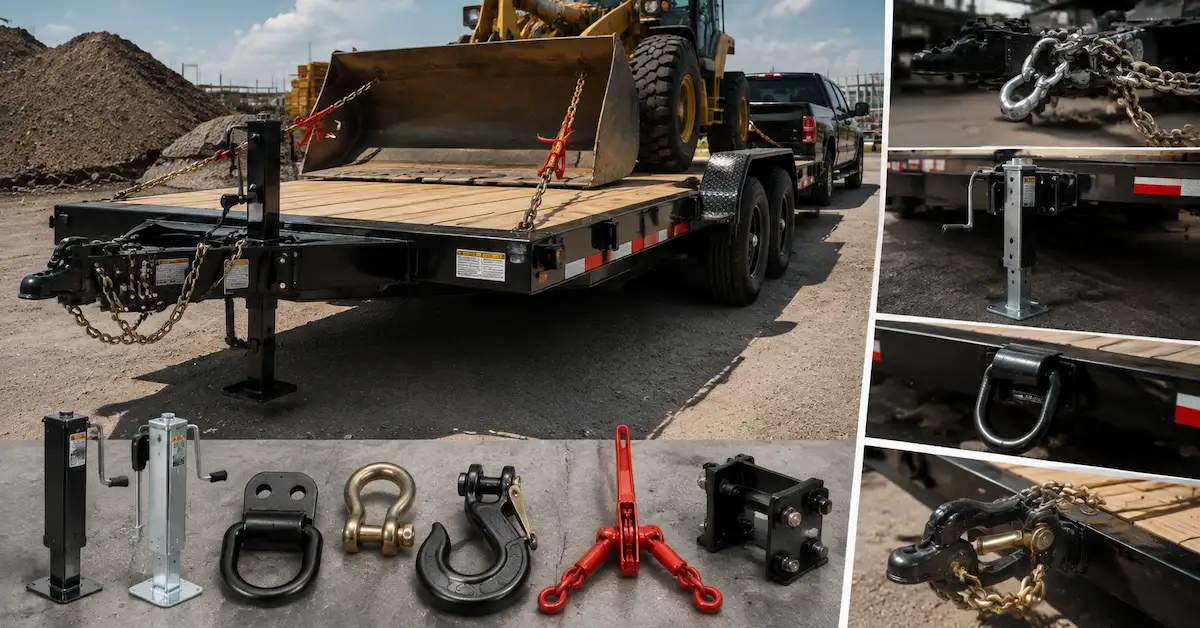
Common trailer parts include:
- trailer jacks
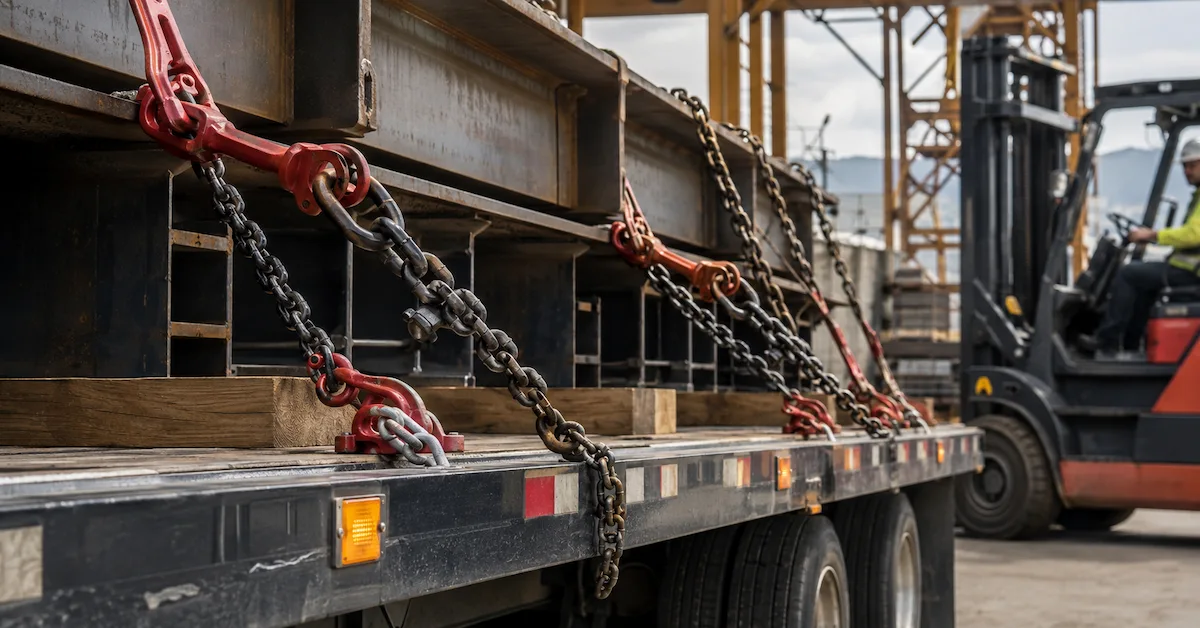
- load binders
- hooks and connectors
- trailer hardware
- support components
- towing-related accessories
- custom fabricated parts
- mechanical components
- OEM replacement parts
Different trailer applications require different components.
For example:
- Utility trailers require reliable support and connection parts.
- Heavy-duty trailers require stronger load-bearing components.
- Agricultural trailers require corrosion resistance and durability.
- Transport trailers require stable performance during long-distance operation.
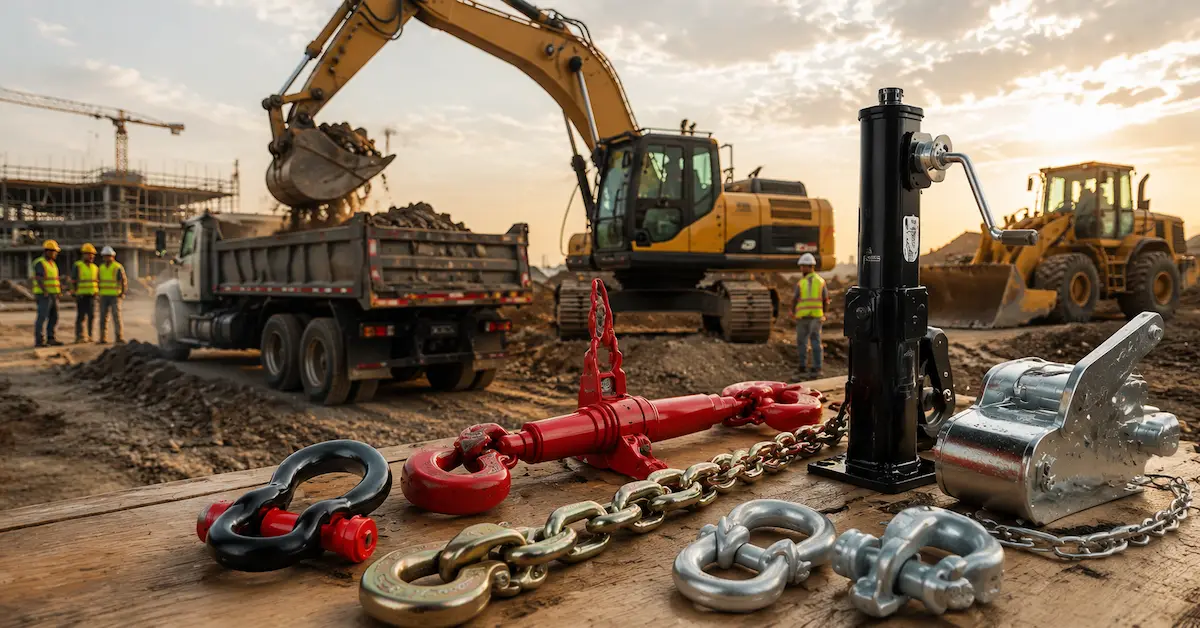
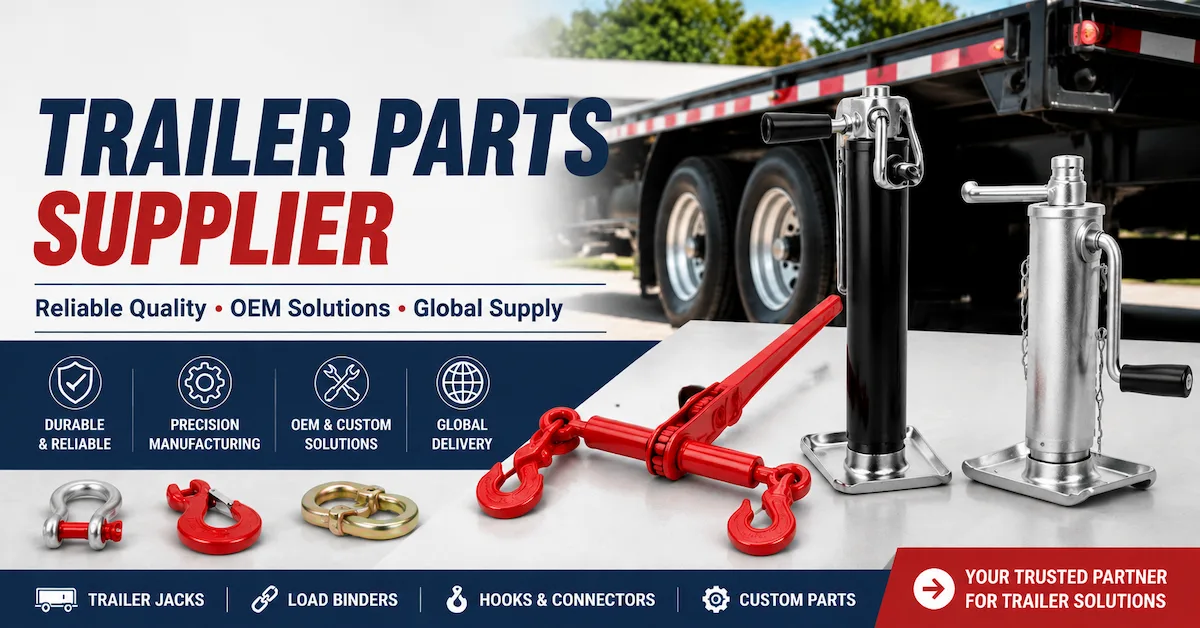
Zhongteli’s product range includes trailer jacks and load binders designed for trailer support, cargo securing, and transportation applications. (ztlrigging.com)
Who Needs a Trailer Parts Supplier?
A reliable trailer parts supplier mainly serves B2B buyers who need stable supply and consistent quality.
Typical customers include:
- Trailer manufacturers
- Trailer OEM brands
- Trailer parts distributors
- Truck and transport equipment suppliers
- Fleet maintenance companies
- Agricultural equipment companies
- Construction equipment suppliers
- Importers and wholesalers
- Repair networks
- Private-label trailer product brands
These buyers usually need more than products.
They need:
- stable production capacity
- consistent dimensions
- reliable packaging
- OEM customization
- competitive pricing
- technical communication
- export experience
For distributors, supplier consistency affects customer satisfaction. For manufacturers, component quality affects final trailer performance.
Why Choosing the Right Supplier Matters
Trailer components often work under demanding conditions.
They may face:
- heavy loads
- vibration
- road impact
- rain and moisture
- dust and mud
- temperature changes
- long-term outdoor storage
Poor-quality trailer parts may cause:
- premature wear
- corrosion problems
- deformation
- installation difficulties
- safety concerns
- increased maintenance costs
- customer complaints
A professional trailer parts supplier should control material selection, manufacturing processes, inspection, and packaging.
The supplier should understand that trailer components are not ordinary hardware. They are parts that influence vehicle reliability and user safety.
Main Trailer Parts Categories
| Trailer Part Category | Function | Key Buyer Concern |
|---|---|---|
| Trailer Jacks | Support and lift trailers | Load capacity, stability, corrosion resistance |
| Load Binders | Secure cargo chains | Strength, safety, durability |
| Hooks & Connectors | Connect trailer systems | Forging quality and reliability |
| Trailer Hardware | Support assembly and installation | Fit accuracy and material quality |
| Custom Components | Match special trailer designs | OEM capability and engineering support |
| Replacement Parts | Repair and maintenance | Availability and consistency |
For buyers looking for complete sourcing solutions, a supplier with multiple product categories can reduce procurement complexity.
Key Specifications to Confirm Before Ordering
Before selecting a supplier, buyers should prepare clear requirements.
| Specification | What to Confirm | Why It Matters |
|---|---|---|
| Trailer type | Utility, flatbed, agricultural, heavy-duty, transport | Defines application requirements |
| Load requirement | Working load and safety requirements | Ensures correct product selection |
| Material | Carbon steel, alloy steel, forged steel | Affects strength and durability |
| Surface treatment | Zinc coating, painting, powder coating, anti-rust treatment | Improves corrosion resistance |
| Size | Dimensions and installation requirements | Ensures compatibility |
| Testing | Load test, dimensional inspection, material testing | Confirms reliability |
| Packaging | Carton, pallet, labels, protection | Prevents shipping damage |
| Customization | Logo, design, packaging, specifications | Supports OEM projects |
Clear requirements help suppliers provide accurate quotations and reduce production errors.
Material Selection for Trailer Components
Material quality directly affects trailer component performance.
Common materials include:
Carbon Steel
Suitable for:
- standard trailer components
- moderate load applications
- cost-effective solutions
Alloy Steel
Suitable for:
- heavy-duty applications
- high-load components
- fatigue-critical parts
Forged Steel
Suitable for:
- hooks
- load binders
- high-strength connectors
Forging improves structural strength by creating a denser metal structure.
A professional trailer parts supplier should recommend materials based on application, not simply price.
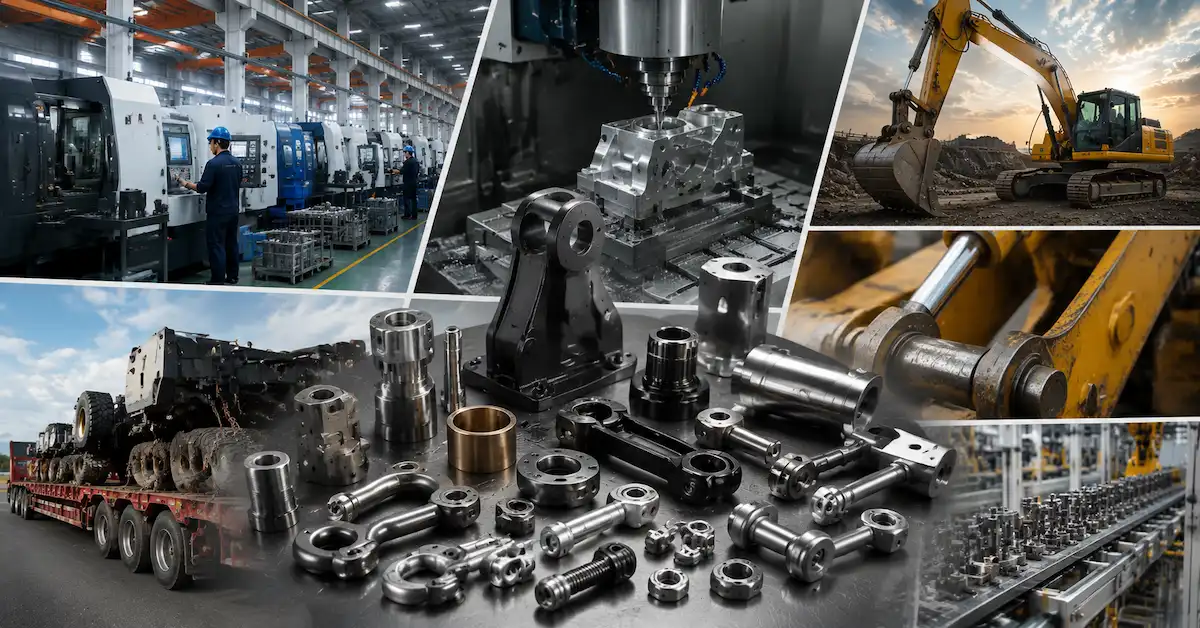
Manufacturing Capability and Quality Control
A reliable supplier should have controlled manufacturing processes.
Important processes include:
Forging
Used for high-strength components such as hooks and load-bearing parts.
Machining
Used for:
- accurate dimensions
- mounting holes
- precision interfaces
Heat Treatment
Improves:
- hardness
- toughness
- fatigue resistance
Surface Treatment
Provides:
- corrosion protection
- better appearance
- longer service life
Inspection
Includes:
- material inspection
- dimensional inspection
- strength testing
- appearance inspection
- packaging inspection
Zhongteli’s About Us page highlights material inspection, process inspection, finished product inspection, advanced forging, heat treatment, and surface treatment capabilities. (ztlrigging.com)
OEM Trailer Parts Customization
Many trailer manufacturers need customized components rather than standard products.
A professional trailer parts supplier should support:
- custom dimensions
- custom materials
- special mounting structures
- OEM logos
- private-label packaging
- customized colors
- product drawings
- sample development
- batch production
- export packaging
OEM capability is especially important for:
- trailer brands
- distributors
- aftermarket companies
- regional equipment suppliers
A supplier with engineering support can help improve product fit and reduce development time.
Trailer Parts Supplier vs General Hardware Supplier
| Supplier Type | Advantages | Limitations | Best For |
|---|---|---|---|
| Trailer Parts Supplier | Understands trailer applications and requirements | Product range may be focused | Trailer manufacturers |
| General Hardware Supplier | Large catalog | Limited trailer expertise | Simple hardware needs |
| Trading Company | Flexible sourcing | Less production control | Mixed small orders |
| OEM Factory | Custom capability and quality control | May require MOQ | Long-term B2B cooperation |
For trailer-related products, working with a specialized supplier usually provides better technical support and consistency.
Export Packaging and Delivery
For international buyers, packaging is an important part of supplier capability.
Good export packaging includes:
- anti-rust protection
- protective wrapping
- cartons
- pallets
- product labels
- batch identification
- moisture protection
- shipping marks
A professional trailer parts supplier should understand international transportation requirements and protect products during long-distance shipment.
Zhongteli highlights global export service and customers across Europe, America, Southeast Asia, the Middle East, and other regions. (ztlrigging.com)
How to Choose the Right Trailer Parts Supplier
Use this checklist:
- Does the supplier understand trailer applications?
- Can it provide OEM customization?
- Does it control material quality?
- Does it have forging and machining capability?
- Can it provide inspection records?
- Does it support private-label packaging?
- Can it handle repeat production?
- Does it have export experience?
- Can it provide technical support?
- Is communication efficient?
A reliable supplier should understand your trailer system, not only sell individual parts.
Why Work with Ningbo Zhongteli Rigging Co., Ltd.?
Ningbo Zhongteli Rigging Co., Ltd. was established in 2008 and focuses on designing, producing, and selling high-quality rigging products and related components.
The company highlights:
- 15+ years industry experience
- custom product solutions
- global export service
- ISO & CE certified quality
- 15,000㎡ factory area
- 50+ production lines
- 200+ skilled workers
For trailer manufacturers and distributors, Zhongteli can support:
- trailer jacks
- load binders
- forged hooks
- rigging hardware
- custom components
- OEM packaging
- export supply
Buyers can explore the Zhongteli Products page or contact the team through the Contact Us page for quotations, samples, and customization requirements.
Frequently Asked Questions
1. What does a trailer parts supplier provide?
A trailer parts supplier provides components used for trailer manufacturing, assembly, repair, and maintenance, including jacks, binders, hooks, connectors, and custom hardware.
2. How do I choose a reliable trailer parts supplier?
Choose a supplier with manufacturing capability, quality control, OEM support, export experience, and stable production capacity.
3. What materials are commonly used for trailer parts?
Common materials include carbon steel, alloy steel, and forged steel depending on load requirements and application conditions.
4. Can trailer parts be customized?
Yes. OEM customization can include dimensions, materials, colors, logos, packaging, and special designs.
5. Why is surface treatment important?
Surface treatment protects trailer parts from corrosion, improves appearance, and extends service life.
6. What quality checks should suppliers provide?
Important checks include material inspection, dimensional inspection, strength testing, surface inspection, and packaging inspection.
7. Do trailer parts suppliers support private labels?
Many OEM suppliers support private labels, including logos, packaging, labels, and product identification.
8. What industries use trailer parts?
Trailer parts are used in transportation, logistics, agriculture, construction, shipping, and industrial equipment industries.
9. Why choose a manufacturer instead of a trader?
Manufacturers usually provide better production control, customization ability, technical communication, and quality traceability.
10. How can I start a trailer parts sourcing project?
Prepare your product requirements, drawings, samples, quantity, and packaging needs, then contact the supplier for evaluation and quotation.
Build Better Trailers with the Right Parts Partner
Choosing the right trailer parts supplier helps manufacturers, distributors, and fleet operators improve product reliability, reduce maintenance problems, and build stronger customer relationships.
The best supplier is not simply the cheapest option. It is the partner that understands trailer applications, manufacturing processes, quality control, customization, and export requirements.
For trailer jacks, load binders, rigging hardware, and custom trailer components, Ningbo Zhongteli Rigging Co., Ltd. can support global buyers with manufacturing capability, OEM solutions, and export-ready supply.