English


Choosing the right lifting and rigging supplier is a critical decision for companies involved in construction, transportation, logistics, shipping, manufacturing, and industrial projects.
Rigging products are not ordinary hardware components. They are responsible for securing, lifting, supporting, and controlling heavy loads. Product strength, manufacturing quality, testing capability, and supplier reliability directly affect operational safety and project efficiency.
Many buyers compare suppliers based only on price. However, the lowest quotation does not always provide the lowest total cost. Poor-quality rigging products can lead to equipment damage, cargo loss, replacement costs, project delays, and customer complaints.
A professional lifting and rigging supplier should provide more than products. It should provide engineering support, quality assurance, OEM customization, stable production, and reliable global delivery.
What Does a Lifting and Rigging Supplier Provide?
A professional lifting and rigging supplier provides products and solutions used for:
- lifting heavy equipment
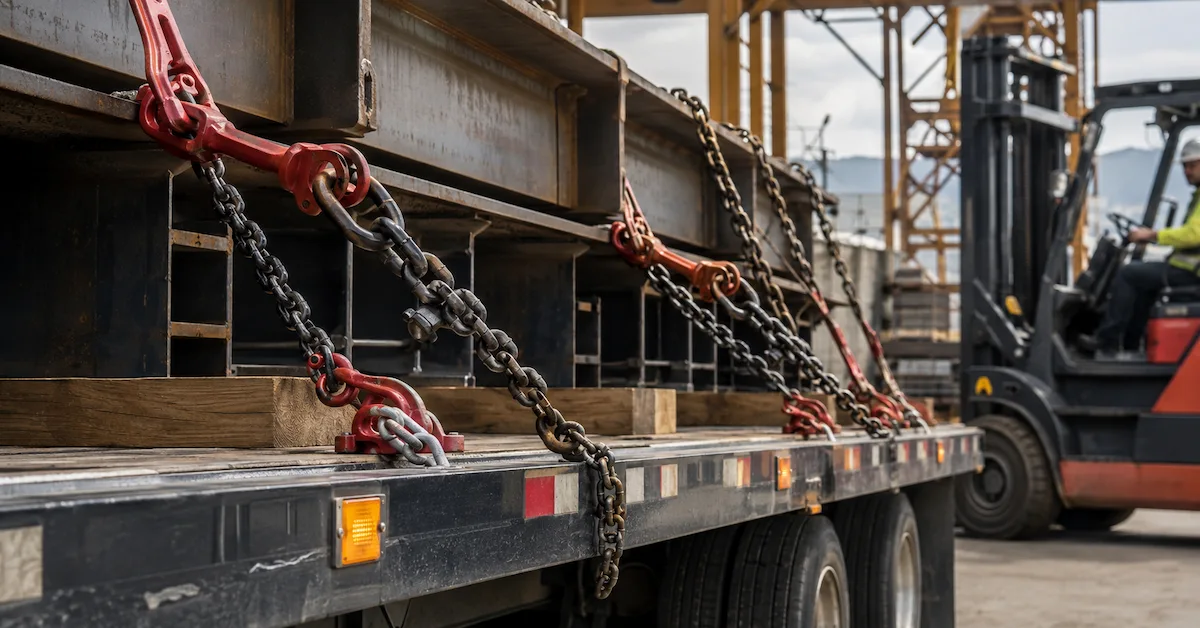
- securing transported cargo
- supporting industrial operations
- connecting mechanical systems
- stabilizing trailer and transport equipment
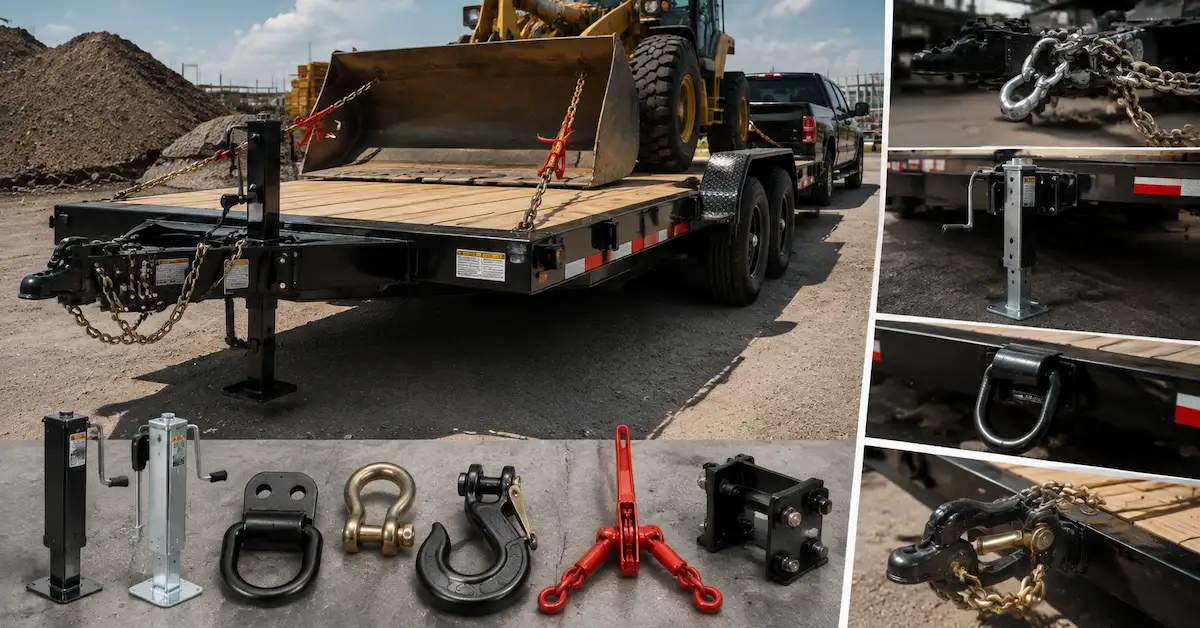
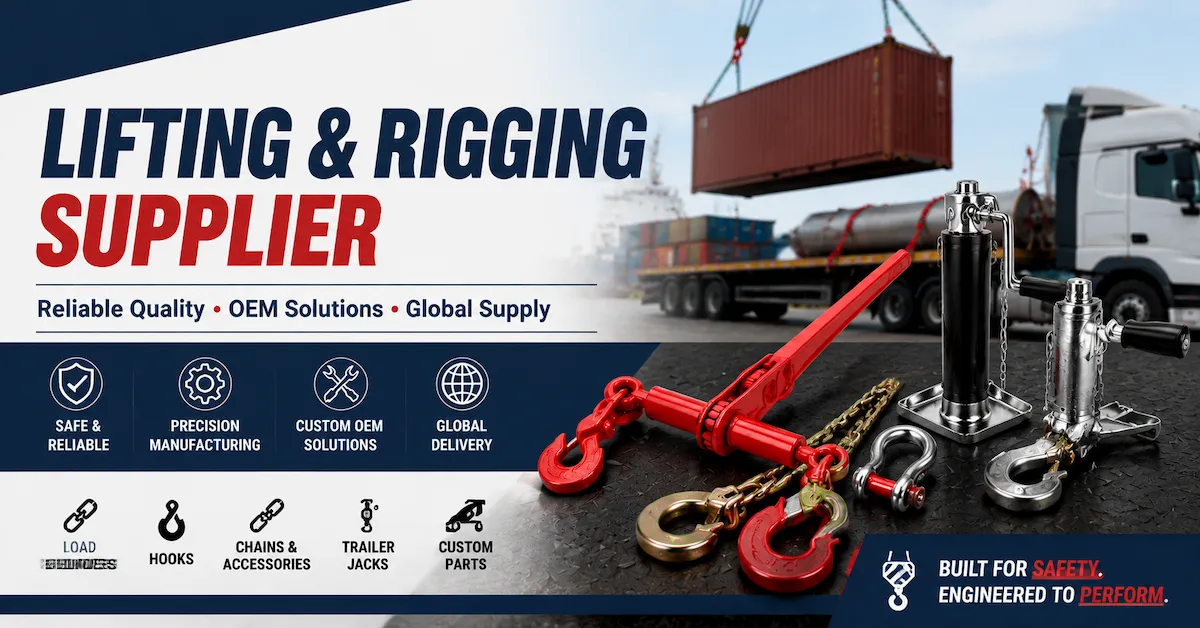
Common rigging products include:
| Product Category | Main Function |
|---|---|
| Load Binders | Tighten and secure cargo chains |
| Hooks | Connect lifting and securing systems |
| Chains & Accessories | Provide load restraint and connection |
| Trailer Components | Support trailer operation and transportation |
| Rigging Hardware | Provide connection and securing solutions |
| Custom Rigging Parts | Match special OEM requirements |
Zhongteli focuses on rigging equipment, trailer jacks, torque shafts, forged hooks, load binders, and related industrial products for global customers. The company provides customized solutions according to customer requirements. (ztlrigging.com)
Why Choosing the Right Supplier Matters
Rigging products often work under extreme conditions:
- heavy loads
- repeated tension
- vibration
- outdoor exposure
- humidity
- dust
- impact forces
A reliable lifting and rigging supplier should understand these challenges and design products accordingly.
Poor-quality rigging products may cause:
Safety Risks
Weak components may fail under working loads, creating dangerous situations.
Higher Maintenance Cost
Low-quality products may require frequent replacement.
Supply Chain Problems
Unstable suppliers can cause:
- delayed shipments
- inconsistent batches
- customer complaints
- production interruptions
For global buyers, supplier reliability is just as important as product specifications.
Key Factors When Selecting a Lifting and Rigging Supplier
When evaluating suppliers, buyers should consider several important factors.
1. Manufacturing Capability
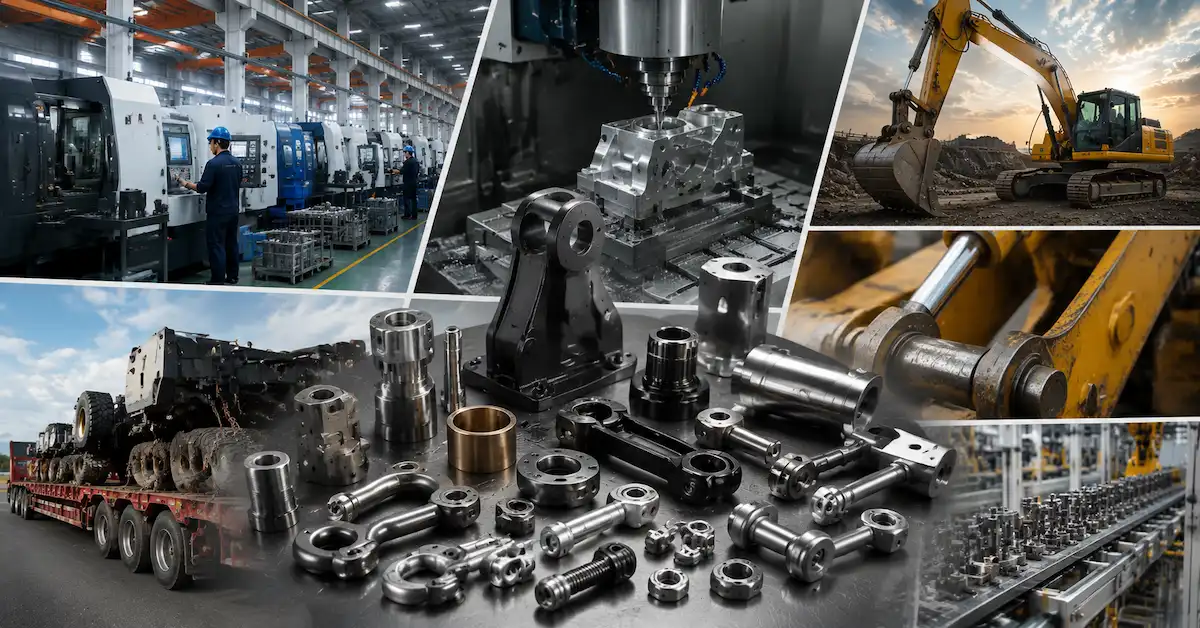
A professional supplier should have control over the manufacturing process.
Important capabilities include:
- forging
- machining
- heat treatment
- surface treatment
- assembly
- inspection
A factory with complete production capability can better control quality, delivery time, and customization.
Zhongteli’s manufacturing information highlights advanced forging, heat treatment, surface treatment, and strict inspection processes. (ztlrigging.com)
2. Product Range and Application Experience
A strong supplier should understand different industries.
Typical applications include:
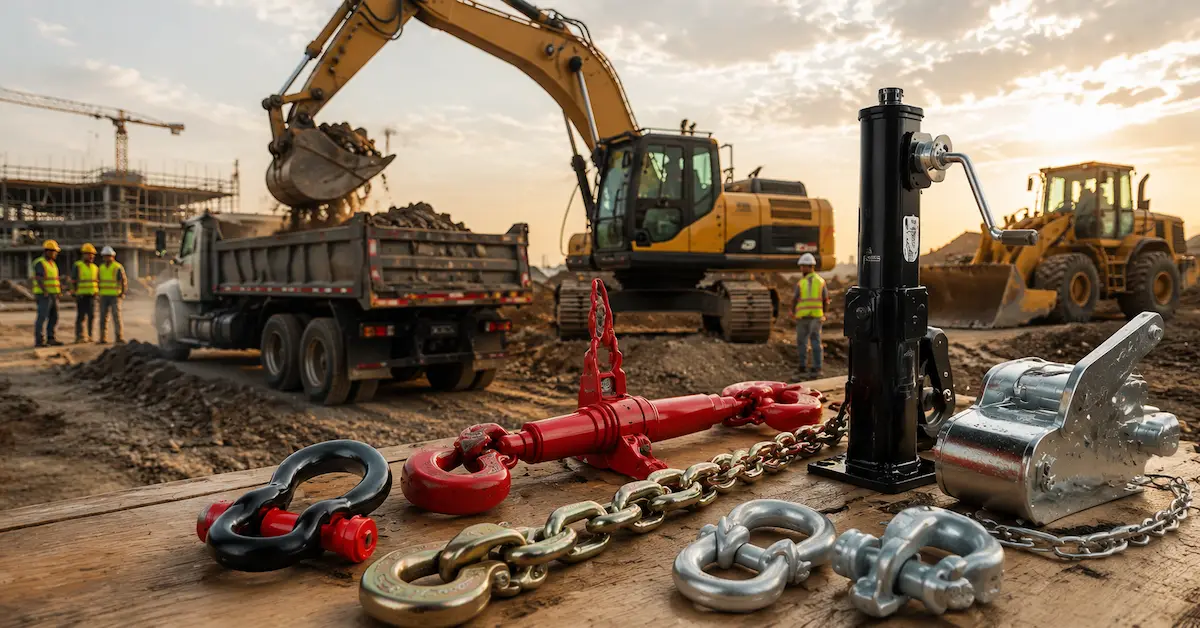
Construction
Used for:
- lifting equipment
- securing materials
- industrial installation
Transportation
Used for:
- cargo securing
- trailer systems
- logistics operations
Agriculture
Used for:
- machinery transportation
- outdoor equipment support
Marine and Shipping
Used for:
- corrosion-resistant applications
- heavy cargo handling
A supplier with broad application experience can recommend better solutions.
3. Material Quality and Manufacturing Process
Material selection determines product performance.
Common materials include:
- carbon steel
- alloy steel
- forged steel
For heavy-duty rigging products, forging is commonly used because it improves structural strength and fatigue resistance.
Important production processes include:
Forging
Improves:
- strength
- durability
- structural consistency
Heat Treatment
Improves:
- hardness
- toughness
- fatigue resistance
Surface Treatment
Provides:
- corrosion protection
- longer service life
- better appearance
A reliable lifting and rigging supplier should understand how each process affects final product performance.
4. Quality Control and Testing
Quality control is one of the biggest differences between suppliers.
A professional supplier should perform:
- raw material inspection
- dimensional inspection
- hardness testing
- strength testing
- appearance inspection
- final product inspection
For load-related products, testing is especially important because appearance alone cannot show real performance.
Zhongteli emphasizes material inspection, process inspection, finished product inspection, and quality management throughout production. (ztlrigging.com)
5. OEM and Customization Capability
Many global buyers do not need standard products only.
They may require:
- custom dimensions
- private labeling
- special colors
- customized packaging
- different load ratings
- customer-specific designs
A capable lifting and rigging supplier should support OEM projects from design discussion to mass production.
Typical OEM services include:
- drawing review
- sample development
- product modification
- packaging customization
- batch production
For brands and distributors, OEM capability helps create stronger market differentiation.
Factory Supplier vs Trading Supplier
| Supplier Type | Advantage | Limitation |
|---|---|---|
| Factory Manufacturer | Direct quality control, OEM capability | May require MOQ |
| Trading Company | Flexible sourcing | Less control over production |
| General Hardware Supplier | Wide product range | Limited rigging expertise |
| Specialized Rigging Factory | Strong application knowledge | More focused product range |
For safety-related products, working directly with a specialized factory usually provides better control.
How to Evaluate a Global Rigging Partner
Before choosing a supplier, ask:
Production Questions
- Does the supplier own manufacturing facilities?
- Can it control forging and heat treatment?
- Does it inspect every production batch?
Product Questions
- What materials are used?
- What testing is performed?
- Can products be customized?
Business Questions
- Does the supplier export internationally?
- Can it provide stable delivery?
- Does it support long-term cooperation?
A professional supplier should answer these questions clearly.
Why Work with Ningbo Zhongteli Rigging Co., Ltd.?
Ningbo Zhongteli Rigging Co., Ltd. is a professional manufacturer specializing in rigging equipment and related industrial products.
The company provides:
- Load binders
- Trailer jacks
- Forged hooks
- Torque shafts
- Custom rigging components
Zhongteli highlights:
- 15+ years industry experience
- 15,000㎡ factory area
- 50+ production lines
- 200+ skilled workers
- ISO 9001 quality system
- Global export experience
As a professional lifting and rigging supplier, Zhongteli supports global buyers with:
- OEM customization
- product development
- quality inspection
- export packaging
- technical support
Buyers can explore available solutions through the Zhongteli Products page.
Common Applications of Lifting and Rigging Products
Rigging products are widely used in:
- construction projects
- logistics transportation
- flatbed trucking
- trailer operations
- industrial manufacturing
- agricultural equipment transport
- marine applications
- warehouse handling
Each application has different requirements for:
- strength
- corrosion resistance
- size
- safety factor
- durability
Choosing the correct supplier helps ensure the right product selection.
Frequently Asked Questions
1. What does a lifting and rigging supplier provide?
A lifting and rigging supplier provides products used for lifting, securing, connecting, and supporting heavy loads, including binders, hooks, chains, and custom hardware.
2. How do I choose a reliable rigging supplier?
Evaluate manufacturing capability, quality control, customization ability, export experience, and product application knowledge.
3. Why is forging important for rigging products?
Forging improves material strength and durability, making products more suitable for heavy-load applications.
4. Can rigging products be customized?
Yes. OEM customization can include dimensions, colors, packaging, labels, and special designs.
5. What industries use rigging products?
Common industries include construction, logistics, transportation, shipping, agriculture, and manufacturing.
6. What quality tests should suppliers provide?
Important tests include material inspection, dimensional inspection, hardness testing, strength testing, and final inspection.
7. Should I choose a factory or trading company?
For safety-related rigging products, a factory often provides better quality control and technical support.
8. What information is needed for an OEM quotation?
Provide product type, dimensions, load requirements, materials, quantity, packaging needs, and application environment.
9. How can I reduce sourcing risk?
Choose suppliers with proven manufacturing capability, inspection systems, export experience, and stable production.
10. How can I start cooperation with Zhongteli?
Contact Zhongteli with your product requirements, drawings, or samples for technical evaluation and quotation.
Choose a Reliable Partner for Safer Operations
The right lifting and rigging supplier can help companies improve safety, reduce sourcing risks, and build reliable long-term supply chains.
Instead of choosing only by price, buyers should evaluate manufacturing capability, quality control, customization support, and industry experience.
With professional manufacturing capability and global service experience, Ningbo Zhongteli Rigging Co., Ltd. supports customers worldwide with reliable rigging solutions, OEM services, and export-ready products.