English


Rigging hardware is used wherever heavy loads must be secured, lifted, supported, connected, or transported safely. For logistics companies, construction contractors, trailer equipment suppliers, marine buyers, and industrial distributors, choosing the right rigging hardware manufacturer is not only about finding a low price. It is about safety, strength, consistency, delivery, and long-term trust.
A poor-quality hook, binder, chain component, jack, or forged connector can create serious risks. It may fail under load, corrode too quickly, deform during use, or cause customer complaints after shipment. For B2B buyers, these problems can lead to warranty claims, project delays, and damage to brand reputation.
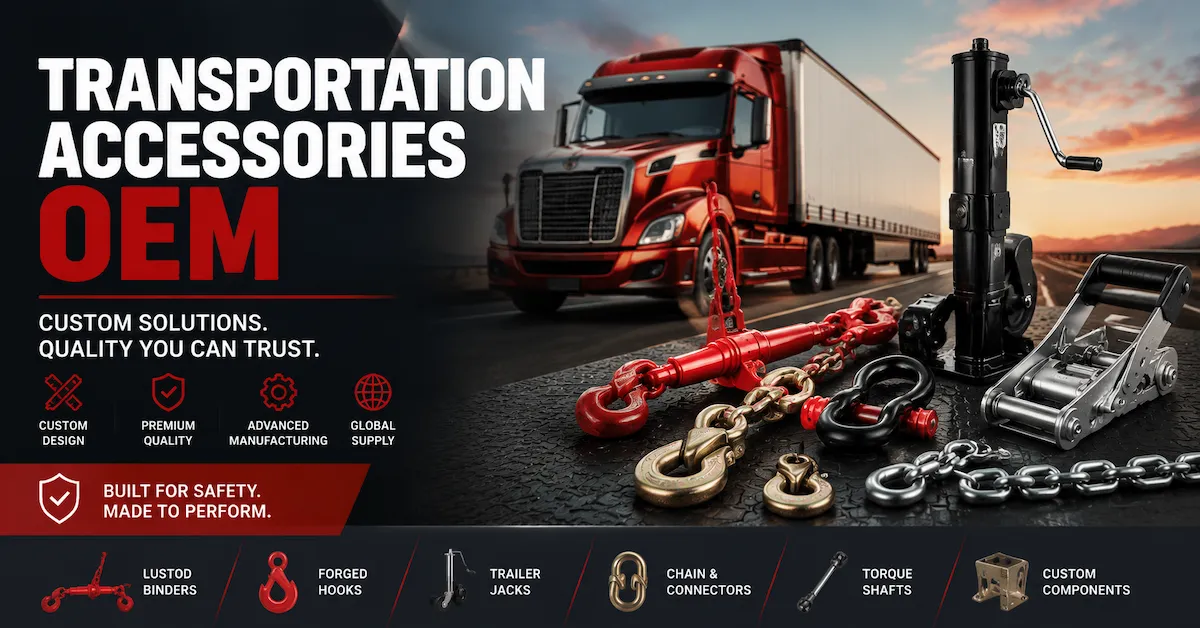
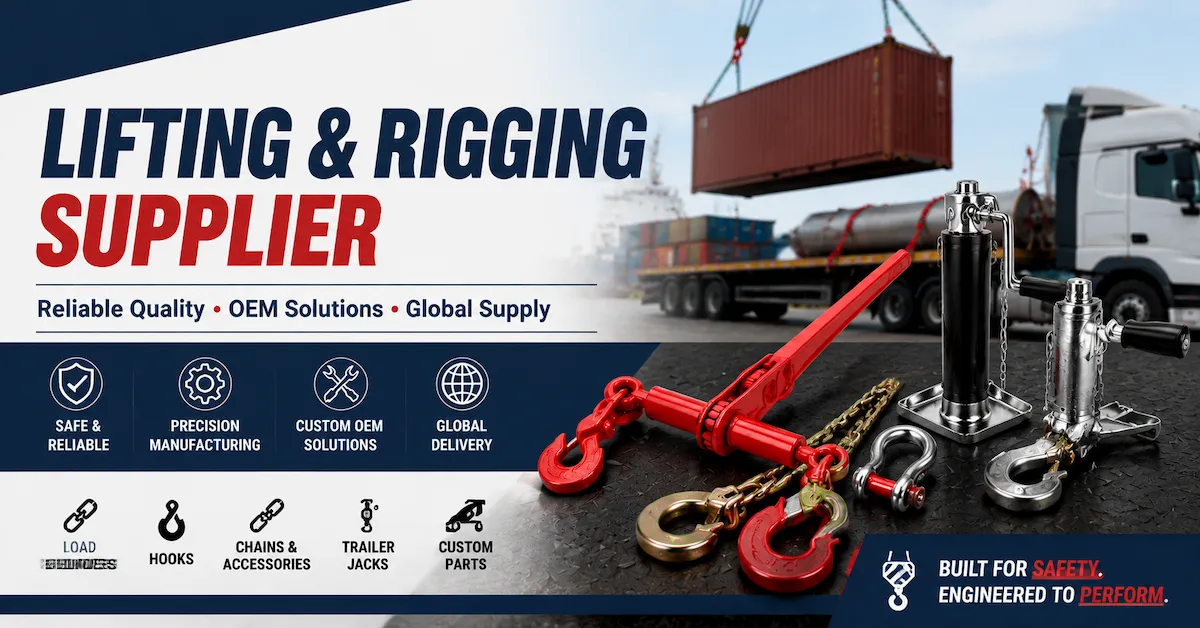
Ningbo Zhongteli Rigging Co., Ltd. positions itself as a professional manufacturer of rigging equipment, trailer jacks, torque shafts, forged hooks, load binders, and related products for global customers. Its website also states that products are exported to Europe, America, Southeast Asia, the Middle East, and other regions, with applications in logistics, shipping, construction, and related fields.
What Is Rigging Hardware?
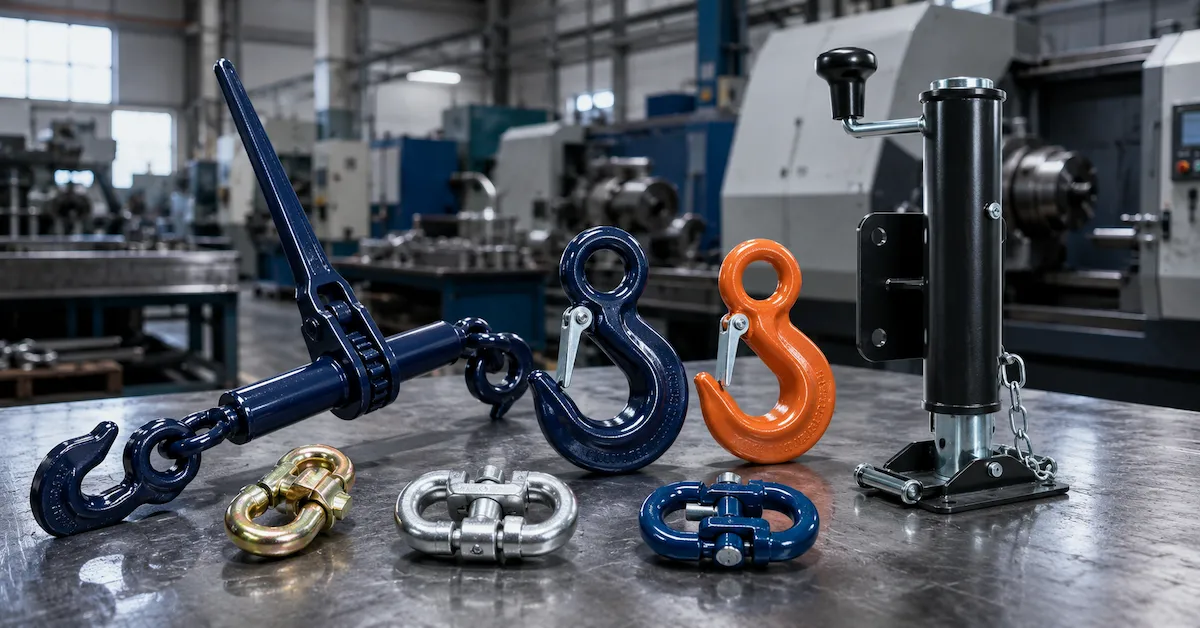
Rigging hardware refers to the mechanical components used for lifting, securing, pulling, tensioning, connecting, or supporting loads. In industrial and transport applications, rigging hardware must be strong, durable, traceable, and suitable for the working environment.
Common rigging hardware can include:
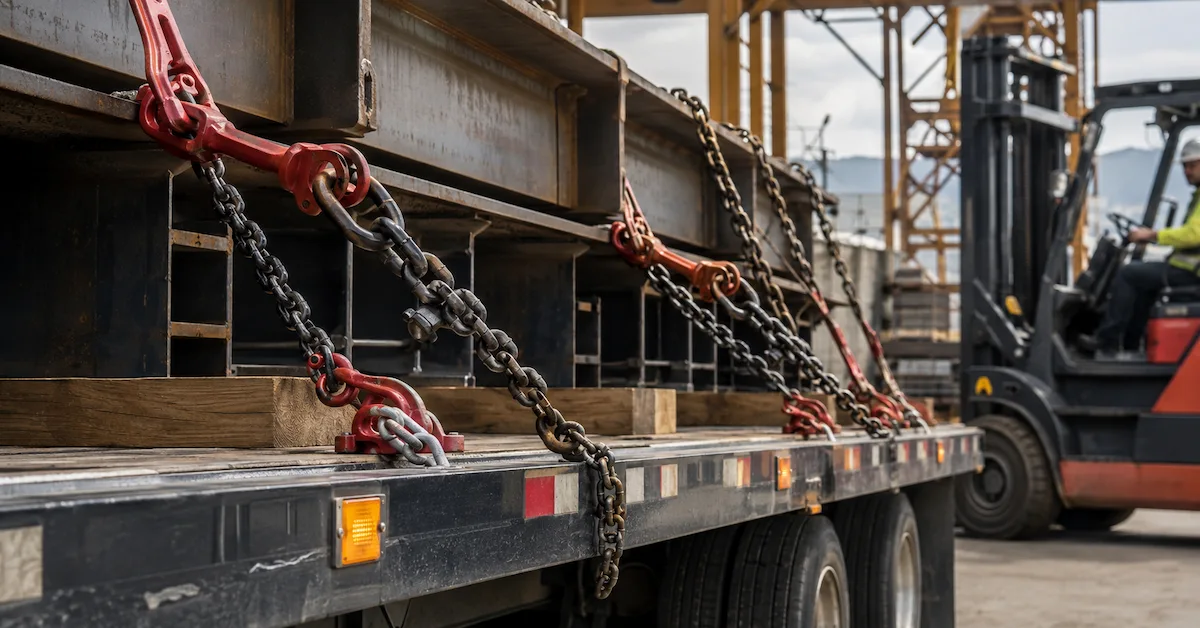
- load binders
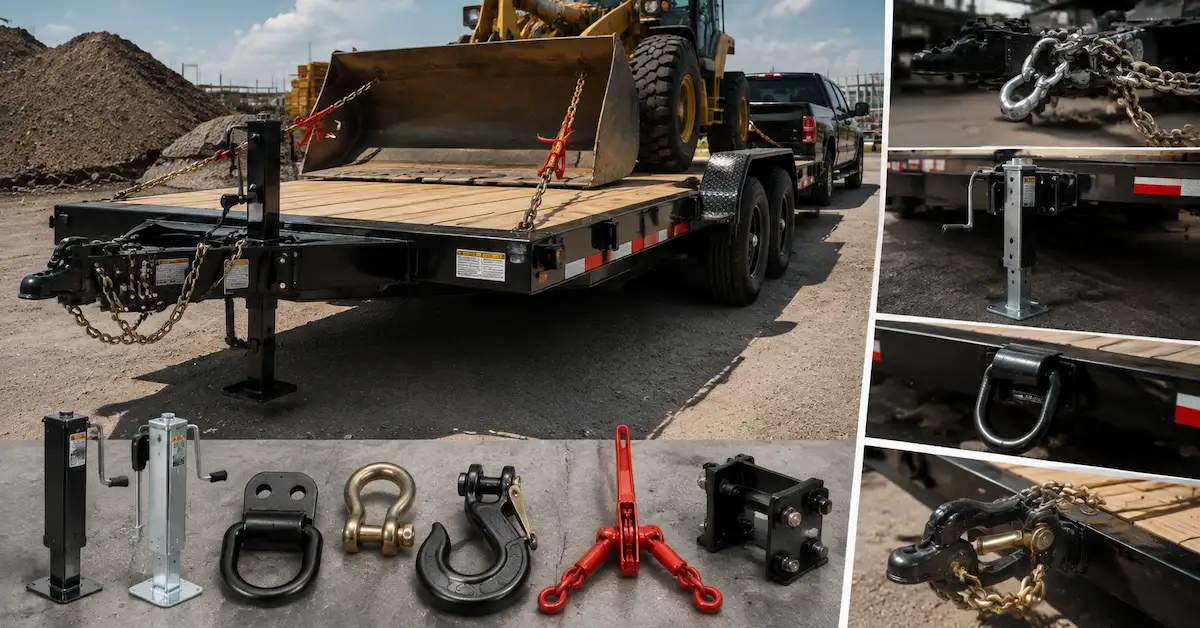
- trailer jacks
- forged hooks
- chains and chain accessories
- shackles and connectors
- lifting and securing components
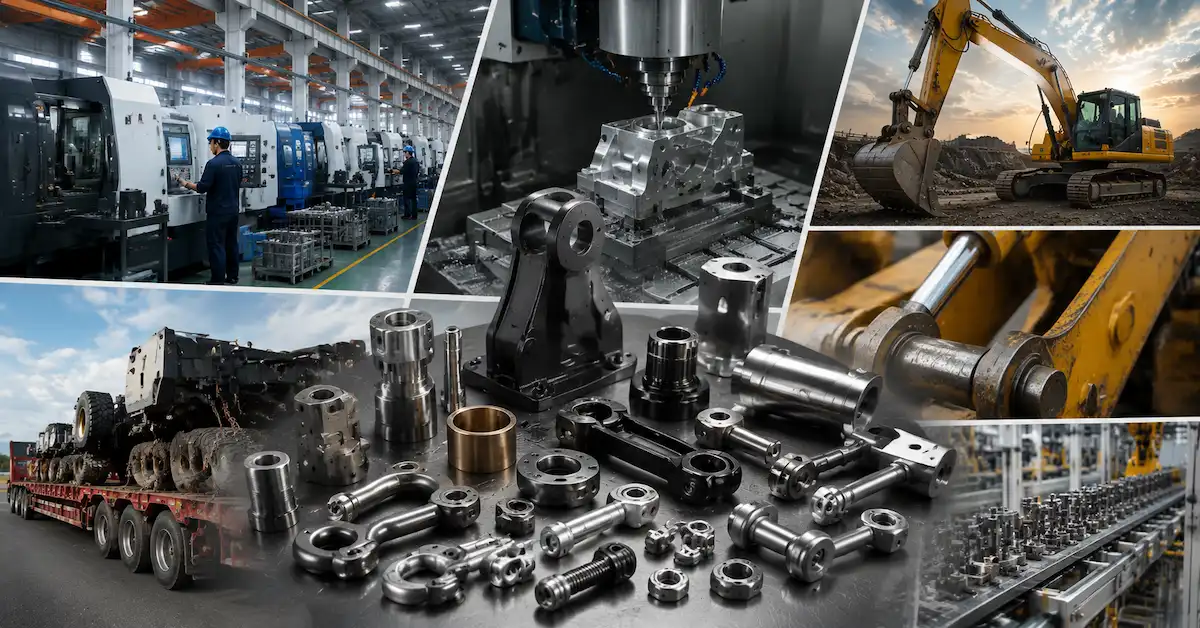
- custom forged or machined parts
- trailer and transport support hardware
For Zhongteli’s current website structure, the product page clearly displays Load Binder and Trailer Jack categories, including products such as indirect load binders, EU type load binders, lever type load binders, folding handle load binders, and top wind trailer jacks.
The keyword rigging hardware manufacturer has strong B2B commercial intent because buyers searching this term are usually comparing factories, evaluating product quality, checking customization capability, or preparing for bulk sourcing.
Who Needs a Rigging Hardware Manufacturer?
A professional rigging hardware manufacturer is suitable for buyers who need reliable load control, stable batch quality, and export-ready supply.
Typical customers include:
- rigging equipment distributors
- logistics and transport companies
- construction equipment suppliers
- trailer parts wholesalers
- marine and shipping equipment buyers
- agricultural equipment suppliers
- industrial hardware importers
- OEM brands and private-label buyers
- project contractors
- safety equipment procurement teams
These buyers usually care about more than the product itself. They also need stable quality, clear packaging, customization support, delivery reliability, technical communication, and after-sales response.
For distributors, one unreliable batch can create many downstream complaints. For OEM buyers, inconsistent size or finish may cause assembly issues. For contractors, unsafe hardware can affect project safety.
Why Rigging Hardware Quality Matters
Rigging hardware often works under dynamic load, vibration, impact, outdoor exposure, humidity, dust, or corrosive environments. Even small defects can become serious under heavy use.
Common risks of low-quality rigging hardware include:
- deformation under load
- cracking at forged or welded areas
- weak hooks or connectors
- poor fit with chains or equipment
- surface corrosion during storage or use
- inconsistent dimensions between batches
- poor handle operation on load binders
- unstable lifting or supporting performance
- packaging damage during export shipment
A reliable rigging hardware manufacturer should control product strength, material quality, heat treatment, surface protection, testing, and packaging. Zhongteli’s About Us page highlights advanced forging, heat treatment, surface treatment, material inspection, process inspection, and finished product inspection as part of its product advantages and quality control system.
Main Product Categories for Rigging Hardware Buyers
For B2B buyers, product category clarity is important. A good manufacturer should help buyers match product types with real application needs.
| Product Category | Main Function | Typical Buyer Need |
|---|---|---|
| Load binders | Tighten and secure cargo chains | Load control, transport safety, forged strength |
| Trailer jacks | Lift, support, and stabilize trailers | Load capacity, easy operation, corrosion resistance |
| Forged hooks | Connect or secure lifting and rigging systems | Strength, safety factor, reliable forging |
| Chain accessories | Connect, shorten, or tension chains | Fit accuracy, surface treatment, batch consistency |
| Custom rigging parts | Match special project or OEM requirements | Custom design, private label, engineering support |
| Torque shafts / related parts | Support mechanical transmission or structural applications | Precision, machining, heat treatment, OEM supply |
Zhongteli’s homepage also describes a wide variety of hooks, chains, and other products in various colors and sizes, offering multiple choices for customers.
Key Specifications to Confirm Before Ordering
Before contacting a rigging hardware manufacturer, buyers should prepare clear sourcing requirements. This helps the supplier recommend the correct product, material, finish, packaging, and testing plan.
| Specification Item | What Buyers Should Confirm | Why It Matters |
|---|---|---|
| Product type | Load binder, trailer jack, hook, chain accessory, custom part | Defines production process |
| Working load | WLL, breaking strength, or required load rating | Ensures safe application |
| Material | Carbon steel, alloy steel, forged steel, custom material | Affects strength and durability |
| Manufacturing process | Forging, machining, welding, assembly, heat treatment | Affects performance and cost |
| Surface treatment | Zinc plating, powder coating, painting, black oxide, custom finish | Improves corrosion resistance |
| Size and fit | Chain size, hook opening, jack capacity, mounting dimensions | Ensures compatibility |
| Testing requirement | Proof testing, hardness, load testing, dimensional inspection | Confirms reliability |
| Certification needs | ISO, CE, customer-specific documentation | Supports import and project approval |
| Packaging | Carton, pallet, label, private-label packaging | Protects export shipment |
| Quantity | Trial order, wholesale batch, annual supply plan | Affects pricing and lead time |
Clear specifications reduce sampling errors and improve quotation accuracy.
Material, Forging, and Heat Treatment
Material is the foundation of rigging hardware performance. For high-load applications, forged steel or alloy steel is often preferred because it can provide better strength and fatigue resistance than low-grade materials.
A reliable rigging hardware manufacturer should understand how each process affects performance:
- Forging improves structural density and strength.
- Heat treatment improves hardness, toughness, and fatigue resistance.
- Machining improves fit and dimensional accuracy.
- Surface treatment improves corrosion resistance.
- Testing confirms whether the batch meets requirements.
For example, Zhongteli’s product page states that multiple load binder products use drop forged construction, heat treatment for extra strength, individual proof testing, 360° swivel hooks, and available customization.
For buyers, these details matter because a load binder or hook may look similar from the outside, but the internal strength depends on material and process control.
Surface Treatment and Corrosion Resistance
Rigging hardware often works outdoors or in transport environments. Products may be exposed to rain, road salt, humidity, dust, or marine air. Poor surface treatment can lead to rust, poor appearance, and reduced service life.
Common surface treatments include:
- zinc plating
- powder coating
- painting
- black oxide
- galvanizing
- anti-rust oil
- custom color coating
For load binders and trailer jacks, surface finish also affects customer perception. A well-finished product looks more professional and performs better during storage and use.
The product page notes that trailer jacks are designed for high stability and durability, and that good surface finish can offer superior corrosion resistance and prolong service life.
OEM and Custom Rigging Hardware
Many global buyers do not only need standard rigging hardware. They need products that match their market, packaging, brand, and application.
A professional rigging hardware manufacturer should support OEM customization such as:
- custom product size
- custom load rating
- custom hook or handle design
- custom mounting dimensions
- color customization
- logo marking
- private-label packaging
- carton and pallet design
- barcode or part number labels
- batch traceability
- special surface treatment
- sample development before bulk order
Zhongteli’s homepage describes a custom service process that includes requirement analysis, solution design, production manufacturing, and quality assurance, with engineers creating customized design solutions using CAD technology and industry expertise.
For B2B buyers, OEM customization can improve brand consistency, reduce sourcing complexity, and support long-term repeat orders.
Rigging Hardware Manufacturer vs Trading Company
| Supplier Type | Advantages | Limitations | Best For |
|---|---|---|---|
| Manufacturer | Better process control, direct technical communication, OEM support | May require MOQ or production lead time | OEM buyers, distributors, project supply |
| Trading company | May offer many product types quickly | Less control over production and QC | Small mixed orders |
| Specialized rigging factory | Strong product knowledge and testing focus | Product range may be focused | Safety-critical rigging hardware |
| General hardware supplier | Broad catalog | May lack rigging-specific strength control | Low-risk general hardware |
For safety-related products, a manufacturer with strong quality control is usually a better long-term choice than a general trader.
Application Scenarios
Rigging hardware is used across many industries.
Common applications include:
- logistics cargo securing
- flatbed truck transportation
- shipping and port handling
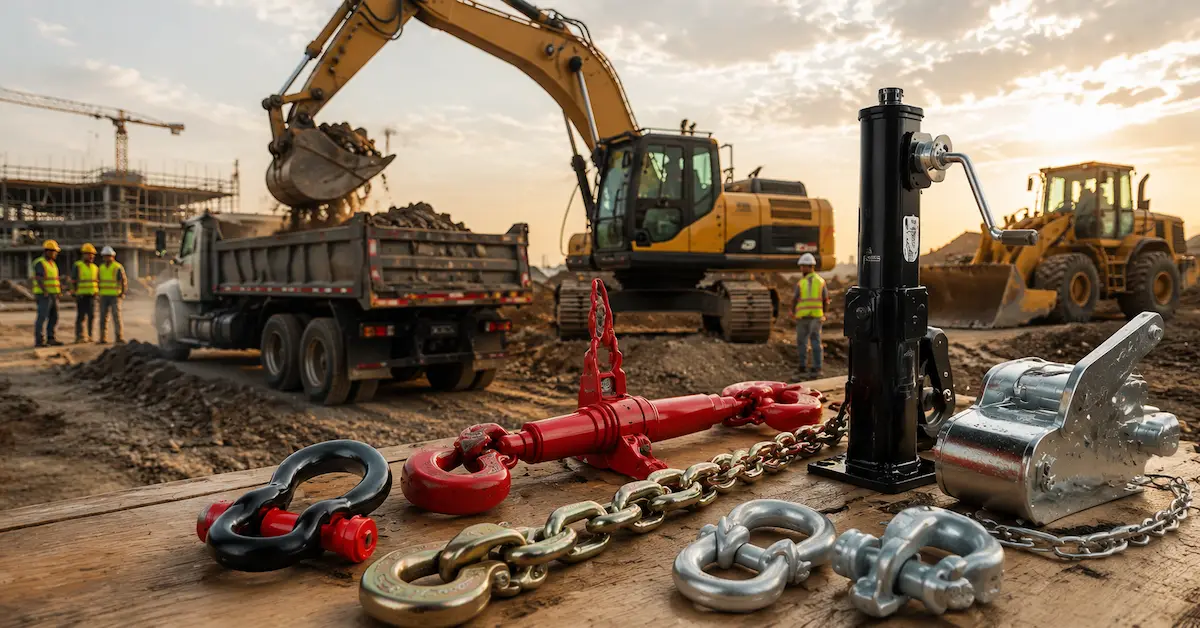
- construction site lifting and support
- trailer loading and stabilization
- agricultural equipment transport
- marine equipment handling
- industrial maintenance
- warehouse and material handling
- OEM equipment assembly
Zhongteli’s homepage positions its products for logistics, shipping, construction, and related fields, while its About Us page states that products are exported to more than 20 countries and regions.
Selection Guide by Buyer Type
| Buyer Type | Main Concern | Recommended Supplier Capability |
|---|---|---|
| Distributor | Stable quality and competitive batch supply | Product range, packaging, repeat production |
| Logistics buyer | Cargo safety and ease of use | Load binders, chain compatibility, testing |
| Trailer parts supplier | Lifting/support performance | Trailer jacks, mounting fit, corrosion resistance |
| Construction contractor | Strength and durability | Forged parts, proof testing, documentation |
| Marine buyer | Corrosion resistance | Surface treatment, packaging, rust prevention |
| OEM brand | Private label and custom design | CAD support, marking, packaging, batch traceability |
| Importer | Export documents and shipment protection | Global export experience, clear labeling |
This table helps buyers quickly match supplier strengths with real sourcing needs.
Quality Control Checklist
A reliable rigging hardware manufacturer should provide measurable quality control, not only product photos.
Important QC items include:
- raw material inspection
- dimensional inspection
- forging quality check
- heat treatment verification
- hardness testing
- surface finish inspection
- proof testing where required
- assembly function check
- corrosion resistance check when needed
- packaging inspection
- batch traceability
- final shipment inspection
Zhongteli’s About Us page states that every batch undergoes strict material inspection, process inspection, and finished product inspection, and also highlights ISO 9001 certified quality, 15,000㎡ factory area, 50+ production lines, and 200+ skilled workers.
Cost Factors Buyers Should Understand
The cost of rigging hardware depends on several factors:
- material grade
- forging or machining complexity
- size and load rating
- heat treatment requirement
- surface treatment type
- proof testing requirement
- packaging method
- logo or private-label customization
- order quantity
- delivery schedule
- documentation requirements
The cheapest product is not always the best choice. For rigging hardware, safety and consistency matter more than small price differences. A low-cost product can become expensive if it causes claims, returns, rust problems, or customer complaints.
How to Choose the Right Rigging Hardware Manufacturer
Use this checklist when evaluating suppliers:
- Does the manufacturer understand load ratings and product applications?
- Can it provide forged and heat-treated products?
- Does it support OEM customization?
- Can it provide stable batch quality?
- Does it inspect materials, processes, and finished products?
- Can it support private-label packaging?
- Does it have export experience?
- Can it provide fast and clear communication?
- Are product categories clearly organized?
- Can the supplier support repeat orders and long-term cooperation?
A professional rigging hardware manufacturer should ask about application, load requirement, product size, surface treatment, quantity, packaging, and target market before recommending a product.
Why Work with Ningbo Zhongteli Rigging Co., Ltd.?
Ningbo Zhongteli Rigging Co., Ltd. was established in 2008 and describes itself as a professional rigging manufacturer with 15 years of industry experience. The company focuses on designing, producing, and selling high-quality rigging products and provides professional services to global customers.
For rigging hardware buyers, Zhongteli’s value comes from its manufacturing background, custom product solutions, global export service, ISO & CE certified quality, and fast worldwide delivery. The company also highlights advanced manufacturing processes, strict quality control, global service, and precise customization.
As a rigging hardware manufacturer, Zhongteli can support buyers who need load binders, trailer jacks, torque shafts, forged hooks, custom rigging parts, OEM packaging, and export-ready supply.
Buyers can explore the current Zhongteli product page or contact the team through the Contact Us page for drawings, samples, packaging requirements, and quotation support.
Frequently Asked Questions
1. What does a rigging hardware manufacturer do?
A rigging hardware manufacturer designs, produces, tests, and supplies hardware used for lifting, securing, supporting, connecting, and transporting loads.
2. What products are included in rigging hardware?
Rigging hardware may include load binders, hooks, chains, chain accessories, trailer jacks, connectors, shackles, and custom forged or machined parts.
3. Why is forging important for rigging hardware?
Forging can improve structural strength and durability, making products more suitable for heavy-duty load control and industrial applications.
4. What information should I provide for quotation?
Provide product type, size, working load, material, surface treatment, quantity, packaging requirements, target market, and any drawings or samples.
5. Can rigging hardware be customized for OEM orders?
Yes. Customization can include size, color, logo, packaging, marking, surface treatment, load rating, and product design.
6. What surface treatment is recommended?
Zinc plating, powder coating, painting, black oxide, galvanizing, or anti-rust oil can be selected based on working environment and cost target.
7. How do I reduce quality risk when importing rigging hardware?
Confirm material, production process, testing requirements, packaging, sample approval, and batch inspection before mass production.
8. Is a manufacturer better than a trading company?
For safety-related rigging hardware, a manufacturer usually provides better process control, technical communication, customization support, and quality traceability.
9. Which industries use rigging hardware?
Rigging hardware is used in logistics, shipping, construction, trailer transport, agriculture, marine equipment, industrial maintenance, and OEM equipment assembly.
10. How can I start a rigging hardware project?
Prepare your product requirements, drawings, samples, quantity, and packaging needs, then contact Zhongteli through the Contact Us page for technical review and quotation.
Build Safer Projects with the Right Rigging Hardware Partner
Choosing the right rigging hardware manufacturer helps buyers reduce safety risks, improve product consistency, protect brand reputation, and support long-term supply. For B2B buyers, the best supplier is not simply the lowest-cost option. It is the partner that understands load safety, material strength, manufacturing process, testing, customization, packaging, and export service.
For load binders, trailer jacks, forged hooks, chains, custom rigging hardware, and OEM supply, Ningbo Zhongteli Rigging Co., Ltd. can support global buyers with manufacturing capability, quality control, customization, and export-ready service.