English


A transmission shaft is one of the key components in power transmission systems. It transfers rotational force between mechanical parts and helps the entire system operate smoothly under load, speed, and vibration. For OEM buyers, a shaft is not just a metal rod. It affects alignment, torque transfer, bearing life, vibration control, assembly efficiency, and long-term equipment reliability.
That is why choosing a reliable custom transmission shaft OEM supplier is important for industrial machinery manufacturers, vehicle system builders, trailer equipment suppliers, agricultural machinery companies, and global parts distributors.
Standard shafts may work for simple applications, but many mechanical systems require custom dimensions, special connections, alloy steel materials, heat treatment, grinding, dynamic balancing, or export-ready packaging. A professional OEM supplier should understand the full process from drawing review to batch production.
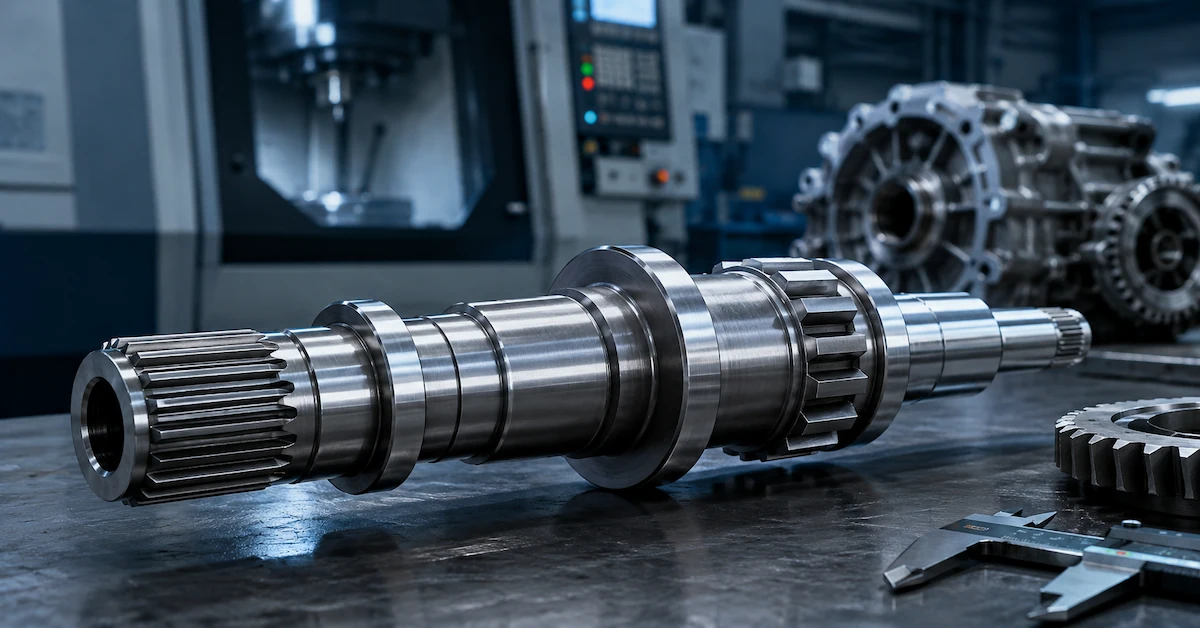
What Is a Custom Transmission Shaft?
A custom transmission shaft is a shaft designed and manufactured according to a buyer’s specific drawing, sample, equipment layout, torque requirement, or assembly condition. It can be used to transfer mechanical power between motors, gearboxes, axles, couplings, bearings, pulleys, and other rotating parts.
Buyers may also search for related terms such as:
- custom drive shaft
- OEM transmission shaft
- industrial transmission shaft
- mechanical transmission shaft
- power transmission shaft
- precision transmission shaft
- heavy-duty transmission shaft
- custom torque shaft
- CNC machined shaft
The keyword custom transmission shaft OEM has strong purchase intent because the buyer is usually not looking for a general explanation. They are often preparing a project, comparing suppliers, sending drawings, requesting samples, or looking for a long-term manufacturing partner.
Zhongteli’s website already states that the company manufactures torque shafts and related products for global customers, and its custom service process includes requirement analysis, solution design, production manufacturing, and quality assurance. This makes transmission shaft OEM content suitable for the site’s broader Torque Shafts and Manufacturing Process content cluster.
Who Needs a Custom Transmission Shaft OEM Supplier?
A professional custom transmission shaft OEM supplier is mainly suitable for B2B buyers who need application-specific shaft solutions instead of standard catalog parts.
Typical buyers include:
- industrial machinery manufacturers
- vehicle system manufacturers
- trailer and transport equipment builders
- agricultural machinery suppliers
- construction machinery manufacturers
- drivetrain and gearbox system suppliers
- automation equipment manufacturers
- aftermarket mechanical parts distributors
- importers and wholesalers of shaft components
- maintenance teams for industrial equipment
These buyers usually care about more than price. They need correct fit, consistent material, stable machining accuracy, repeatable batch quality, and reliable delivery. If a shaft is used in a rotating system, even a small error in runout, straightness, or balance may cause vibration, bearing wear, noise, and downtime.
Why Standard Shafts May Not Be Enough
Standard shafts are designed for common dimensions and general working conditions. However, OEM systems often have special requirements.
A standard shaft may fail when:
- the equipment has limited installation space
- torque load is higher than common use
- connection interfaces are non-standard
- the shaft requires a special spline, keyway, flange, or thread
- vibration control is important
- the working environment is dusty, wet, muddy, or corrosive
- the buyer needs private-label packaging or part marking
- batch repeatability is required for assembly lines
For example, a shaft for an agricultural machine may need corrosion protection and impact resistance. A shaft for an industrial conveyor may need low vibration and long continuous operation. A shaft for a trailer or truck-related system may need stronger material and better fatigue resistance.
This is why a custom transmission shaft OEM project should begin with application review, not only price inquiry.
Key Specifications to Confirm Before Ordering
Before requesting a quotation, buyers should prepare clear technical details. This helps the supplier choose the right material, machining method, heat treatment, surface treatment, and inspection plan.
| Specification Item | What Buyers Should Confirm | Why It Matters |
|---|---|---|
| Shaft length | Overall length and effective working length | Ensures correct installation |
| Shaft diameter | Main diameter, stepped sections, bearing seat size | Affects torque capacity and fit |
| Torque load | Working torque and peak torque | Prevents overload and fatigue failure |
| Rotational speed | RPM range and duty cycle | Determines balancing and vibration control |
| Connection type | Spline, keyway, flange, thread, groove, coupling, or welded end | Ensures compatibility with the system |
| Material grade | Carbon steel, 40Cr, 42CrMo, or custom alloy steel | Affects strength and fatigue life |
| Heat treatment | Quenching, tempering, induction hardening, stress relief | Improves hardness and durability |
| Tolerance | Runout, straightness, concentricity, bearing seat tolerance | Controls assembly accuracy |
| Surface finish | Turning, grinding, polishing, coating | Affects wear and corrosion resistance |
| Balancing | Static or dynamic balancing requirement | Reduces vibration in rotating systems |
| Testing | Hardness, dimension, runout, material, balancing, load test | Confirms quality consistency |
| Packaging | Anti-rust oil, sleeves, cartons, pallets, labels | Protects export shipment quality |
For replacement orders, buyers can provide samples, photos, part numbers, and installation dimensions. For OEM development, 2D drawings, 3D files, torque data, RPM, equipment type, and working environment are preferred.
Material Selection for Transmission Shafts
Material selection directly affects shaft strength, toughness, machinability, heat treatment response, and service life.
Common material options include:
- carbon steel for standard industrial applications
- 40Cr for improved mechanical performance
- 42CrMo for heavy-duty and fatigue-critical systems
- custom alloy steel for OEM applications
- coated or treated steel for outdoor or corrosive environments
A professional OEM supplier should not choose material only by cost. It should consider torque load, working speed, shock load, bearing fit, connection type, environmental exposure, and expected service life.
For steel material references, ASTM A29/A29M-23 covers general requirements for carbon and alloy steel bars, which can help buyers define material expectations for shaft production.
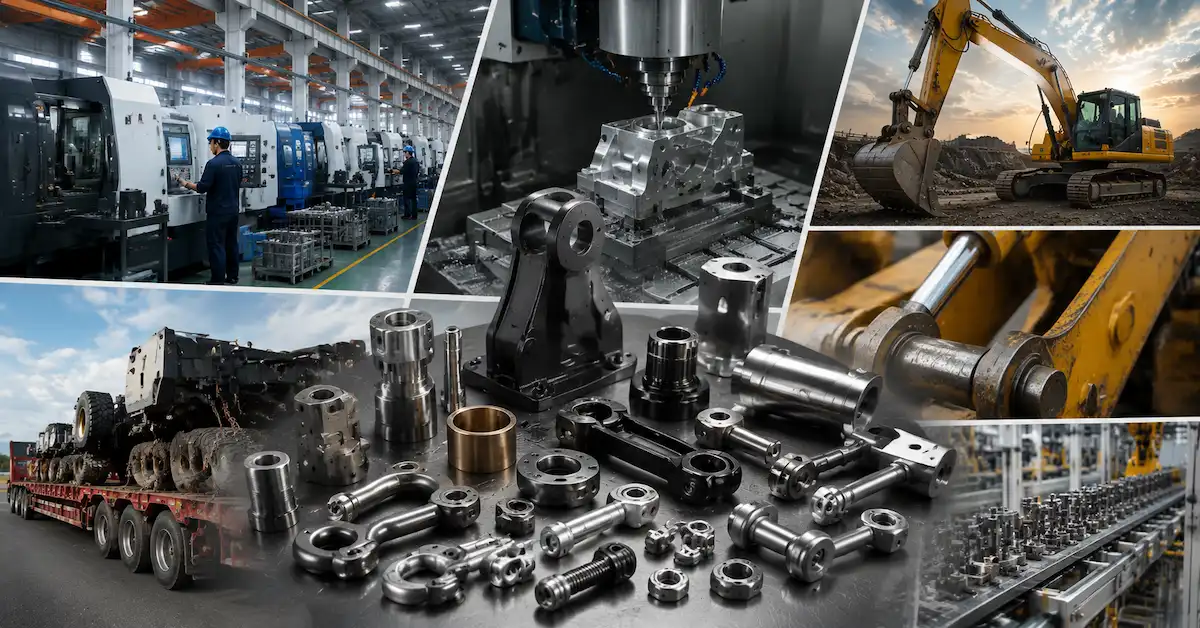
CNC Machining and Precision Control
Transmission shafts often connect with bearings, gearboxes, couplings, flanges, splines, or other mechanical components. This means dimensional accuracy is critical.
Important machining points include:
- outer diameter accuracy
- bearing seat tolerance
- spline or keyway accuracy
- thread quality
- flange face perpendicularity
- groove position
- straightness
- concentricity
- total indicated runout
- surface roughness
For shaft fit and tolerance discussions, ISO 286-1 is commonly used as a reference for tolerances and fits on linear sizes such as cylindrical features. A reliable supplier should understand tolerance requirements and identify which dimensions are truly critical instead of applying unnecessary tight tolerances everywhere.
Precision machining matters because poor dimensional control can lead to vibration, noise, assembly difficulty, and premature wear.
Heat Treatment, Grinding, and Surface Protection
A custom transmission shaft must be strong enough for its working load and stable enough for long-term operation. Heat treatment improves hardness, strength, wear resistance, and fatigue performance.
Common heat treatment options include:
- quenching
- tempering
- induction hardening
- stress relief
- surface hardening
Grinding may be required for bearing seats, sealing areas, or high-precision rotating surfaces. It improves surface finish and dimensional accuracy but adds cost, so it should be used where the application really needs it.
Surface protection is also important, especially for export and outdoor applications. Common options include:
- anti-rust oil
- black oxide
- zinc coating
- phosphating
- painting
- custom protective coating
A good custom transmission shaft OEM supplier should help buyers select the right combination of material, heat treatment, grinding, and surface finish based on the real use case.
Dynamic Balancing for Rotating Shafts
If the shaft rotates at medium or high speed, dynamic balancing may be required. Poor balance can cause vibration, noise, bearing damage, and reduced system life.
Dynamic balancing is especially important for:
- long transmission shafts
- drivetrain-related shafts
- high-speed rotating shafts
- welded or assembled shafts
- shafts with flanges or couplings
- precision machinery shafts
ISO 21940-11 provides technical guidance for balancing procedures and unbalance tolerances for rigid rotors, which is relevant when buyers need to define balancing requirements for rotating shafts.
Not every shaft requires dynamic balancing. A low-speed shaft may not need the same balancing level as a high-speed drivetrain shaft. The supplier should ask about RPM, shaft length, assembly condition, and vibration requirements before recommending a balancing plan.
Custom Transmission Shaft vs Standard Shaft
| Shaft Type | Advantages | Limitations | Best For |
|---|---|---|---|
| Standard shaft | Fast sourcing, lower initial cost | Limited fit and performance control | Simple mechanical systems |
| Custom transmission shaft | Designed for exact equipment requirements | Requires drawings or samples | OEM machinery and vehicle systems |
| Heavy-duty transmission shaft | Stronger material and heat treatment | Higher cost | High-load industrial systems |
| Welded transmission shaft | Flexible structure and lower material waste | Requires weld and runout control | Long shafts or flange-integrated designs |
| Precision transmission shaft | Tight tolerance and smoother rotation | Higher machining cost | Gearboxes, conveyors, automation systems |
For OEM buyers, custom shafts are usually the better choice when fit, life, and repeatability matter more than the lowest first-order price.
Application Scenarios
Custom transmission shafts are used in many industries where power transfer and rotation stability are important.
Common applications include:
- industrial machinery
- conveyors and automation systems
- agricultural machinery
- construction machinery
- trucks and trailers
- automotive systems
- gearbox assemblies
- PTO-related equipment
- material handling systems
- OEM mechanical modules
Different applications require different priorities.
For conveyor systems, smooth operation and low vibration may be most important.
For agricultural machinery, dust, mud, impact, and corrosion resistance may matter more.
For construction machinery, fatigue resistance and shock-load durability are critical.
For automotive or trailer systems, fitment accuracy and batch consistency are key.
Selection Guide by Application
| Application | Recommended Shaft Type | Key Requirement | Suggested Process |
|---|---|---|---|
| Conveyor system | Precision transmission shaft | Continuous rotation and low vibration | CNC machining + balancing |
| Agricultural machinery | Coated transmission shaft | Dust, mud, impact, corrosion resistance | Heat treatment + coating |
| Construction equipment | Heavy-duty transmission shaft | Shock load and fatigue resistance | Alloy steel + heat treatment |
| Truck and trailer systems | Custom torque / transmission shaft | Load stability and fit accuracy | Machining + grinding |
| Gearbox assembly | Precision ground shaft | Accurate bearing and gear fit | Grinding + tolerance control |
| OEM machinery | Fully custom shaft | Drawing accuracy and repeatability | Full OEM manufacturing |
This table should be used as a starting point. Final selection should follow torque, speed, installation space, material requirements, and testing needs.
Quality Control Checklist for OEM Buyers
A reliable custom transmission shaft OEM supplier should provide measurable quality control, not only product photos.
Important QC items include:
- material certificate review
- chemical composition check when required
- hardness testing after heat treatment
- outer diameter inspection
- bearing seat inspection
- spline or keyway inspection
- straightness and runout inspection
- surface roughness check
- coating or anti-rust inspection
- dynamic balancing report when required
- final appearance inspection
- packaging inspection
- batch traceability for repeat orders
Zhongteli’s About Us page states that every batch of products undergoes material inspection, process inspection, and finished product inspection, and it highlights advanced forging, heat treatment, and surface treatment processes. These are useful trust signals for shaft-related OEM content.
Export Packaging and Delivery
Export packaging is especially important for transmission shafts because machined surfaces, splines, flanges, threads, and bearing seats can be damaged during transportation.
Good export packaging may include:
- anti-rust oil
- protective sleeves
- plastic caps
- foam separators
- carton boxes
- wooden pallets
- moisture protection
- product labels
- batch labels
- part number marking
For importers and distributors, packaging should be discussed before production is completed. This helps avoid rust, scratches, mixed parts, and warehouse handling issues.
Cost Factors Buyers Should Understand
The price of a custom transmission shaft depends on several factors:
- material grade
- shaft length and diameter
- number of stepped sections
- spline or keyway complexity
- flange or thread design
- welding or assembly requirement
- heat treatment process
- grinding requirement
- tolerance level
- balancing requirement
- surface coating
- inspection documentation
- packaging method
- order quantity
- delivery schedule
A lower price may not be a true saving if the shaft causes downtime, assembly problems, vibration, or repeat claims. For OEM buyers, the best value usually comes from a balance of cost, quality, and long-term repeatability.
How to Choose the Right Custom Transmission Shaft OEM Supplier
Use this checklist when comparing suppliers:
- Can the supplier review drawings, samples, and application data?
- Does it understand torque, RPM, and working environment?
- Can it recommend suitable steel grades?
- Does it support CNC machining, heat treatment, and grinding?
- Can it control runout, straightness, and concentricity?
- Can it provide dynamic balancing when required?
- Does it inspect critical dimensions before shipment?
- Can it support OEM marking and private-label packaging?
- Does it provide anti-rust export packaging?
- Can it keep batch quality consistent for repeat orders?
- Does it communicate clearly during sampling and production?
A strong OEM supplier should not only ask for quantity. It should ask about application, load, speed, material, connection type, tolerance, and packaging requirements.
Why Work with Ningbo Zhongteli Rigging Co., Ltd.?
Ningbo Zhongteli Rigging Co., Ltd. is a professional manufacturer specializing in rigging equipment, trailer jacks, torque shafts, forged hooks, and related products, with exports to Europe, America, Southeast Asia, the Middle East, and other regions. The company emphasizes independent production, global export, custom services, and strict quality assurance.
For custom transmission shaft buyers, Zhongteli’s value lies in manufacturing capability, customization support, quality inspection, and export service. The company’s About Us page highlights 15+ years of experience, custom product solutions, global export service, ISO & CE certified quality, 15,000㎡ factory area, 50+ production lines, and 200+ skilled workers.
As a custom transmission shaft OEM supplier, Zhongteli can support buyers who need custom dimensions, alloy steel selection, CNC machining, heat treatment, surface treatment, inspection, OEM packaging, and export-ready supply.
For drawings, samples, quotations, or technical communication, buyers can contact Zhongteli through the Contact Us page; the contact page lists the company address in Ningbo, phone number, and email addresses for global cooperation.
OEM Customization Options
Common customization options include:
- custom shaft length and diameter
- stepped shaft design
- spline, keyway, groove, thread, or flange design
- welded or assembled shaft structure
- bearing seat grinding
- custom alloy steel selection
- heat treatment and hardness targets
- surface coating and anti-rust treatment
- dynamic balancing requirement
- part number marking
- private-label packaging
- export carton and pallet design
- batch traceability labels
For OEM production, the goal is not only one correct sample. The real goal is stable repeat orders with the same fit, performance, packaging, and inspection control.
Frequently Asked Questions
1. What does a custom transmission shaft OEM supplier do?
A custom transmission shaft OEM supplier manufactures transmission shafts according to buyer drawings, samples, equipment requirements, torque load, speed, and application environment.
2. What materials are commonly used for transmission shafts?
Common materials include carbon steel, 40Cr, 42CrMo, and custom alloy steel. Heavy-duty applications usually require stronger alloy steel and proper heat treatment.
3. When should I choose a custom shaft instead of a standard shaft?
Choose a custom shaft when standard shafts cannot meet your length, diameter, connection type, torque load, RPM, tolerance, surface treatment, or packaging requirements.
4. What information should I provide for quotation?
Provide drawings, samples, shaft dimensions, torque load, RPM, material requirement, heat treatment, connection type, tolerance, quantity, and packaging needs.
5. Do custom transmission shafts need heat treatment?
Many transmission shafts need heat treatment to improve hardness, strength, wear resistance, and fatigue life. The exact process depends on material and application.
6. Is dynamic balancing required?
Dynamic balancing is recommended for rotating shafts where vibration, speed, noise, bearing wear, or smooth operation is important.
7. Can transmission shafts be customized for OEM packaging?
Yes. OEM customization can include part marking, private labels, export cartons, pallets, batch labels, and anti-rust packaging.
8. What affects the cost of a custom transmission shaft?
Cost depends on material, shaft size, machining complexity, heat treatment, grinding, tolerance, balancing, coating, inspection, packaging, and order quantity.
9. What industries use custom transmission shafts?
They are used in industrial machinery, conveyors, agricultural equipment, construction machinery, trucks, trailers, automotive systems, gearboxes, and OEM mechanical modules.
10. How can I start a custom transmission shaft project?
Prepare your drawing, sample, or application requirements, then contact Zhongteli for technical review, quotation, sampling, and export-ready production.
Build Reliable Power Transmission with the Right OEM Shaft Partner
A custom transmission shaft may look simple, but its performance depends on material, machining accuracy, heat treatment, runout control, balancing, surface protection, and supplier quality management.
Choosing the right custom transmission shaft OEM supplier helps reduce vibration, fitment problems, premature wear, export damage, and after-sales claims. For global B2B buyers, the best supplier is not only the one that can quote quickly. It is the partner that understands your equipment, your application, and your long-term quality expectations.
For custom transmission shafts, torque shafts, drive shafts, and related OEM mechanical components, Ningbo Zhongteli Rigging Co., Ltd. can support global buyers with manufacturing capability, quality control, customization, and export-ready supply.