English


What Makes a Load Binder for Heavy Equipment Different From a General Cargo Binder?
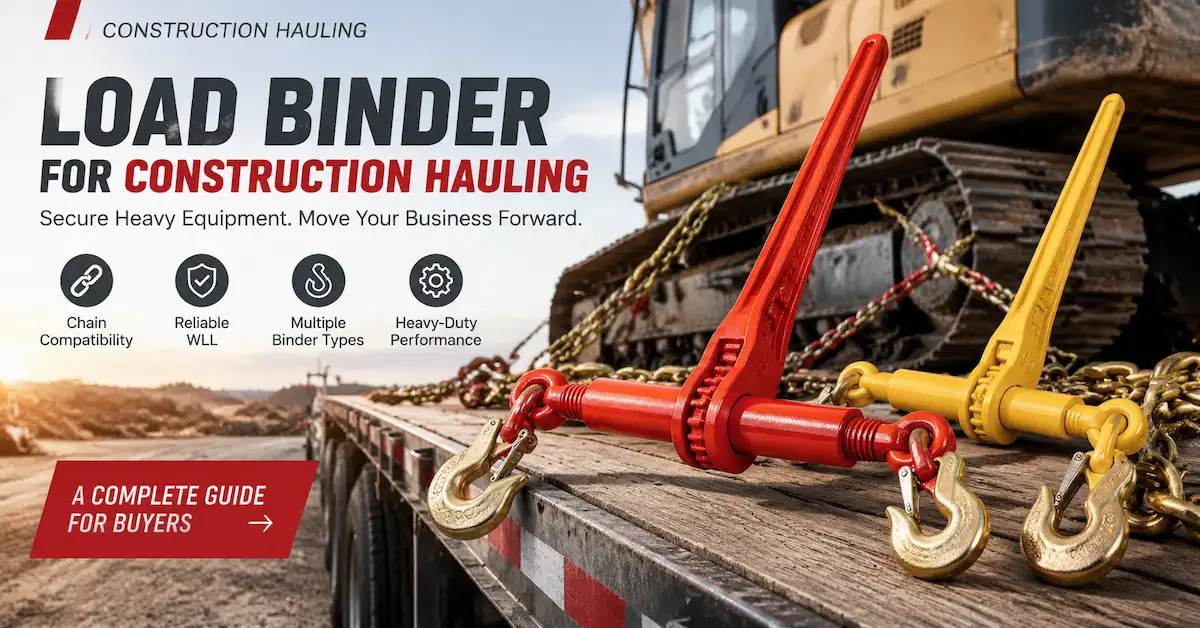
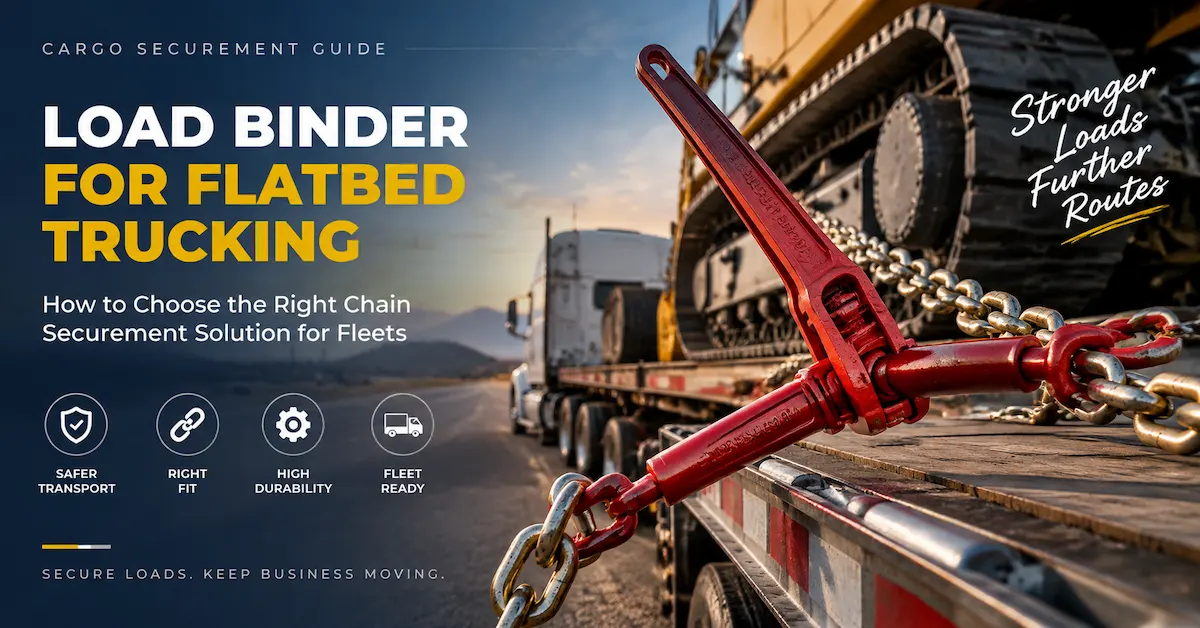
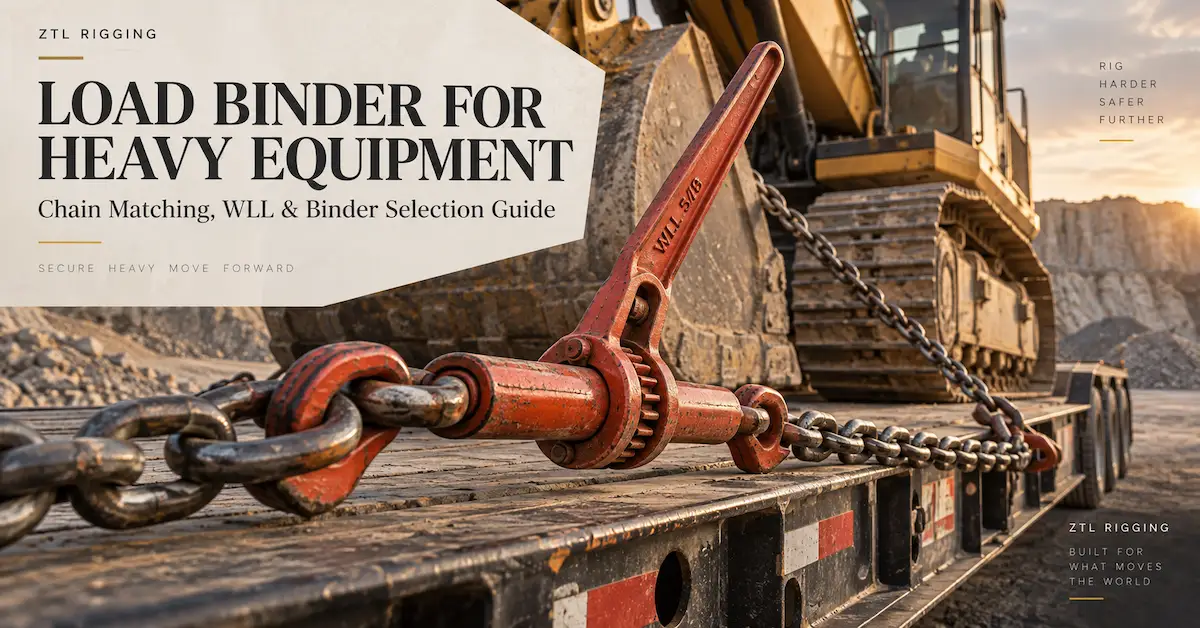
A load binder for heavy equipment is not a separate product category defined only by the words “heavy equipment.” It is a chain-tensioning component selected as part of a complete cargo-securement system for machinery such as excavators, loaders, skid steers, agricultural equipment, and other industrial machines transported on flatbed or equipment trailers. The real selection problem is whether the binder matches the specified transport chain, provides the required Working Load Limit (WLL), has suitable hooks and take-up, fits the available operating space, and can be used according to the buyer’s securement procedure.
ZTL’s Load Binder product range includes ratchet, lever, folding-handle, indirect, EU-type, and torque-tensioner designs. These products solve the same broad task—removing slack and applying tension to chain—but their operating methods and dimensional characteristics differ. A heavy-equipment transporter should therefore begin with the chain system and securement layout rather than choosing a binder because it looks “heavy duty.”
Who Should Use This Heavy Equipment Load Binder Guide?
This guide is intended for heavy-haul fleets, construction-equipment transport companies, machinery rental businesses, cargo-control distributors, trailer-equipment suppliers, agricultural-equipment logistics companies, private-label brands, and industrial purchasing teams that buy load binders in repeat quantities.
The guide is especially useful where buyers need to standardize equipment across a fleet or product line. A fleet procurement manager may want fewer binder SKUs and easier operator training. A distributor may need several chain-size ranges and binder mechanisms for different customers. A private-label buyer may focus on markings, packaging, inspection records, and consistent repeat production. An equipment-transport company may care more about operating clearance around excavator tracks, loader frames, buckets, booms, and trailer structure. These buyers should not all receive the same generic recommendation.
A load binder should also not be treated as a lifting device merely because it is manufactured from heavy-duty steel. ZTL positions its load binders for chain tie-down and cargo-securement applications, so suspended lifting or another different use should not be assumed without specific product documentation.
Start With the Equipment and Tie-Down Layout, Not the Binder
The first step when selecting a load binder for heavy equipment is to understand the transport configuration. An excavator, wheel loader, skid steer, tractor, or industrial machine can have very different tie-down points, geometry, weight distribution, and available working space.
Before requesting a binder quote, record the following:
| Application Input | What the Buyer Should Define | Why It Matters |
|---|---|---|
| Equipment type | Excavator, loader, tractor, skid steer, industrial machine, etc. | Determines the physical securement layout |
| Equipment transport configuration | Trailer type and tie-down positions | Affects chain routing and binder access |
| Chain specification | Chain size, grade, and approved use | Must match the binder hooks and rating |
| Required WLL | Required rating for the selected tie-down component | Determines suitable binder range |
| Available clearance | Space around machine, trailer, and binder | Influences handle style and operation |
| Take-up requirement | Amount of slack the binder must remove | Determines usable adjustment range |
| Operating environment | Rain, mud, dust, road salt, storage conditions | Influences finish and maintenance needs |
| Purchase quantity | Initial order and forecast volume | Helps define commercial requirements |
| Destination market | Country or region | Helps determine markings and documentation |
| Documentation | Drawings, test records, inspection requirements | Defines the approval package |
This application-first approach is more reliable than asking a supplier for “the strongest binder you have.” A higher-rated component is not automatically the best choice if it does not correctly engage the chain, has unsuitable dimensions, or creates unnecessary operating difficulty.
Match the Binder to the Exact Chain Size and Grade
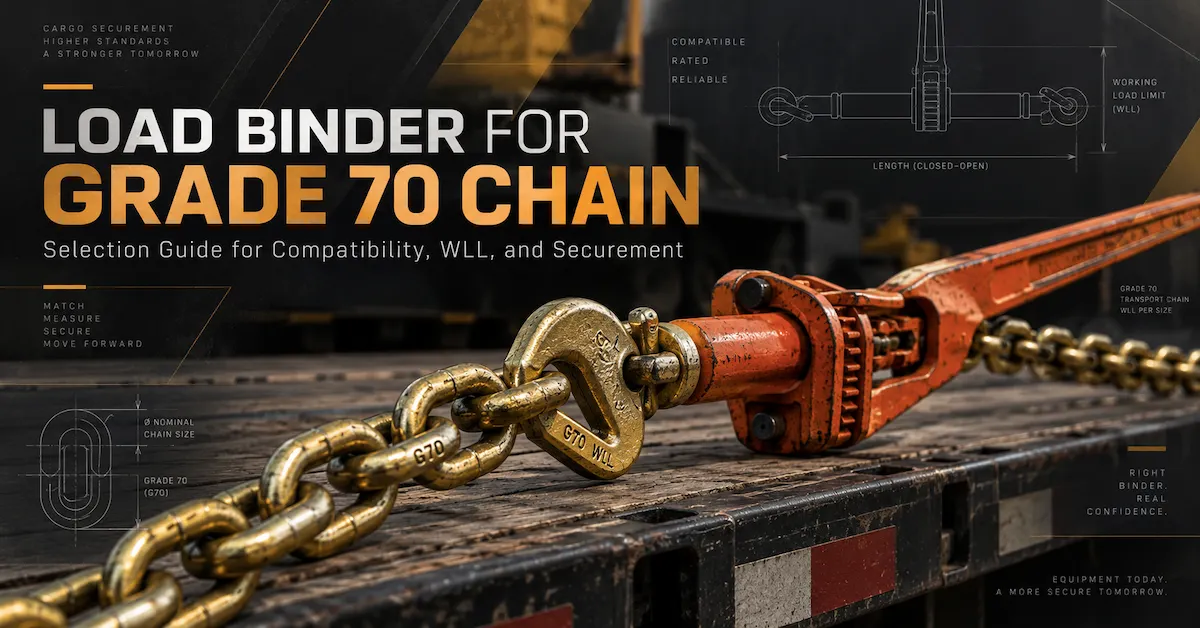
Chain compatibility is one of the most important purchasing checks. ZTL’s current load binder size and chain compatibility guide explains why chain diameter alone does not fully define compatibility. The same nominal chain diameter can appear in more than one binder range, while the WLL and hook geometry can differ. Buyers should therefore confirm the chain size, grade, hook engagement, and marked WLL as a controlled combination.
For example, ZTL currently publishes the following values for its ratchet-type range:
| Published Chain Range | Published WLL | Published Proof Load | Published Minimum Ultimate Load |
|---|---|---|---|
| 1/4–5/16 in. | 2,200 lb | 4,400 lb | 7,800 lb |
| 5/16–3/8 in. | 5,400 lb | 10,800 lb | 19,000 lb |
| 3/8–1/2 in. | 9,200 lb | 18,400 lb | 33,000 lb |
| 1/2–5/8 in. | 13,000 lb | 26,000 lb | 46,000 lb |
These figures show why a purchase specification should keep WLL, proof load, and minimum ultimate load as separate fields. Proof load is not the operating WLL, and minimum ultimate load is not a working capacity. The buyer should also confirm the latest drawing, marking, test requirements, and chain compatibility for the exact product being ordered.
Why WLL Matters More Than an Informal “Tonnage” Description
Heavy-equipment sourcing discussions can become confusing when sales quotations use phrases such as “5-ton binder” or “10-ton binder” without defining what the number means. Procurement documents should instead identify the correct rating terminology and measurement unit.
For a transport tie-down system, the binder works together with the chain, hooks, anchor points, and other securement components. A high-rated binder does not make a lower-rated chain or attachment point stronger. This is why professional buyers should avoid selecting one component in isolation.
A practical RFQ should therefore state:
required binder WLL + chain size + chain grade + hook configuration + intended application.
Keeping these values together also reduces downstream errors. The same information should be consistent on the technical drawing, inspection sheet, product marking, packaging, and any private-label documentation.
Ratchet Load Binder vs Lever Load Binder for Heavy Equipment
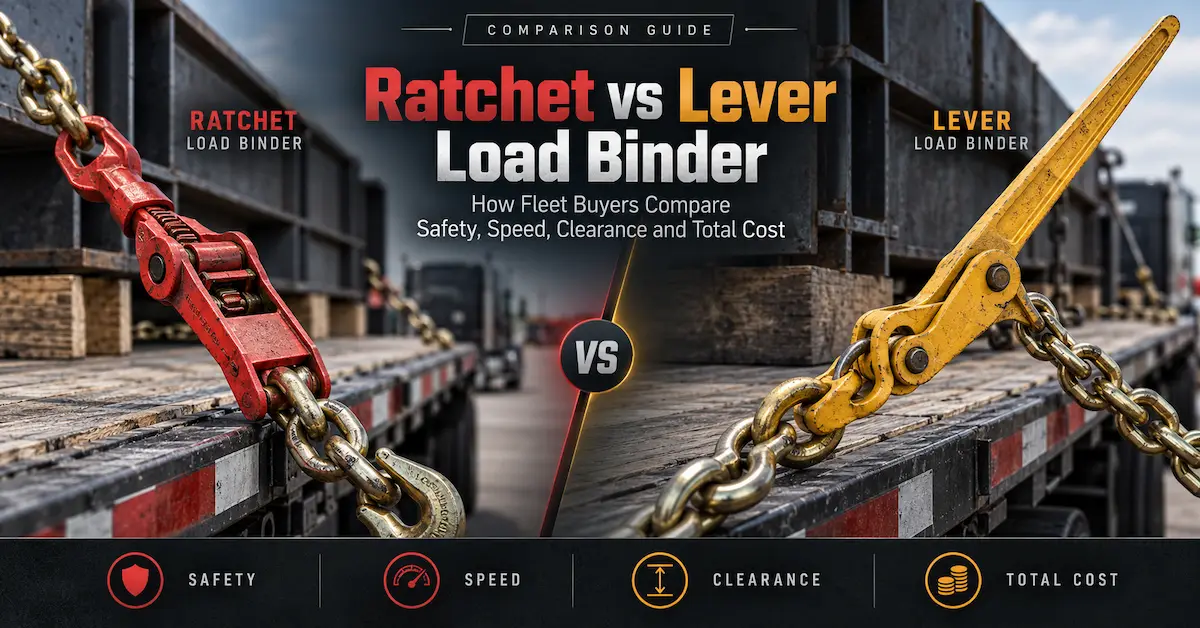
Ratchet and lever binders are two common choices for machinery transport, but their operating characteristics differ. ZTL currently offers both types within its load binder range.
| Factor | Ratchet Load Binder | Lever Load Binder |
|---|---|---|
| Tensioning method | Progressive ratchet adjustment | Lever action |
| Adjustment style | Incremental | Faster movement through lever travel |
| Key buying questions | Take-up, thread engagement, ratchet operation, WLL | Handle travel, release behavior, WLL |
| Heavy-equipment concern | Precise adjustment around machinery | Sufficient handle operating space |
| Typical buyer priority | Controlled repeated adjustment | Simple, familiar operation |
| Must still confirm | Chain compatibility, WLL, hooks, finish, test requirements | Chain compatibility, WLL, hooks, finish, test requirements |
ZTL describes its Lever Type Load Binder as using drop-forged steel, heat treatment, 360° swivel hooks, individual proof testing, and customizable configurations. Its published lever-binder table includes WLL options ranging from 2,280 lb in the smallest listed chain range up to 13,000 lb in the largest listed range. The correct choice still depends on the approved chain and complete securement system rather than selecting the largest number automatically.
When Does a Ratchet Binder Make Sense for Equipment Transport?
A ratchet binder can be useful where operators need gradual adjustment while removing chain slack. The screw-and-ratchet mechanism allows tension to be increased progressively, which can make fine adjustment easier in repeated commercial transport operations.
For heavy machinery, buyers should inspect more than the mechanism name. Confirm usable take-up, thread condition, closed and extended dimensions, remaining thread engagement at the approved maximum extension, hook movement, handle clearance, and protection of exposed threaded components. ZTL’s ratchet load binder sourcing guide places the same emphasis on chain compatibility, WLL, hook design, take-up, forged construction, heat treatment, proof testing, markings, and production consistency.
For a fleet carrying different machines, a ratchet design may also support standardization if the same approved chain system and binder specification can cover several recurring transport configurations. That decision should be based on actual fleet requirements, not on mechanism preference alone.
When Does a Lever Binder Make Sense?
Lever binders are familiar in many heavy-duty transport operations and can apply tension through a relatively direct operating motion. ZTL explicitly positions its lever model for heavy-duty transport use.
The important procurement questions are handle length, handle movement, release behavior, chain fit, hook orientation, and the operator’s available working space. Heavy equipment can make this particularly important because tracks, tires, buckets, blades, trailer rails, and other structures may reduce clearance.
For sample evaluation, buyers should replicate the actual equipment transport layout as closely as practical. A binder that operates freely on an inspection table may behave differently when positioned between a large excavator and a trailer deck with limited space. Operators should also follow the product instructions and the company’s approved securement procedure rather than improvising leverage extensions or alternate operating methods.
Use Folding-Handle Binders When Clearance Is the Main Problem
A folding-handle design addresses a different buyer problem: reducing handle projection. ZTL’s folding handle load binder guide identifies heavy equipment transportation, construction machinery hauling, flatbed transportation, and limited-clearance environments as relevant applications.
That can be useful when securing equipment where conventional handles may project toward:
- excavator tracks;
- loader tires;
- trailer side rails;
- adjacent chains;
- hydraulic components;
- machine body panels;
- nearby cargo.
However, a folding handle should not be selected simply because it looks more compact. The buyer still needs to confirm WLL, chain compatibility, hinge construction, locking behavior, folded envelope, hook geometry, finish, and inspection requirements. The hinge also introduces an additional component that should be included in sample and production inspection.
Take-Up Range Is Critical When Securing Machinery
Take-up is the amount of chain slack a binder can remove through its usable adjustment range. It matters because heavy machinery rarely presents identical tie-down geometry from one transport job to another.
Too little usable take-up can force the operator to reposition the chain repeatedly. Incorrect use at excessive extension can create another problem if adequate thread engagement or approved operating geometry is no longer maintained.
For ratchet-style products, ask the supplier to provide:
- fully closed dimensions;
- nominal working dimensions;
- maximum approved extension;
- usable take-up;
- minimum required thread engagement;
- hook-to-hook reference dimensions.
ZTL’s load binder compatibility guide specifically identifies take-up as a commercial specification rather than a minor dimension.
Hook Geometry Matters as Much as Binder Capacity
The hooks are the interface between the binder and transport chain. For that reason, photographs are not enough to verify compatibility.The buyer should review the hook pocket, throat dimensions, chain seating, swivel movement where applicable, and the relationship between the hook and the intended chain.
For heavy-equipment transport programs that source chain from several suppliers, a controlled compatibility matrix can be valuable. Instead of saying a binder “fits common transport chain,” identify the combinations that have been approved.
A distributor should also keep compatibility information consistent across the product page, label, carton, manual, and sales data. A technically correct binder can still create customer complaints if different documents show different chain-size or WLL information.
Select Surface Protection for the Real Working Environment
Heavy-equipment transportation frequently exposes securement hardware to outdoor storage, rain, mud, road contamination, dust, and repeated handling. Agricultural or construction operations can create especially dirty working conditions.
Buyers should therefore define the use environment instead of requesting a generic “anti-rust finish.” Ask the supplier what surface treatment is applied to each important component and how the coating is inspected. Threaded or moving areas may require different treatment from large forged surfaces.
For private-label programs, include finish requirements in the approved specification and sample. Color or coating changes should not be treated as a purely cosmetic decision if they affect dimensions, moving interfaces, markings, or inspection.
What Manufacturing and QC Evidence Should a Buyer Request?
A professional load binder purchase should connect the drawing to the manufacturing and inspection process. ZTL describes manufacturing capabilities that include forging, heat treatment, surface treatment, inspection, and customization, while individual load-binder pages identify features such as forged construction and proof testing. Buyers can review the company background through ZTL About Us and then request model-specific evidence for the product being sourced.
For a heavy-equipment load binder program, consider confirming:
| QC Area | Buyer Question |
|---|---|
| Raw material | What specification controls the critical forged components? |
| Forging | Which parts are forged and how are production lots identified? |
| Heat treatment | What process and verification apply to the selected model? |
| Dimensions | Which hook, thread, take-up, and handle dimensions are controlled? |
| Operation | How is mechanism movement checked? |
| Proof testing | Is testing unit-based or sampling-based for the quoted model? |
| Marking | How are WLL, chain range, branding, and lot information controlled? |
| Finish | What appearance and coating criteria apply? |
| Traceability | Can inspection records be linked to the production lot? |
| Change control | How are changes communicated after sample approval? |
Do not assume that a capability mentioned at company level applies identically to every SKU. Model-specific confirmation is more useful than a general factory statement.
Compare Binder Types Around the Transport Problem
For buyers purchasing a load binder for heavy equipment, the following comparison helps organize the initial selection before requesting controlled specifications.
| Binder Type | Main Purchasing Advantage | Heavy-Equipment Application Question | Main RFQ Focus |
|---|---|---|---|
| Ratchet | Progressive tension adjustment | Is controlled incremental take-up useful? | WLL, chain fit, take-up, threads |
| Lever | Direct lever operation | Is there enough handle and release clearance? | WLL, chain fit, handle geometry |
| Folding Handle | Reduced handle projection | Is equipment-to-trailer clearance limited? | Folded envelope, hinge, WLL |
| Indirect | Alternative operating geometry | Does the operating method fit the current securement procedure? | Operation, clearance, WLL, hooks |
| EU Type | Regional product format | Is this design required by the customer or product range? | Destination, chain interface, documents |
| Torque Tensioner | Controlled tensioning concept | Does the buyer have a defined torque/tension procedure? | Method, compatibility, inspection |
This comparison is not a ranking. The appropriate binder depends on the buyer’s chain system, equipment geometry, operating procedure, destination requirements, and workforce practices. ZTL’s current range includes these different binder concepts so buyers can start from the application rather than forcing every job into a single design.
How Should Distributors Build a Heavy-Equipment Binder Range?
A distributor may not need every binder type in every size. Instead, map each SKU to a customer job.
Ask:
Which chain sizes are most common among customers transporting construction equipment? Which WLL steps create useful separation rather than duplicate products? Do customers prefer ratchet operation or lever operation? Is a folding handle valuable because many customers carry equipment with limited clearance? Are markings and packaging clear enough for counter staff and end users to distinguish models?
This approach reduces unnecessary SKU duplication. It also allows the supplier and distributor to create clearer packaging, better product descriptions, and more predictable replenishment.
OEM and Private-Label Requirements Should Be Separated by Risk
Customization can include logos, color, markings, cartons, labels, manuals, hooks, dimensions, and other product changes. These requests should not all be treated alike.
Logo and carton artwork may primarily affect packaging approval. Changing a hook, dimension, material, operating mechanism, or load-related feature can affect product performance and may require drawing changes, tooling, sample validation, or additional testing.
For an OEM program, start with the closest standard ZTL load binder product, identify each requested difference, and classify it as:
branding → packaging → dimensional → material → functional/performance.
Then agree which changes require a new sample or revised inspection criteria before releasing mass production.
Why Unit Price Is Not the Only Heavy-Equipment Transport Cost
A lower binder price can become expensive if the purchased specification creates chain-fit problems, unclear markings, packaging damage, inconsistent finish, or repeat-order variation.
For bulk sourcing, compare:
unit price + sample cost + customization + inspection + packaging + freight + warehousing + replacement handling + inventory complexity.
A fleet may value product standardization because it simplifies training and inspection. A distributor may accept more SKUs because wider assortment creates sales opportunities. A private-label brand may spend more on packaging and traceability because customer complaints are harder to manage without clear batch identification.
Commercial decisions should therefore follow the buyer’s operating model rather than a universal “lowest cost” rule.
A Practical RFQ for Load Binder for Heavy Equipment Projects
Instead of sending “Please quote heavy-duty load binders,” provide a structured technical inquiry.
| RFQ Field | Buyer Input |
|---|---|
| Equipment transported | Excavator, loader, tractor, industrial machine, etc. |
| Binder type | Ratchet, lever, folding handle, or open for recommendation |
| Chain size | Exact size range |
| Chain grade | Buyer’s approved chain specification |
| Required WLL | Required working load limit |
| Take-up | Required adjustment range |
| Hook type | Required chain interface |
| Environment | Outdoor, construction, agricultural, road exposure, etc. |
| Finish | Required surface treatment |
| Marking | WLL, chain size, brand, lot information |
| Testing | Required inspection or proof-test documentation |
| Packaging | Unit/carton/pallet requirements |
| Quantity | Trial order, initial bulk order, annual forecast |
| Market | Destination country or region |
| OEM | Logo, color, packaging, dimensional or other customization |
For an application-based review, buyers can submit these details through the ZTL contact page.
Frequently Asked Questions
1. What is the best load binder for heavy equipment?
There is no single binder type that is best for every machine. Select according to chain size and grade, required WLL, take-up, hook compatibility, operating clearance, and the company’s approved securement procedure. Ratchet, lever, and folding-handle designs solve different operational problems.
2. Can I select a binder only by equipment weight?
No. Equipment weight is part of the securement assessment, but a binder must be selected within the complete tie-down system. Chain rating, binder WLL, anchor points, configuration, and applicable securement requirements also matter.
3. Which binder is better for excavator transport: ratchet or lever?
Neither is universally better. Ratchet binders provide progressive adjustment, while lever binders use direct lever operation. Consider chain compatibility, take-up, operator procedure, handle clearance, and fleet preference before choosing.
4. Why is chain grade important when choosing a load binder?
Chain grade affects the chain’s rated performance and should be matched with an approved binder and hook configuration. Chain diameter alone does not fully define compatibility.
5. What WLL should I specify for a heavy-equipment load binder?
Specify the WLL required by the approved tie-down design and applicable transport requirements. Do not substitute proof load or minimum ultimate load for WLL.
6. When should I choose a folding-handle load binder?
A folding-handle model can be useful where excavator tracks, machine bodies, trailer rails, or adjacent cargo create limited clearance. Confirm the folded dimensions and hinge behavior in addition to normal binder specifications.
7. Are ZTL load binders proof tested?
ZTL publishes individual proof-testing statements for certain models, including its lever-type product. Testing requirements should still be confirmed for the exact model and order rather than assumed across every binder configuration.
8. Can load binders be customized for a private-label brand?
ZTL lists customization availability across its load-binder range. Branding, packaging, markings, and technical changes should be separated because structural or dimensional changes may require additional technical review and sample validation.
9. What information should I send for a bulk quotation?
Provide binder type, chain size and grade, WLL, quantity, destination, application, finish, markings, packaging, testing requirements, and any OEM customization. A detailed RFQ is more useful than asking only for the lowest unit price.
10. Where can I compare ZTL load binder options?
Review the ZTL Load Binder product range, then use the load binder size and chain compatibility guide to organize chain, WLL, take-up, hooks, test requirements, and RFQ information before requesting a quotation.
Conclusion
Selecting a load binder for heavy equipment is a system-matching decision rather than a search for the largest capacity number. Heavy-haul fleets, machinery transport companies, distributors, and OEM buyers should begin with the equipment tie-down layout, then confirm chain size and grade, WLL, hook engagement, take-up, handle clearance, manufacturing controls, markings, finish, and inspection requirements. Ratchet, lever, folding-handle, indirect, and other binder designs can each solve different transport problems, but none should be approved without a controlled specification that connects the binder to the intended chain and operating procedure.
ZTL offers multiple configurations through its Load Binder range, with published manufacturing capabilities covering forging, heat treatment, surface treatment, inspection, and customization. For a bulk, fleet, distributor, or private-label project, contact ZTL with the equipment type, chain specification, required WLL, binder preference, quantity, destination market, finish, packaging, and testing requirements so the appropriate product configuration can be evaluated before sample and production approval.