English


How to Choose a Load Binder for Construction Hauling Applications
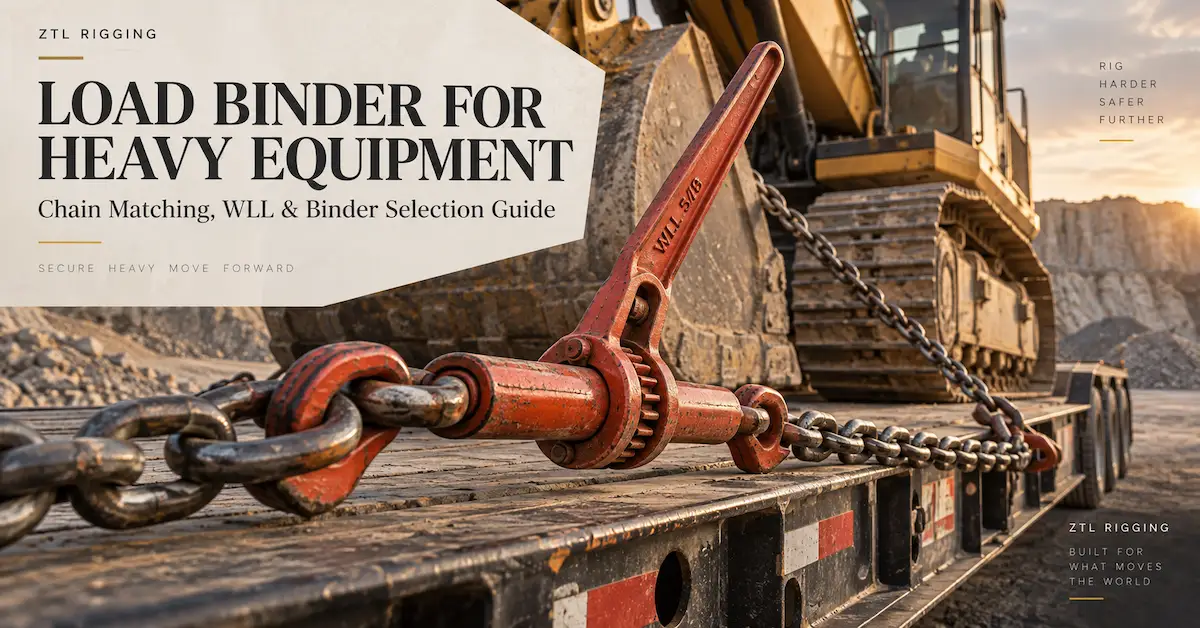
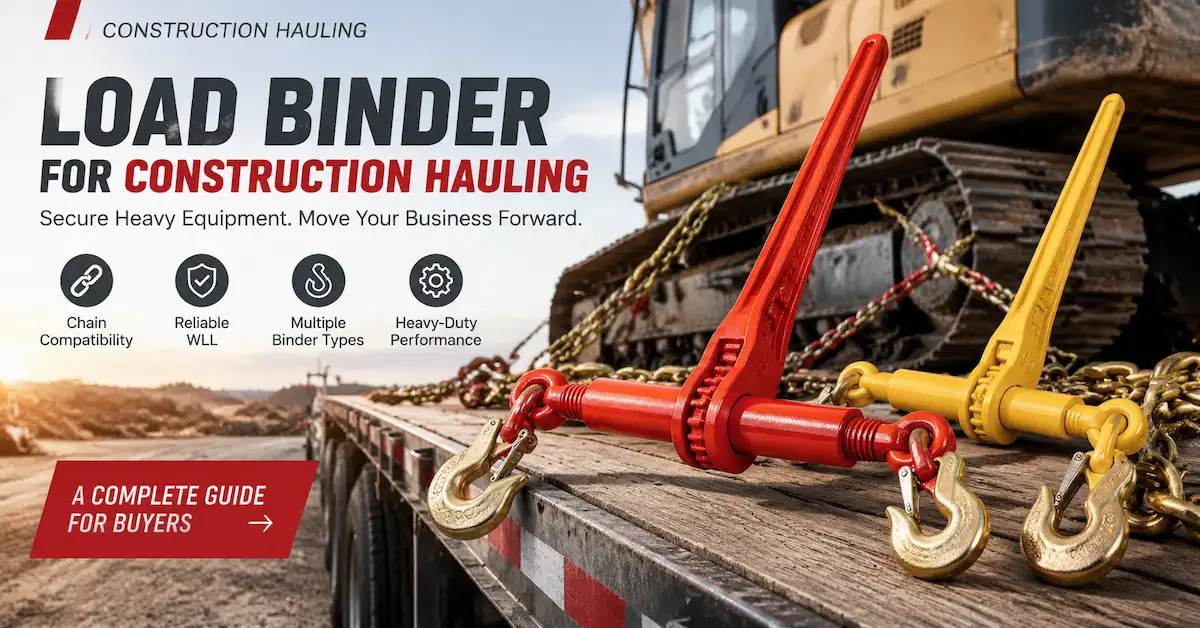
A load binder for construction hauling is an important component in heavy equipment transportation systems. Construction companies and equipment transport fleets commonly move excavators, loaders, bulldozers, skid steers, cranes, and other machinery using flatbed trailers, lowboy trailers, or specialized equipment carriers. Because these machines have different shapes, weights, attachment points, and transport requirements, selecting the correct binder requires a complete understanding of the securement system.
A suitable load binder must match the chain specification, Working Load Limit (WLL), hook design, adjustment range, and operating environment. The binder does not work alone; it functions together with the chain, anchor points, trailer structure, and cargo securement procedure.
ZTL provides multiple Load Binder solutions, including ratchet load binders, lever load binders, folding handle load binders, indirect tensioners, EU type tensioners, and torque tensioners. These product options allow buyers to evaluate different operating methods and application requirements instead of using one design for every construction transport situation.
Why Construction Hauling Requires the Right Load Binder Selection
Construction equipment transportation creates challenges that are different from general cargo transportation.
Heavy machines often include:
- Large steel structures
- Irregular attachment points
- Tracks or oversized tires
- Hydraulic components
- Limited tie-down access
- High-frequency loading operations
A binder selected for construction hauling should consider:
| Factor | Why It Matters |
|---|---|
| Equipment type | Excavators, loaders, and machinery have different securement layouts |
| Chain compatibility | Ensures correct connection between chain and binder |
| Working Load Limit | Defines the applicable working capacity |
| Handle clearance | Affects operator access around equipment |
| Adjustment range | Determines ability to remove chain slack |
| Operating environment | Influences finish and maintenance requirements |
| Purchase volume | Impacts OEM and bulk supply planning |
The objective is not simply selecting the strongest-looking binder. The objective is selecting a controlled product specification that matches the equipment transport application.
Who Uses Load Binders for Construction Equipment Transport?
Construction Equipment Transport Companies
Heavy-haul companies transport machinery between construction sites, rental yards, warehouses, and project locations.
Their purchasing priorities often include:
- Reliable repeated operation
- Compatible chain systems
- Fast loading procedures
- Easy inspection processes
- Consistent replacement supply
Construction Equipment Rental Companies
Rental companies frequently move equipment between locations and require securement products that support repeated handling.
They usually focus on:
- Product durability
- Operator familiarity
- Maintenance requirements
- Fleet standardization
Flatbed Trucking Fleets
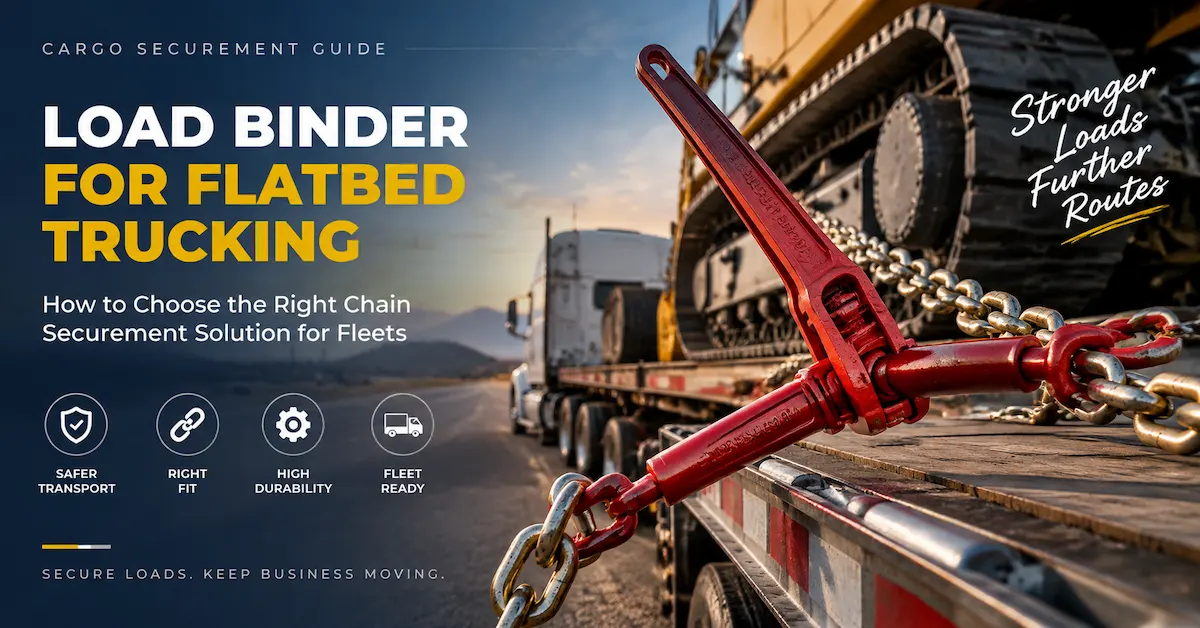
Flatbed carriers transporting construction machinery need products suitable for different cargo configurations.
Important considerations include:
- Trailer layout
- Chain routing
- Available working space
- Securement procedures
Equipment Dealers and Distributors
Distributors may purchase binders as replacement or accessory products for construction customers.
They typically require:
- Multiple product options
- Clear specifications
- Packaging consistency
- Stable supply
OEM and Private Label Buyers
Private-label buyers often evaluate:
- Product customization
- Brand marking
- Packaging
- Documentation
- Batch consistency
For these customers, supplier capability is part of the purchasing decision.
Start With Chain Compatibility Before Choosing a Binder
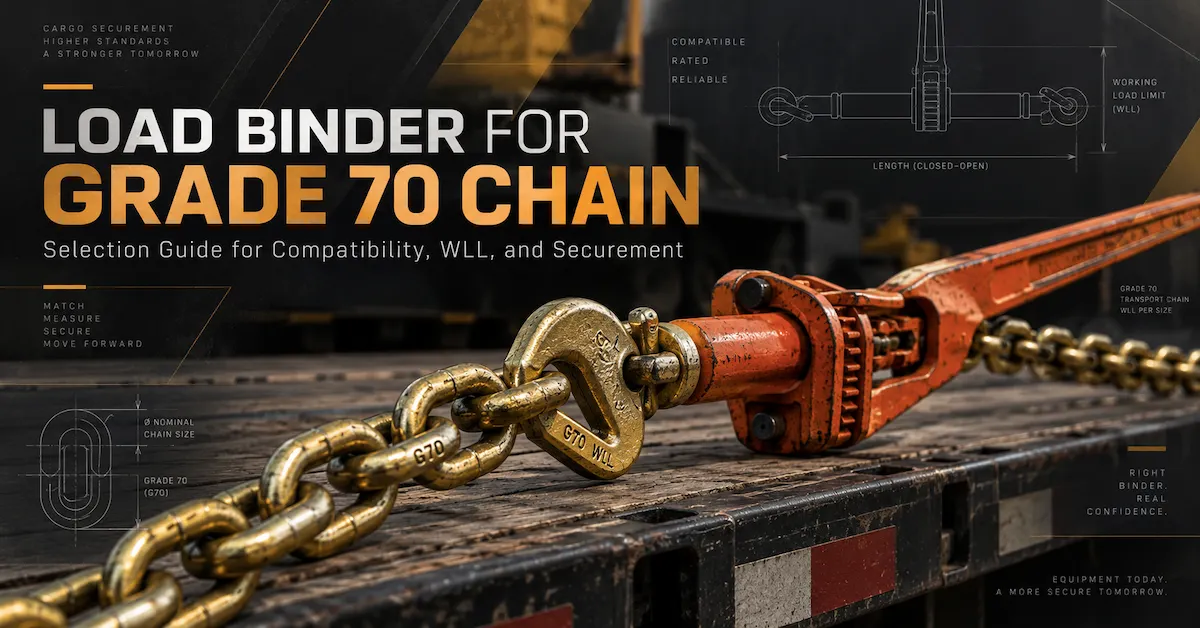
One of the most important steps when selecting a load binder for construction hauling is confirming compatibility with the chain system.
A professional buyer should confirm:
| Requirement | Information Needed |
|---|---|
| Chain size | Diameter or chain specification |
| Chain grade | Approved chain grade |
| Required WLL | Working Load Limit |
| Hook style | Compatible connection method |
| Application | Equipment transport requirements |
| Quantity | Trial order or bulk requirement |
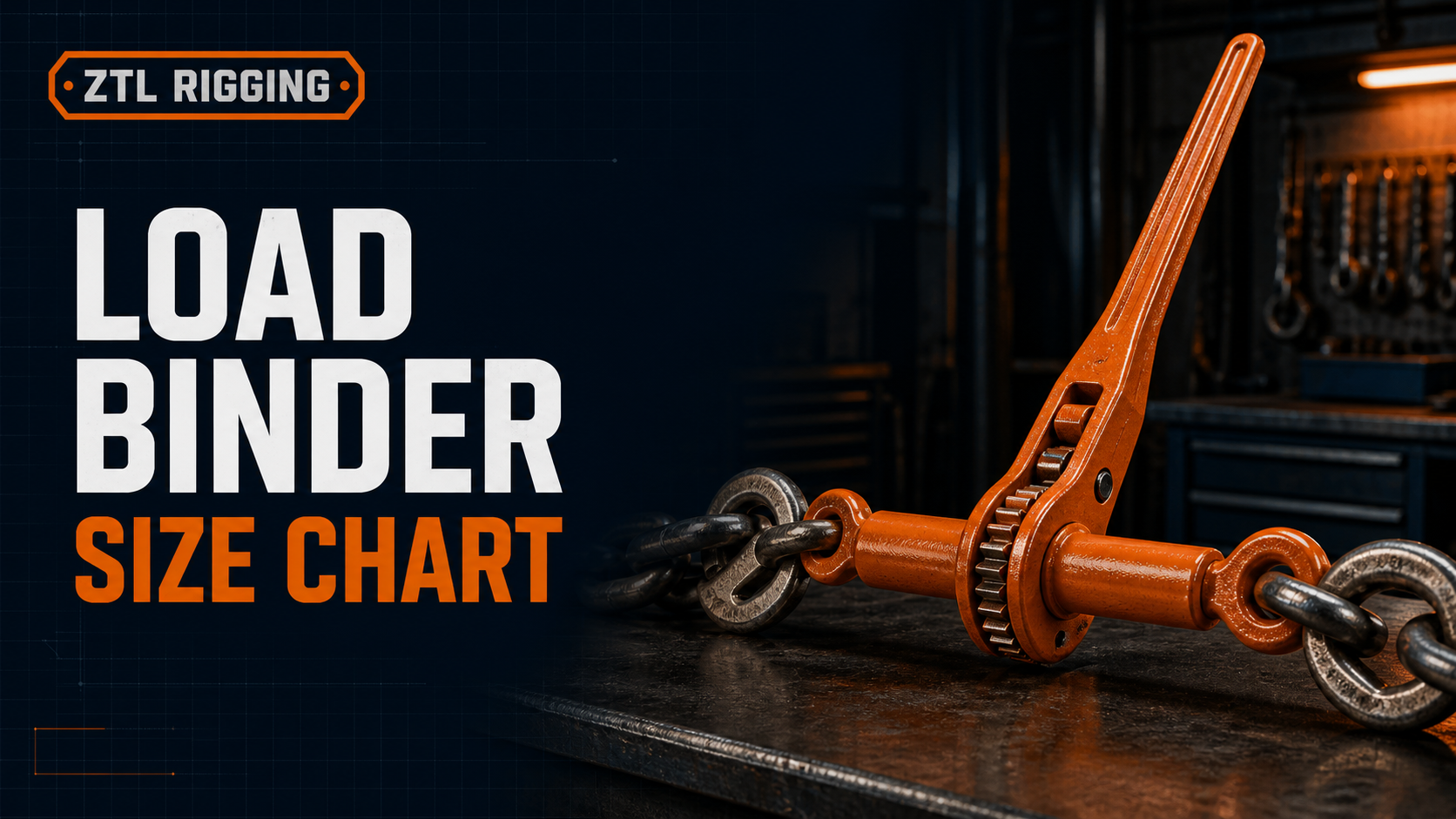
ZTL’s Load Binder Size Chart and Chain Compatibility Guide explains why chain size, grade, WLL, and binder specifications should be reviewed together.
A binder that physically connects to a chain is not automatically the correct choice. Buyers should confirm the complete securement combination before ordering.
Understanding WLL for Construction Equipment Securement
What Is Working Load Limit?
Working Load Limit (WLL) is the maximum allowable working load under defined conditions.
When sourcing construction hauling binders, buyers should distinguish between:
- Working Load Limit
- Proof Load
- Ultimate Load
These values have different meanings.
Why Rating Information Matters
Construction equipment transport involves high-value machinery. A purchasing decision based only on words such as:
- Heavy duty
- Industrial strength
- High capacity
does not provide enough technical information.
A proper specification should identify:
- Required WLL
- Compatible chain size
- Approved application
- Product markings
- Inspection requirements
This information creates a clearer purchasing standard between suppliers.
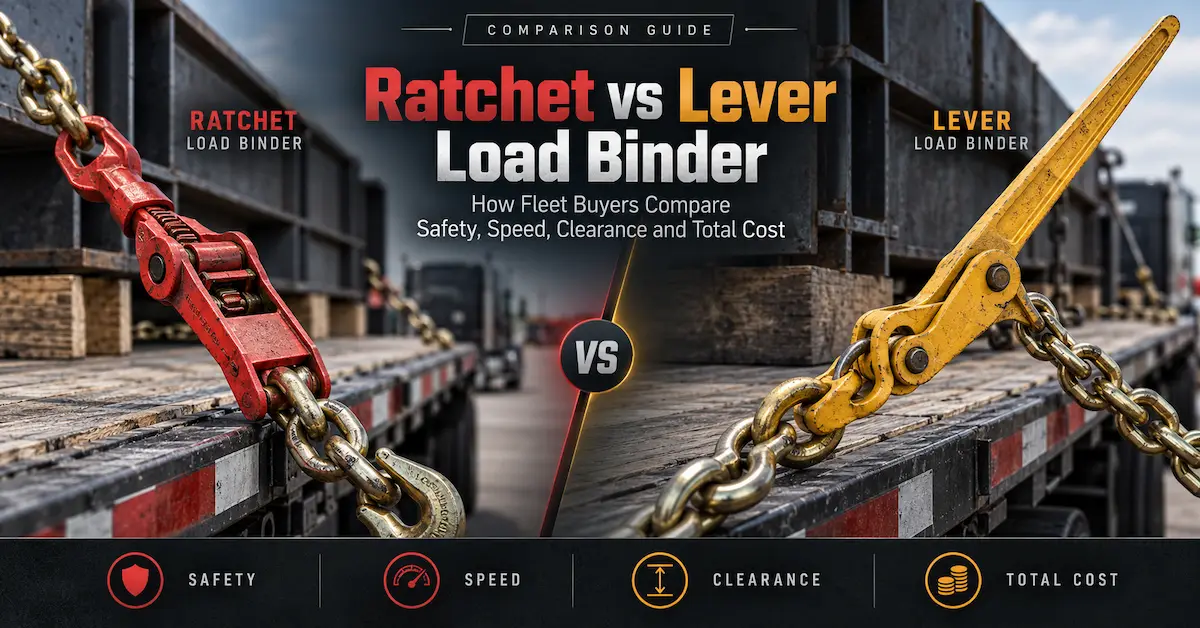
Ratchet Load Binder for Construction Hauling
Ratchet load binders are commonly selected when operators need controlled adjustment during equipment transportation.
Advantages may include:
- Progressive tension adjustment
- Controlled operation
- Flexible tension management
However, buyers should evaluate:
Adjustment Range
The binder should provide sufficient take-up capability for removing chain slack while staying within approved operating conditions.
Thread and Mechanism Condition
For repeated construction hauling use, buyers should consider:
- Thread protection
- Mechanism inspection
- Lubrication requirements
- Environmental exposure
ZTL’s Ratchet Load Binder provides a product option for buyers evaluating ratchet-based securement solutions.
Lever Load Binder for Heavy Equipment Transport
Lever load binders are widely used in transportation applications because of their direct operating method.
For construction hauling applications, buyers should review:
- Handle movement
- Operating clearance
- Hook compatibility
- Chain matching
- Inspection requirements
ZTL’s Lever Type Load Binder includes forged construction, heat treatment, swivel hooks, and customization options.
The correct selection depends on the equipment layout and securement process rather than choosing one binder type universally.
Folding Handle Load Binder for Limited Equipment Clearance
Construction machinery often creates limited working space because of:
- Excavator tracks
- Loader buckets
- Machine frames
- Trailer side rails
- Nearby chains
A folding handle load binder can help reduce unnecessary handle projection.
ZTL’s Folding Handle Load Binder Guide discusses applications where clearance is an important consideration.
Before purchasing, buyers should confirm:
| Inspection Item | Purpose |
|---|---|
| Folded size | Check storage and transport clearance |
| Handle operation | Confirm practical use |
| Hinge structure | Review durability |
| Chain compatibility | Avoid incorrect matching |
| WLL | Confirm securement requirement |
How Take-Up Range Affects Construction Hauling Performance
Take-up range refers to how much slack a binder can remove through its adjustment system.
For construction equipment transportation, this matters because:
- Equipment tie-down points vary
- Chain routing changes between machines
- Trailer configurations differ
- Operators need practical adjustment capability
A buyer should request:
- Closed length
- Extended length
- Adjustment range
- Hook-to-hook dimensions
- Approved operating range
ZTL’s Load Binder Compatibility Guide highlights take-up as an important specification when selecting binders.
Manufacturing Quality Requirements for Construction Load Binders
For B2B buyers, selecting a supplier also means evaluating manufacturing consistency.
ZTL describes manufacturing capabilities including:
- Forging
- Heat treatment
- Surface treatment
- Inspection
- Customization
These capabilities are introduced on the ZTL About Us page.
A construction hauling buyer should evaluate:
| Quality Area | Buyer Review Point |
|---|---|
| Materials | Are critical components controlled? |
| Forging | Are forged parts consistent? |
| Heat treatment | Is the process verified? |
| Dimensions | Are hooks and threads inspected? |
| Testing | Are requirements defined? |
| Marking | Are ratings traceable? |
| Surface treatment | Is protection suitable? |
Factory capability should support product-specific inspection rather than replace it.
Surface Protection Requirements for Construction Environments
Construction hauling environments often expose equipment securement products to:
- Mud
- Dust
- Rain
- Road salt
- Outdoor storage
Therefore, buyers should define the working environment before selecting surface treatment.
Questions to confirm:
- What coating system is used?
- Which components receive protection?
- How are moving parts treated?
- What inspection criteria apply?
A finish requirement should be based on actual usage conditions rather than a general statement such as “corrosion resistant.”
OEM Customization for Construction Load Binder Projects
OEM buyers may require customization for:
- Brand marking
- Packaging
- Labels
- Product identification
- Specific configurations
However, different customization requests involve different risks.
| Customization | Impact |
|---|---|
| Logo | Identification change |
| Packaging | Distribution requirement |
| Color | Appearance requirement |
| Dimensions | Engineering review |
| Structure | Validation requirement |
A clear specification before production reduces communication problems during repeat orders.
How to Prepare an RFQ for Construction Hauling Load Binders
A professional RFQ should include:
| Information | Details |
|---|---|
| Equipment type | Excavator, loader, tractor, machinery |
| Chain specification | Size and grade |
| Required WLL | Working Load Limit |
| Binder preference | Ratchet, lever, folding handle |
| Quantity | Trial or bulk order |
| Packaging | Distribution requirements |
| Branding | OEM requirements |
| Inspection | Required documents |
Buyers can submit project details through the ZTL Contact Us page.
Common Mistakes When Buying Load Binders for Construction Hauling
Selecting Only by Equipment Weight
Equipment weight alone does not define the correct binder specification.
Ignoring Chain Compatibility
A binder must match the approved chain system.
Choosing Without Considering Clearance
Large machines often create limited operating space.
Confusing Different Load Ratings
WLL, proof load, and ultimate load should remain separate concepts.
Ordering Without Technical Documents
Before bulk purchasing, confirm:
- Product specifications
- Chain compatibility
- Inspection requirements
- Packaging details
Frequently Asked Questions
What is the best load binder for construction hauling?
The best option depends on chain compatibility, required WLL, equipment layout, operating clearance, and company procedures.
Can one binder work for all construction equipment?
No. Different machines and transport configurations may require different binder specifications.
Should I choose ratchet or lever binders for excavator transport?
The choice depends on operating preference, available clearance, adjustment needs, and chain compatibility.
What chain information should I provide when buying a binder?
Provide chain size, grade, WLL requirement, application, and quantity.
Why is WLL important for construction hauling?
WLL helps buyers evaluate whether the binder matches the intended working requirement.
Can load binders be customized for construction companies?
Yes. Customization may include branding, packaging, and selected product requirements.
What quality information should I request from a supplier?
Request product specifications, inspection requirements, testing information, and production-control details.
How should rental companies manage binder purchasing?
Rental companies should focus on standardization, inspection procedures, operator familiarity, and replacement planning.
Can folding handle binders help with equipment clearance?
They can be useful where reduced handle projection is important, but chain compatibility and WLL still need confirmation.
How can I request a quotation from ZTL?
Provide equipment type, chain specification, required WLL, quantity, application, and customization needs through the ZTL Contact Us page.
Conclusion
Selecting a load binder for construction hauling requires more than choosing a product with a high capacity label. Construction transport companies, equipment fleets, distributors, and OEM buyers should evaluate chain compatibility, WLL, binder type, adjustment range, operating clearance, manufacturing quality, and supplier support before purchasing.
ZTL provides multiple Load Binder solutions, including ratchet, lever, folding handle, indirect, EU type, and torque tensioner designs for different equipment transportation requirements. For construction hauling applications, buyers can share equipment type, chain specification, required rating, quantity, and customization requirements through the ZTL Contact Us page to evaluate a suitable securement solution.