English


Forged Rigging Hook Manufacturer: Engineering Strength and Reliability for Modern Lifting Systems
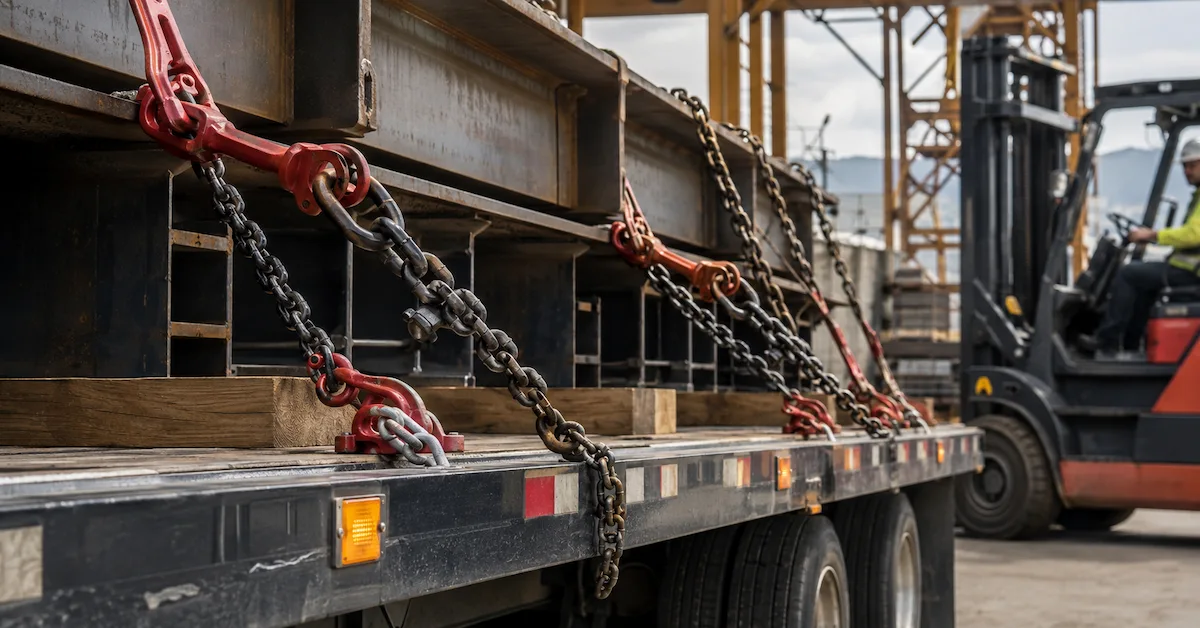
Every chain, binder, and lifting system depends on a small yet decisive component — the forged rigging hook. It holds the weight of steel beams, containers, and machinery, where structural failure isn’t just costly — it’s catastrophic.
This is why choosing a professional forged rigging hook manufacturer like Zhongteli is more than a purchase decision; it’s an investment in engineered safety and global compliance.
Why Rigging Safety Fails Without Certified Forgings
In today’s competitive markets, some hooks are made with low-grade casting or welded joints that compromise mechanical integrity. Under sudden dynamic load, these defects cause hooks to deform or fracture — endangering workers and equipment alike.
Typical Buyer Pain Points:
-
Inconsistent load ratings and uncertified materials.
-
Hooks cracking under temperature variation or repeated stress.
-
Non-standard pin diameters leading to mismatched chain assembly.
-
Lack of quality traceability and documentation for export compliance.
According to OSHA and ASME B30.10, all rigging hooks used in lifting applications must undergo proof testing and regular inspection. Without these certifications, no hook is legally qualified for industrial lifting.
The Forging Principle: Turning Steel Into Safety
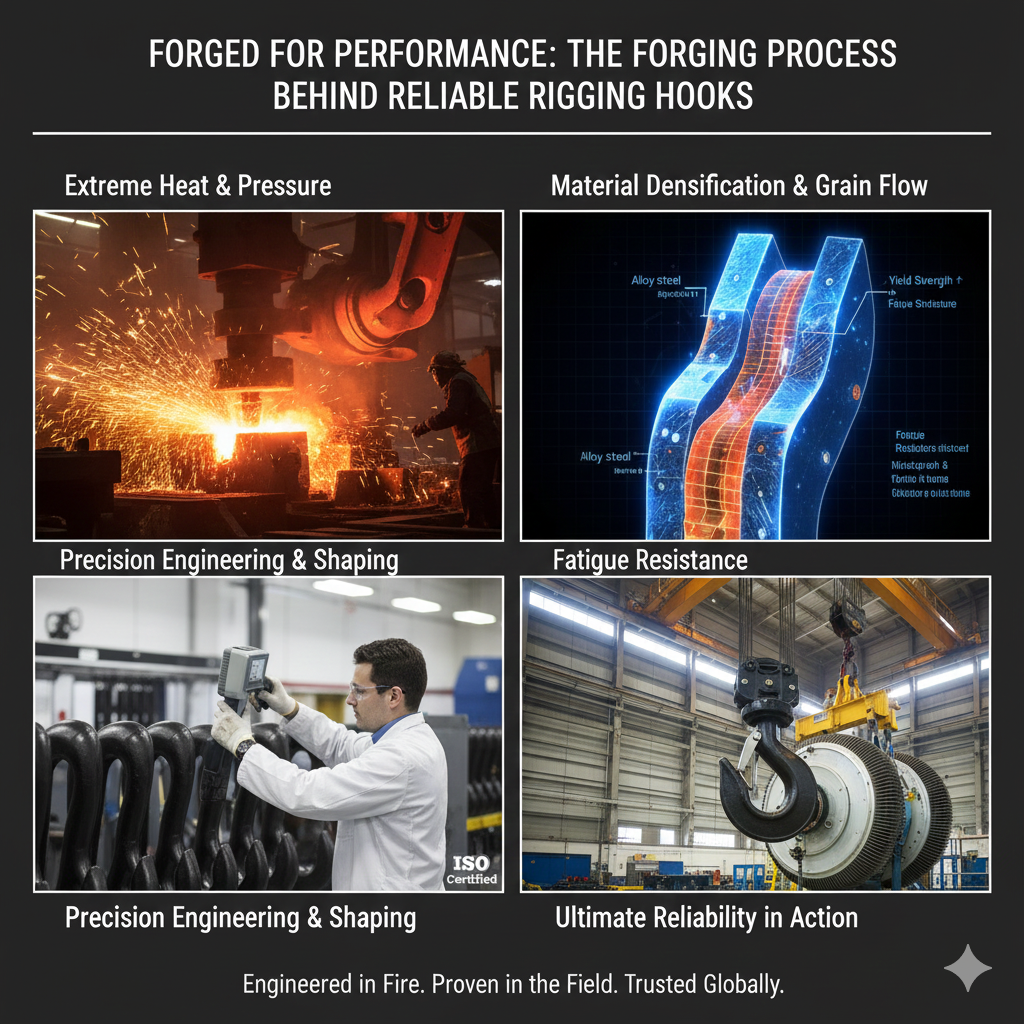
Forging isn’t just a shaping method — it’s a transformation process that strengthens steel from the inside out.
At Zhongteli, each hook is hot-forged under 1000–1600°C pressure, refining the grain flow along the hook’s contour to resist fatigue and shock.
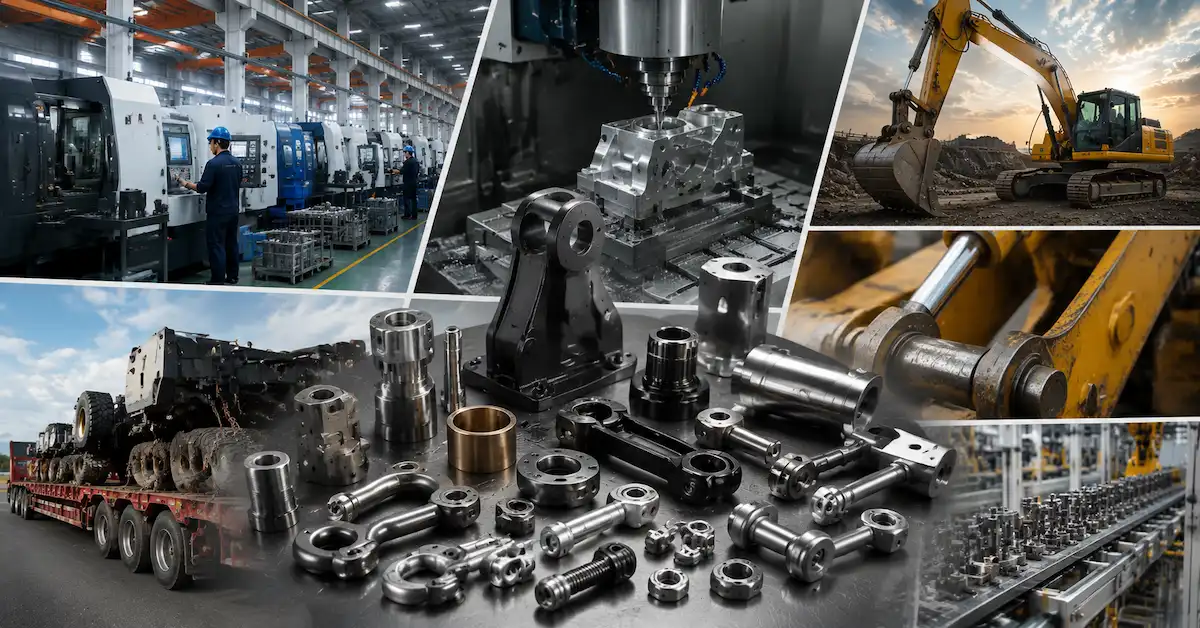
Production Workflow:
-
Material Preparation: 35CrMo / 42Cr alloy steel billets.
-
Closed Die Forging: Optimized flow pattern ensures structural uniformity.
-
Heat Treatment & Quenching: Achieves HRC 33–38 for optimal hardness.
-
Machining: CNC finishing guarantees pin-hole accuracy within ±0.05mm.
-
Surface Treatment: Zinc plating, epoxy, or hot-dip galvanizing for corrosion resistance.
-
Load Testing: Proof test to 2.5× WLL (Working Load Limit).
Each hook is serialized and verified against ISO 7597:2013 and EN 1677-2 standards — ensuring every unit meets both mechanical and regulatory criteria.
Forged vs. Cast Hooks: The Strength in Process
| Feature | Forged Rigging Hook | Cast Hook |
|---|---|---|
| Structure | Aligned grain flow | Random grain orientation |
| Tensile Strength | 850–950 MPa | 400–550 MPa |
| Impact Resistance | Excellent | Poor |
| Load Cycle Endurance | >10,000 cycles | 2,000–4,000 cycles |
| Fatigue Resistance | High | Low |
| Usage Environments | Industrial, Marine, Mining | Light-duty only |
Data published by SAE International demonstrates that forged alloy steel maintains its mechanical integrity even after long-term cyclic loading — the reason industrial operators rely exclusively on certified forgings.
Why Zhongteli Leads Among Global Manufacturers
Zhongteli has built its reputation through strict production control, material traceability, and OEM flexibility.
Core Strengths:
-
ISO 9001 & CE Certified Production
-
Proof Testing & NDT (Ultrasonic / Magnetic Particle)
-
OEM & ODM Support (geometry, logo, coating, and packaging)
-
Automated Forging Lines with real-time temperature control
-
Export Readiness: MTRs, CE compliance, and RoHS packaging available
McKinsey’s 2024 report on industrial sourcing shows that B2B buyers now prioritize vertical integration and documentation transparency, two areas where Zhongteli maintains a global competitive edge.
Application Scenarios
Zhongteli’s forged rigging hooks are trusted worldwide for high-load applications, including:
-
Construction & Infrastructure: Tower cranes, concrete form handling.
-
Shipping & Offshore: Corrosion-resistant hooks for marine mooring.
-
Mining & Steel Fabrication: Heavy-duty lifting in abrasive environments.
-
Energy & Wind Power: Fatigue-resistant hooks for turbine assembly.
-
OEM Systems: Integrated lifting hooks for branded machinery.
Each hook undergoes engineering analysis before delivery — matching load path geometry, working angles, and temperature conditions to ensure performance consistency.
Choosing the Right Rigging Hook
| Application | Hook Type | Material | Finish | Capacity (Tons) |
|---|---|---|---|---|
| General Rigging | Eye Hook | 42CrMo | Zinc | 5–10 |
| Heavy Lifting | Clevis Hook | 35CrMo | Powder Coated | 10–20 |
| Marine Use | Swivel Hook | Stainless / Alloy Mix | Hot-Dip Galv. | 3–8 |
| Industrial OEM | Custom Hook | Alloy Steel | OEM Finish | Custom |
| Mining | Grab Hook | Carbon + Alloy Blend | Painted | 15–25 |
Zhongteli engineers provide customized consultation, ensuring every rigging hook aligns with the customer’s specific lifting configuration and safety certification requirements.
FAQ
Q1: What standards do Zhongteli rigging hooks meet?
All hooks comply with ISO 7597, EN 1677, and ASME B30.10 standards.
Q2: Can Zhongteli produce OEM hooks for branded lifting systems?
Yes. Full OEM support covers geometry design, coating, and engraved branding.
Q3: What’s the expected delivery time for export orders?
Typically 25–30 days, depending on customization and batch volume.
Q4: How are forged hooks tested before shipment?
Through proof load testing, NDT inspection, and visual quality control by ISO-certified inspectors.
Forged for Strength, Proven by Standards
A forged hook is more than a product — it’s a promise of safety engineered into steel.
As a professional forged rigging hook manufacturer, Zhongteli stands behind every ton lifted with materials tested, certified, and exported to meet the world’s highest standards.
For OEM inquiries, private-label supply, or global partnership opportunities, visit Zhongteli’s homepage or contact us here.