English


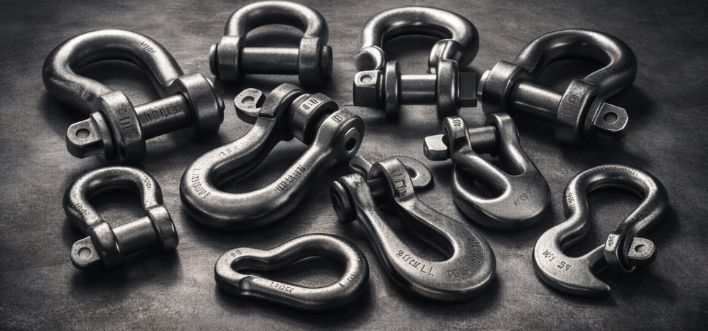
Forged Shackles and Hooks for Global Lifting: Built for Strength, Certified for Export
In lifting and rigging systems, failure rarely begins with large machinery. It begins at connection points — shackles and hooks that quietly carry the load, often overlooked until something goes wrong.
For global buyers, sourcing from a qualified forged shackle and hook exporter is not just about price or availability. It’s about traceability, compliance, and mechanical certainty — especially when products must meet international safety standards across multiple markets.
Why Export Buyers Face Hidden Risks in Rigging Hardware
On paper, many shackles and hooks look identical. In practice, their performance differs dramatically.
A poorly forged shackle may pass visual inspection but fail under repeated load cycles. A hook without proper heat treatment may hold once — but not twice. These are not theoretical risks. They are recurring problems faced by importers dealing with inconsistent suppliers.
Typical issues include:
- Non-uniform grain structure leading to fatigue cracks
- Incorrect pin tolerances causing misalignment in assemblies
- Coating failures in marine or humid environments
- Missing certification documents for customs clearance
According to ASME B30.26 and B30.10 standards, lifting hardware must be proof-tested and clearly marked with working load limits. Without this, export compliance becomes a liability rather than a formality.
The Forging Process: Where Strength Is Engineered
Forging is not simply shaping steel. It is controlling how metal behaves under stress.
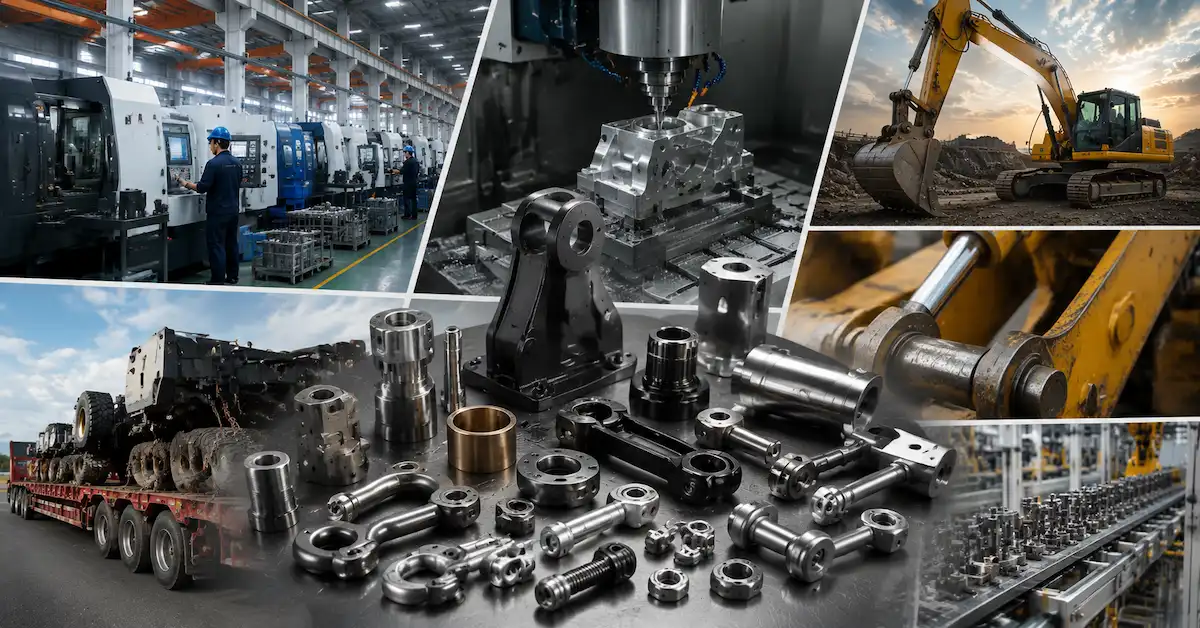
In export-grade production, alloy steel — typically 35CrMo or 42Cr — is heated, compressed, and shaped so that its internal grain aligns with the direction of force. The result is a component that doesn’t just look strong, but behaves predictably under load.
Key process stages:
- Controlled billet heating (1100–1250°C)
- Closed-die forging to eliminate internal voids
- Quenching and tempering for balanced hardness
- CNC finishing for dimensional accuracy
- Surface coating (zinc, hot-dip galvanizing, or epoxy)
Standards such as International Organization for Standardization 7597 and EN 13889 define not only material strength, but also inspection requirements — ensuring exported products meet consistent global benchmarks.
Certified vs. Non-Certified Hardware: A Practical Comparison
| Factor | Certified Forged Shackles & Hooks | Non-Certified Alternatives |
|---|---|---|
| Material | Alloy steel with traceability | Unknown or mixed steel |
| Testing | Proof load + NDT inspection | Visual inspection only |
| Certification | ISO, EN, ASME compliant | Often absent |
| Service Life | 3–5 years under industrial use | 6–12 months |
| Risk Level | Low, predictable performance | High, inconsistent behavior |
The difference is not marginal. It’s structural.
Research from SAE International shows that forged components retain significantly higher fatigue resistance over repeated load cycles — a critical factor in transport and lifting applications where repetition is constant.
What Defines a Reliable Exporter in This Category
A true forged shackle and hook exporter does more than manufacture. It builds systems that support global trade requirements.
This includes:
- Full material traceability (Mill Test Reports)
- Export-ready packaging (fumigation-free, moisture-protected)
- Compliance with destination standards (EU, North America, Middle East)
- Batch-level inspection records
- OEM customization capability
Additionally, exporters must align with global trade frameworks such as those defined by World Trade Organization, ensuring documentation and labeling meet international expectations.
Applications Across Key Industries
Forged shackles and hooks are used wherever load transfer must remain stable and predictable.
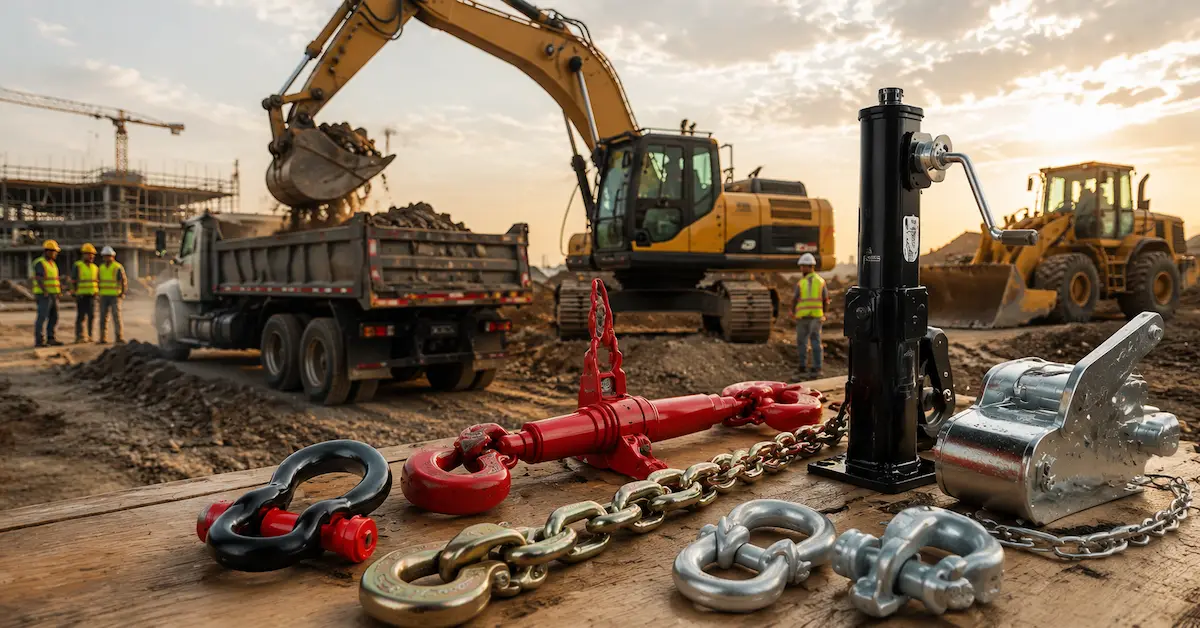
- Construction: lifting beams, formwork, and prefabricated structures
- Marine & Offshore: corrosion-resistant shackles for mooring systems
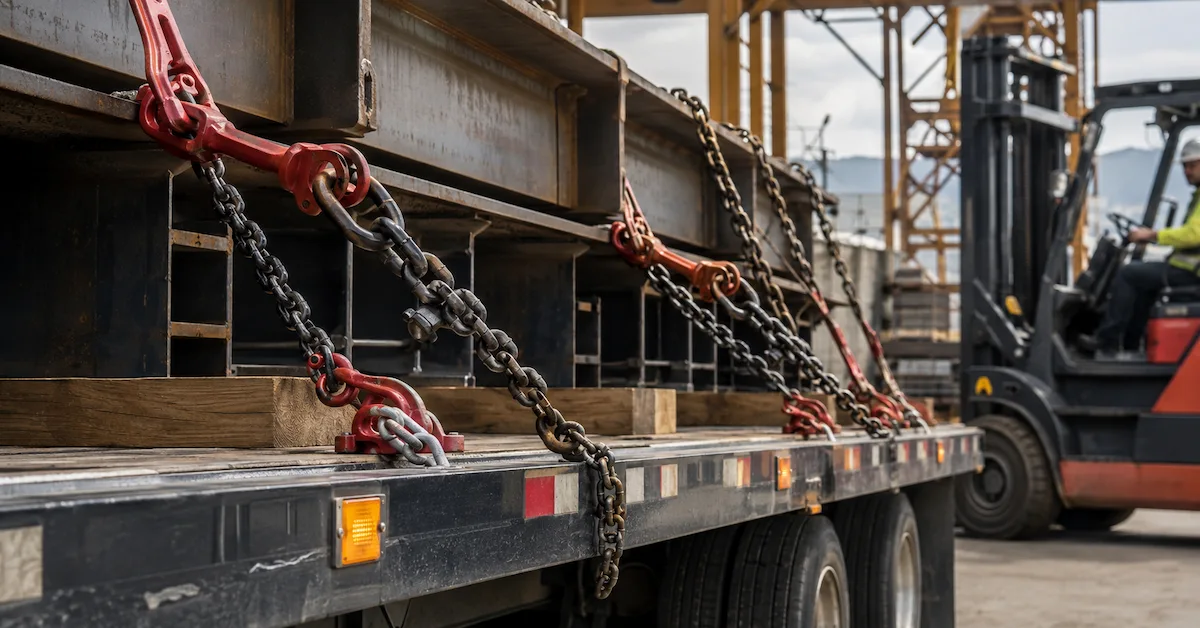
- Logistics & Transport: cargo securing and chain assemblies
- Energy & Infrastructure: heavy component handling in wind and power sectors
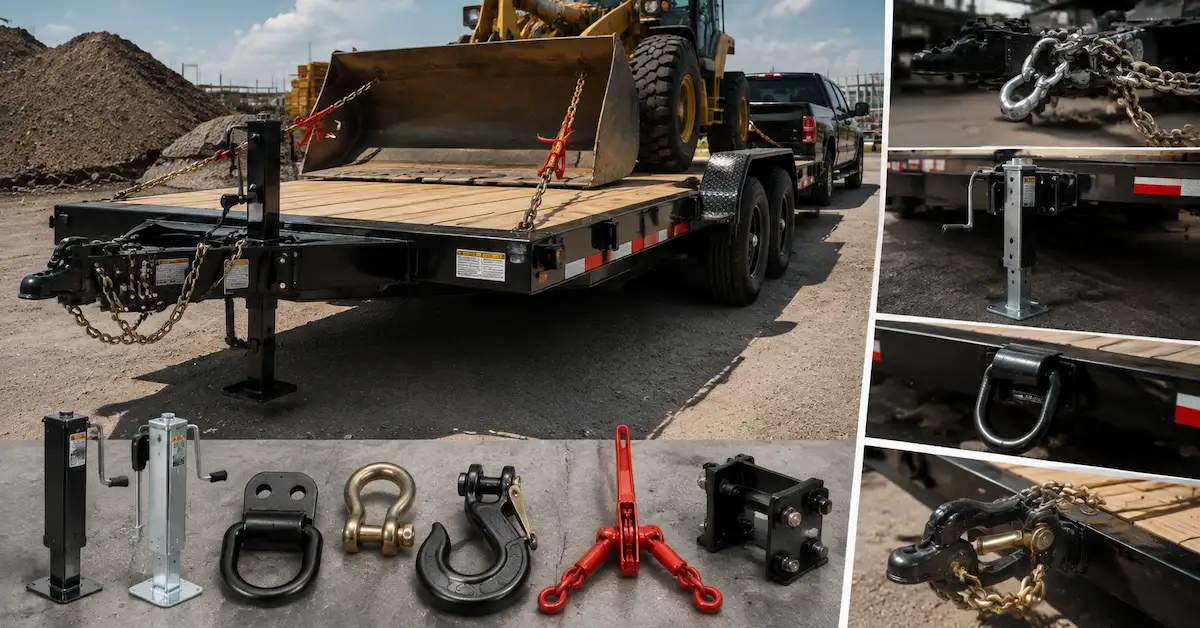
- OEM Equipment: integration into lifting and towing systems
Each environment introduces different stress conditions — from salt exposure to temperature variation — requiring tailored material and coating choices.
How to Choose the Right Export Solution
| Application | Product Type | Material | Coating | WLL Range |
|---|---|---|---|---|
| Marine Use | Bow Shackle | Alloy Steel | Hot-Dip Galv. | 3–10T |
| Construction | D Shackle + Hook | 42CrMo | Zinc | 5–20T |
| Logistics | Grab Hook | Carbon + Alloy | Powder | 5–15T |
| OEM Equipment | Custom Assembly | Custom Alloy | OEM Finish | As required |
Selection is rarely about a single product. It’s about compatibility — between hook, chain, shackle, and load path.
A reliable exporter provides not just products, but matching logic across the entire system.
Frequently Asked Questions
Q1: What certifications are required for export markets?
Typically ISO, EN, and ASME standards, depending on destination country.
Q2: Can shackles and hooks be customized for OEM brands?
Yes — including dimensions, coatings, and laser-engraved branding.
Q3: How are products tested before export?
Proof load testing (2–2.5× WLL), hardness checks, and NDT inspection.
Q4: What affects delivery lead time?
Material availability, coating type, and customization complexity — usually 25–35 days.
Strength That Travels Across Borders
A forged shackle or hook doesn’t just carry weight. It carries responsibility — across job sites, across oceans, across regulations.
Choosing the right forged shackle and hook exporter means choosing predictability, compliance, and long-term reliability.
To explore full product capabilities or discuss OEM export solutions, visit https://www.ztlrigging.com/ or connect directly via https://www.ztlrigging.com/contact-us.