English


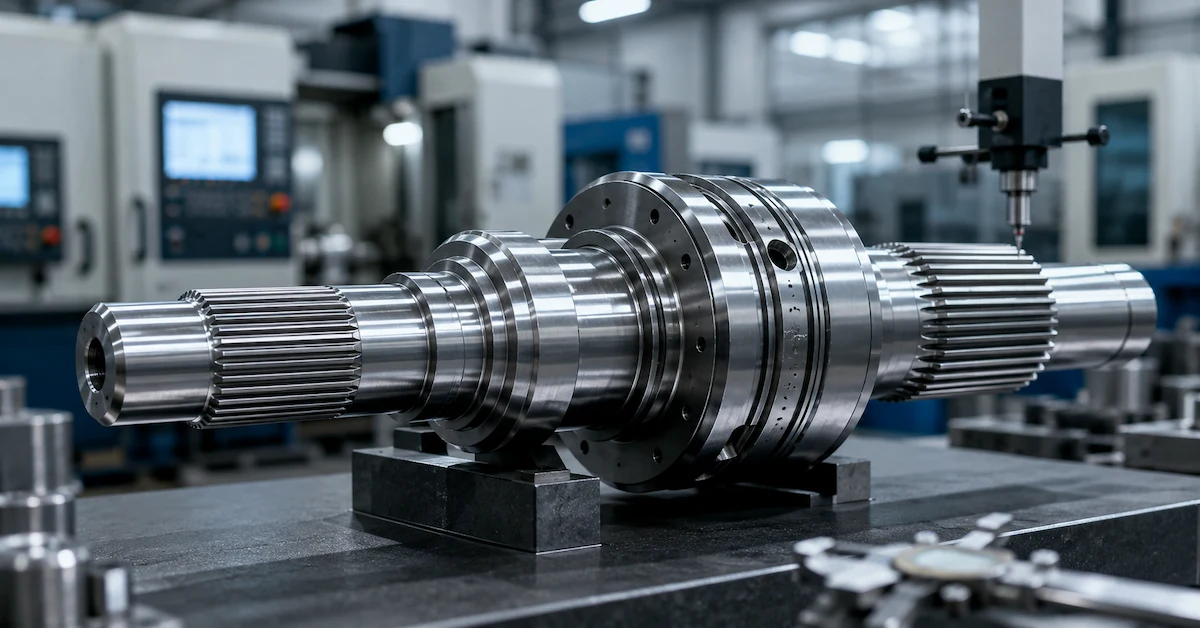
A welded torque shaft is not just a welded metal tube or shaft assembly. In industrial power transmission systems, it must transfer torque, maintain alignment, resist fatigue, and fit accurately into the customer’s equipment. For OEM buyers, choosing the right welded torque shaft factory can directly affect machine stability, production downtime, replacement cost, and long-term customer satisfaction.
Compared with one-piece shafts, welded torque shafts offer more design flexibility. They can combine different diameters, flanges, collars, sleeves, hubs, or connection sections into one finished part. This makes them useful for industrial machinery, trailer systems, agricultural equipment, construction machinery, and custom drivetrain applications.
However, welding also brings technical risks. Poor weld penetration, misalignment, residual stress, and weak heat-affected zones can reduce fatigue life. That is why buyers should work with a factory that understands welding, CNC machining, heat treatment, dimensional control, and quality inspection as one complete process.
For buyers comparing shaft solutions, Zhongteli’s guide on industrial torque shaft factory selection can provide additional background on how torque shafts support stable power transmission in heavy machinery.
What Is a Welded Torque Shaft?
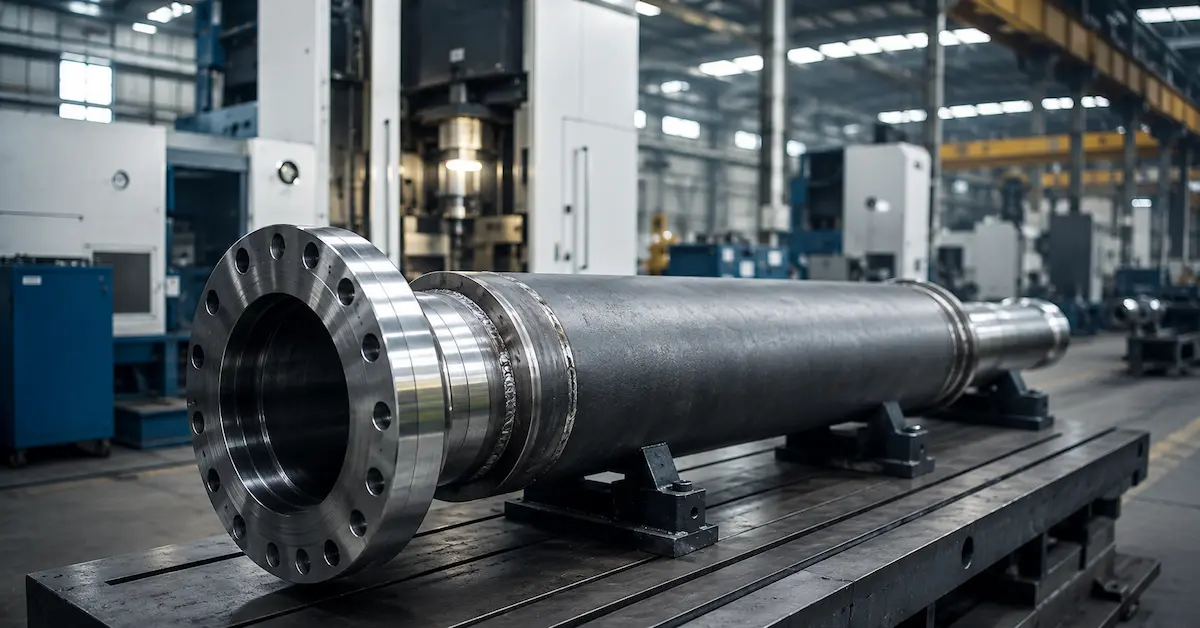
A welded torque shaft is a mechanical shaft made by joining multiple steel sections through welding. These sections may include a shaft body, flange, coupling end, sleeve, hub, mounting collar, or special OEM connection structure.
A welded design is often used when:
- the shaft is too long for one-piece machining
- different sections require different diameters
- the shaft needs a flange or special connection end
- the design requires lower material waste
- OEM equipment needs a customized geometry
- production cost must be balanced with strength and accuracy
A professional welded torque shaft factory should not only weld parts together. It should control the entire manufacturing process, including material selection, machining before welding, welding procedure, post-weld correction, stress control, final machining, inspection, coating, and export packaging.
For custom projects where the shaft must match special equipment layouts, Zhongteli’s article on custom torque shaft OEM solutions is a useful supporting page.
Who Needs a Welded Torque Shaft Factory?
This article is written for B2B buyers who need customized shaft assemblies rather than simple standard shafts.
Typical buyers include:
- industrial machinery manufacturers
- agricultural equipment OEMs
- trailer and transport system builders
- conveyor system manufacturers
- construction machinery suppliers
- power transmission equipment manufacturers
- drivetrain assembly companies
- replacement parts distributors
- importers and wholesalers of industrial shaft components
For these buyers, a welded torque shaft is usually part of a larger mechanical system. If the shaft fails, the issue may not be limited to one component. It may affect bearings, couplings, gearboxes, brackets, motors, or the entire equipment line.
That is why a welded torque shaft factory should be evaluated as a technical partner, not only as a price supplier.
Why Welding Is Used in Torque Shaft Manufacturing
Welding gives engineers more freedom in shaft design. Instead of machining a large and expensive one-piece blank, the manufacturer can join optimized sections together.
This can bring several advantages:
- flexible structure design
- better cost control for long or large shafts
- easier integration of flanges and hubs
- lower raw material waste
- faster customization for OEM drawings
- suitable for low-volume and mid-volume projects
For example, a shaft may require a large flange at one end, a long cylindrical body in the middle, and a smaller machined connection at the other end. Producing the entire part from one solid steel bar may waste material and increase machining time. A welded structure can be more practical if the weld is properly designed, processed, and inspected.
Still, welding must be controlled carefully. A weak weld can become the first failure point under torque, vibration, and repeated load cycles.
Common Risks in Poor Welded Torque Shafts
Not all welded shafts are suitable for industrial torque transmission. Poor manufacturing can create hidden problems that appear only after installation.
Common risks include:
- weld cracking under repeated torque load
- shaft bending or runout after welding
- poor concentricity between welded sections
- weak heat-affected zone near the weld
- internal stress causing deformation over time
- vibration during rotation
- premature bearing or coupling wear
- poor surface finish at mounting areas
- corrosion around weld joints
These problems usually come from uncontrolled welding, poor fixture design, lack of post-weld machining, unsuitable material, or insufficient inspection.
A reliable welded torque shaft factory should know how to reduce these risks before mass production.
Key Specifications to Confirm Before Ordering
Before requesting a quote, buyers should prepare clear technical information. This helps the supplier choose the right material, welding method, machining process, and inspection plan.
| Specification Item | What Buyers Should Confirm | Why It Matters |
|---|---|---|
| Overall length | Total shaft length and working length | Ensures correct installation |
| Main diameter | Outer diameter of each section | Affects strength and fit |
| Welded sections | Number and location of welded joints | Determines welding and stress control |
| Torque load | Working torque and peak torque | Prevents fatigue and fracture |
| Rotation speed | RPM range and duty cycle | Affects balancing and runout control |
| Connection type | Flange, hub, spline, keyway, groove, thread, or coupling | Ensures system compatibility |
| Material grade | Carbon steel, 40Cr, 42CrMo, or custom alloy steel | Affects strength and weldability |
| Welding requirement | MIG, TIG, submerged arc, friction welding, or custom process | Determines weld strength and consistency |
| Heat treatment | Stress relief, quenching, tempering, or surface hardening | Improves performance and reduces residual stress |
| Tolerance | Runout, straightness, concentricity, bearing seat size | Controls vibration and fit |
| Surface treatment | Painting, zinc coating, black oxide, or anti-rust protection | Improves corrosion resistance |
| Testing | Weld inspection, dimensional check, hardness, balancing, load testing | Confirms batch reliability |
For replacement projects, samples and photos are useful. For OEM projects, drawings, 3D files, working load, RPM, and installation details are preferred.
If the shaft is used in a rotating system, buyers should pay special attention to runout and balancing requirements. ISO 286-1 can be used as a reference for tolerances on linear sizes, especially for cylindrical features and shaft fits. ISO 286-1 establishes a code system for tolerances, deviations, and fits for linear sizes.
Material Selection for Welded Torque Shafts
Material selection affects strength, weldability, fatigue resistance, machining performance, and cost.
Common material choices include:
- carbon steel for general industrial applications
- 40Cr for stronger mechanical performance
- 42CrMo for heavy-duty torque and fatigue resistance
- custom alloy steel for OEM-specific performance
- coated or treated steel for outdoor environments
For welded torque shafts, the material must be suitable for both torque transmission and welding. A high-strength steel may perform well mechanically but may require careful welding procedure and stress control.
ASTM A29/A29M is a common reference for carbon and alloy steel bars, and it can be useful when buyers need clearer material requirements for shaft production. ASTM A29/A29M-23 covers general requirements for carbon and alloy steel bars.
For buyers comparing different shaft materials and production routes, Zhongteli’s heavy duty torque shaft manufacturer article provides additional guidance on alloy steel, heat treatment, and heavy-load applications.
Manufacturing Process of Welded Torque Shafts
A professional welded torque shaft factory should follow a controlled production process. The goal is to ensure that the welded shaft is strong, straight, balanced, and ready for assembly.
Typical process:
- Requirement review
Engineers review drawings, torque load, application environment, weld position, and tolerance requirements. - Material preparation
Steel bars, tubes, flanges, sleeves, or hubs are selected and cut according to the drawing. - Pre-machining
Critical surfaces may be roughly machined before welding to improve fit-up and welding accuracy. - Fixture positioning
The shaft sections are positioned in welding fixtures to control alignment and reduce deformation. - Welding
The selected welding method is applied based on material, wall thickness, joint design, and strength requirements. - Post-weld stress control
Stress relief or heat treatment may be used to reduce residual stress and improve stability. - Straightening and correction
Runout and straightness are checked, and correction is performed if required. - Finish machining
Bearing seats, flange faces, keyways, grooves, or threaded sections are finished by CNC machining or grinding. - Surface treatment
Anti-rust oil, painting, zinc coating, or other finishes are applied based on the working environment. - Final inspection and packaging
Dimensions, weld quality, runout, surface finish, and packaging are checked before shipment.
This full-process control is what separates a professional factory from a basic welding shop.
Welding Methods Used for Torque Shafts
Different welding methods may be used depending on material, shaft size, wall thickness, production volume, and performance requirements.
| Welding Method | Features | Advantages | Typical Use |
|---|---|---|---|
| MIG welding | Common industrial welding method | Efficient and suitable for many steel structures | General welded shaft assemblies |
| TIG welding | Cleaner and more controlled weld | Better precision, good appearance | Smaller or precision welded areas |
| Submerged arc welding | High deposition rate and deep penetration | Suitable for larger components | Heavy-duty thick-section shafts |
| Friction welding | Solid-state joining process | High consistency and strong joint quality | High-volume precision shaft production |
| Custom welding process | Designed around OEM requirement | Best match for special applications | Non-standard torque shaft projects |
The best welding method depends on the shaft design. A good supplier should not use one welding method for every project. It should choose the process based on the mechanical requirement.
Welded Torque Shaft vs One-Piece Torque Shaft
| Type | Advantages | Limitations | Best For |
|---|---|---|---|
| Welded torque shaft | Flexible design, suitable for long shafts, lower material waste, easier flange integration | Requires strict weld and alignment control | OEM customized shafts, long shafts, multi-section structures |
| One-piece torque shaft | Stronger continuous material structure, fewer joint risks | Higher material cost, limited by blank size and machining capacity | High-speed or high-load precision shafts |
| Forged torque shaft | Dense structure and strong fatigue resistance | Tooling or forging capacity may be required | Heavy-duty systems and fatigue-critical applications |
| Custom OEM shaft | Designed for exact equipment needs | Requires engineering communication and sampling | OEM machinery, trailer systems, agricultural equipment |
If the application requires maximum strength and high-speed rotation, a one-piece or forged shaft may be better. If the project requires length, flange integration, cost efficiency, or structural flexibility, a welded torque shaft may be more practical.
For buyers comparing related power transmission shafts, Zhongteli’s transmission shaft manufacturer guide can support broader supplier evaluation.
Quality Control for Welded Torque Shafts
Quality control is especially important for welded shafts because the weld joint, alignment, and post-weld condition all affect final performance.
A reliable welded torque shaft factory should inspect:
- raw material certificates
- weld joint appearance
- weld penetration where required
- shaft straightness
- total runout
- concentricity
- flange face accuracy
- bearing seat dimensions
- hardness after heat treatment
- surface finish
- coating condition
- packaging protection
For rotating components, dynamic balancing may also be required. ISO 21940-11 is a useful reference for balancing procedures and unbalance tolerances for rigid rotors.
Inspection should not happen only at the end. For welded torque shafts, in-process inspection is critical because weld distortion and misalignment are easier to control early than after the shaft is fully finished.
Application Scenarios
Welded torque shafts are suitable for many industrial and OEM applications.
Common applications include:
- industrial machinery
- conveyor drive systems
- agricultural machinery
- trailer and transport systems
- construction equipment
- material handling systems
- gearbox and coupling systems
- heavy-duty mechanical assemblies
- custom drivetrain systems
- replacement shaft programs
For trailer-related applications, Zhongteli’s trailer axle torque arm supplier and steel torque rod supplier articles can help readers understand how torque-related components support stability, load control, and suspension performance.
For buyers who want to see Zhongteli’s broader product direction, visit the Zhongteli product page.
Selection Guide by Application
| Application | Recommended Shaft Type | Key Requirement | Suggested Process |
|---|---|---|---|
| Conveyor systems | Welded or precision drive shaft | Continuous rotation and low vibration | Machining + balancing |
| Agricultural machinery | Coated welded torque shaft | Dust, mud, impact, outdoor corrosion | Welding + coating |
| Trailer systems | Custom welded torque shaft | Load stability and fit | Welding + CNC machining |
| Construction equipment | Heavy-duty welded shaft | Shock load and fatigue resistance | Alloy steel + heat treatment |
| Gearbox assemblies | Precision shaft | Accurate fit and low wear | Grinding + runout control |
| OEM machinery | Custom welded shaft | Drawing accuracy and repeatability | Full-process OEM production |
Final selection should depend on actual torque, speed, working environment, connection method, and service life target.
Cost Factors Buyers Should Understand
The price of a welded torque shaft depends on more than length and diameter.
Main cost factors include:
- steel grade
- shaft size and wall thickness
- number of welded joints
- flange or hub complexity
- welding method
- fixture requirement
- CNC machining time
- heat treatment or stress relief
- grinding requirement
- tolerance level
- balancing requirement
- coating type
- inspection documentation
- packaging method
- order quantity
A low-cost welded shaft may look attractive, but it can create higher long-term cost if it causes vibration, cracking, bearing damage, or equipment downtime.
A professional supplier should explain which cost items are necessary and which can be optimized.
How to Choose the Right Welded Torque Shaft Factory
When selecting a supplier, B2B buyers should evaluate both manufacturing capability and engineering communication.
Use this checklist:
- Can the factory read and review technical drawings?
- Does it understand torque load and rotation requirements?
- Can it recommend suitable material grades?
- Does it control welding fixtures and alignment?
- Can it provide CNC machining after welding?
- Does it inspect runout, straightness, and concentricity?
- Can it support stress relief or heat treatment?
- Does it provide coating and anti-rust protection?
- Can it support samples before mass production?
- Does it offer OEM packaging and batch traceability?
- Does it have experience with export orders?
A qualified welded torque shaft factory should be able to discuss the application before production. If a supplier only asks for quantity and price target, but does not ask about load, speed, material, weld position, or tolerance, buyers should be careful.
Why Work with Ningbo Zhongteli Rigging Co., Ltd.?
Ningbo Zhongteli Rigging Co., Ltd. is a professional manufacturer focused on rigging products and related industrial components for global customers. The company highlights advanced manufacturing processes, strict quality control, custom product solutions, global export service, ISO & CE certified quality, and 15+ years of industry experience.
For welded torque shaft buyers, Zhongteli can support custom manufacturing needs through material selection, machining, welding-related production coordination, heat treatment, surface treatment, inspection, and export-ready supply.
As a welded torque shaft factory, Zhongteli is suitable for buyers who need custom shaft structures, OEM dimensions, stable batch quality, and reliable communication for international projects.
For direct project discussion, drawings, samples, or quotation requests, visit the Zhongteli Contact Us page. The contact page lists phone, email addresses, and the Ningbo factory address for global cooperation.
OEM Customization Options
OEM buyers often need welded torque shafts designed around a specific machine or trailer system.
Common customization options include:
- custom shaft length
- custom shaft diameter
- welded flange design
- welded sleeve or hub structure
- special keyway, spline, or thread
- custom bearing seat dimensions
- material grade selection
- heat treatment requirement
- stress relief process
- anti-rust coating
- part number marking
- private-label packaging
- export carton and pallet design
- batch traceability labels
For OEM production, the goal is not only one correct sample. The real goal is stable repeat orders with the same fit, weld quality, and mechanical performance.
Frequently Asked Questions
1. What does a welded torque shaft factory do?
A welded torque shaft factory manufactures torque shafts by joining multiple steel sections through welding, then machining, treating, inspecting, and packaging the finished shaft for industrial or OEM use.
2. When should I choose a welded torque shaft?
Choose a welded torque shaft when the design requires long length, multiple diameters, a flange, a hub, a sleeve, or special OEM geometry that is not efficient to machine from one solid piece.
3. Are welded torque shafts strong enough for industrial use?
Yes, welded torque shafts can be suitable for industrial use when material selection, weld design, welding procedure, alignment control, heat treatment, and inspection are properly managed.
4. What information should I provide for a quotation?
Provide drawings, samples, shaft dimensions, welded joint locations, torque load, RPM, material requirement, tolerance, surface treatment, quantity, and application environment.
5. What materials are commonly used?
Common options include carbon steel, 40Cr, 42CrMo, and custom alloy steel. The final material should match strength, weldability, fatigue resistance, and cost requirements.
6. Is heat treatment necessary after welding?
It depends on material, weld structure, and application. Stress relief or heat treatment may be recommended to reduce residual stress and improve stability.
7. How do I control runout in welded torque shafts?
Runout can be controlled through proper welding fixtures, pre-machining, post-weld correction, finish machining, and final inspection.
8. Can welded torque shafts be customized for OEM equipment?
Yes. A professional supplier can customize length, diameter, flange, hub, sleeve, connection style, material, coating, marking, packaging, and batch traceability.
9. What quality checks are important?
Important checks include weld inspection, dimensional inspection, runout, straightness, concentricity, hardness, surface finish, coating condition, and balancing when needed.
10. How can I start a welded torque shaft project?
Send your drawing, sample, application requirement, or equipment information to Zhongteli through the Contact Us page. The team can review your requirements and provide a suitable OEM manufacturing solution.
Build Stronger Shaft Assemblies with the Right Factory
A welded torque shaft can be an efficient and flexible solution for industrial machinery, trailer systems, agricultural equipment, and OEM power transmission applications. But its reliability depends on the quality of welding, machining, heat treatment, alignment, inspection, and supplier communication.
Choosing the right welded torque shaft factory helps reduce vibration, cracking, fitment problems, and unexpected downtime. For OEM buyers, the best supplier is not simply the lowest-cost workshop. It is the partner that understands both welding structure and torque transmission performance.
For welded torque shafts, custom torque shafts, industrial transmission shafts, and OEM mechanical components, Ningbo Zhongteli Rigging Co., Ltd. can support global buyers with manufacturing capability, quality control, and export-ready supply.